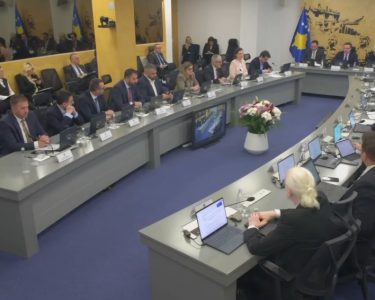

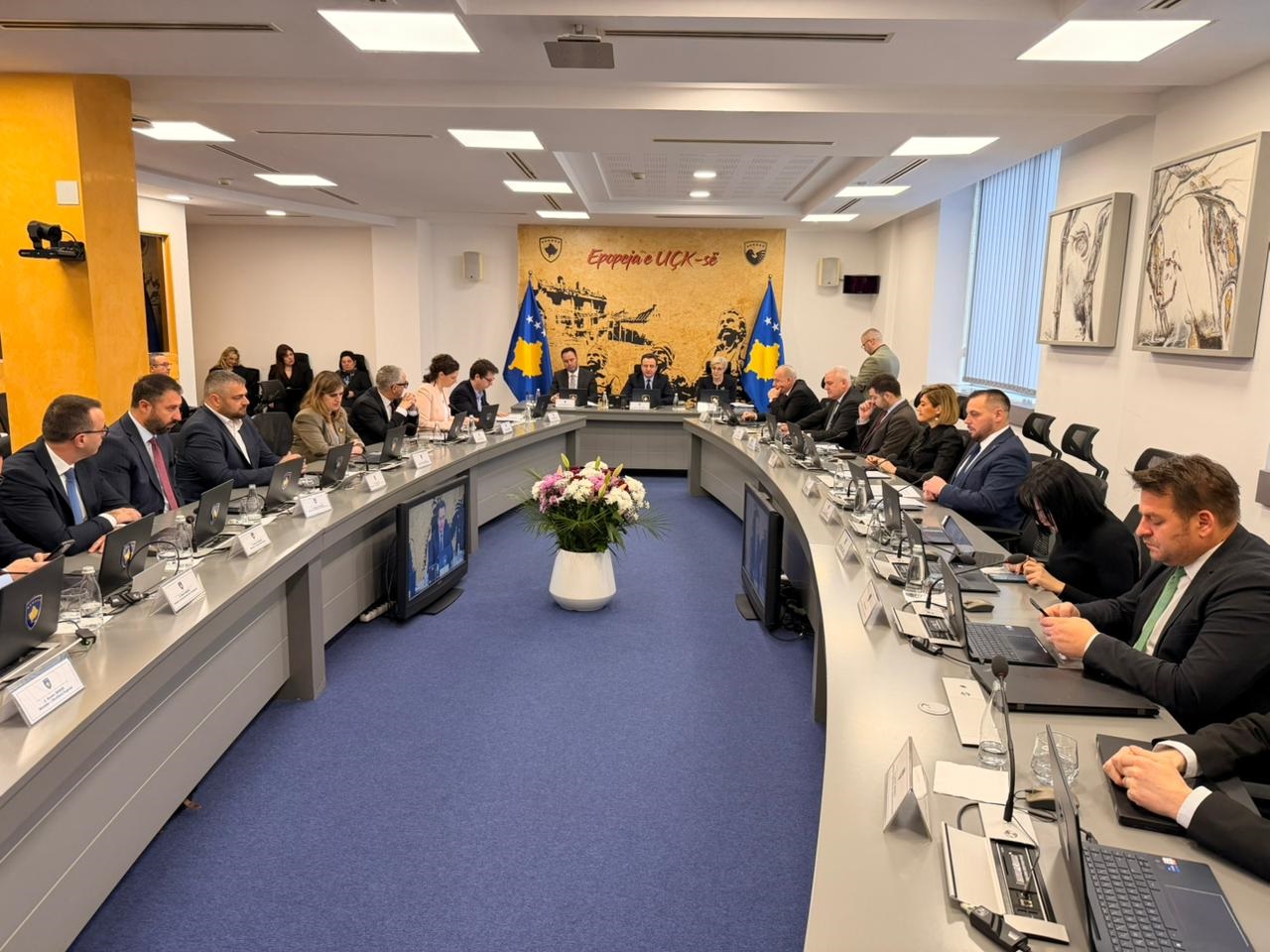
The Government of Kosovo has approved the draft law on the Bureau for Verification and Confiscation of Unjustified Assets, KosovaPress reports.
During the presentation of the draft law, Prime Minister Albin Kurti said that this legislative initiative represents a decisive step in strengthening the rule of law and fighting corruption in Kosovo.
“The Law on the State Bureau for Verification and Confiscation of Unjustified Assets represents a decisive step in strengthening the rule of law and fighting corruption in the Republic of Kosovo. It creates an effective mechanism to investigate and confiscate assets that cannot be justified with lawful sources, directly targeting those who have enriched themselves at the expense of citizens. This law is not only a punitive instrument but also a tool for restoring public trust in justice and state institutions. Through it, we send a clear message that no one is above the law and that accountability must be unavoidable. In this regard, its full and impartial implementation remains a government priority to guarantee justice and equality for all,” Kurti stated.
The Minister of Justice, Donika Gërvalla, said that this draft law is being submitted for a vote today due to the Constitutional Court ruling of 9 January 2026.
“Indeed, this draft law was first approved by the government on 29 December 2021, and this process was preceded by the approval of the concept document in this field on 13 April 2021. This moment also marks the beginning of an almost five-year-long journey toward the realization of this reform initiative, which, based on prior analyses and research, stems from the need to expand instruments and complete the legal infrastructure in the field of anti-corruption and organized crime. The draft law is now also based on three opinions of the Venice Commission and two Constitutional Court rulings. These recommendations have been reflected in the text of the draft law, which was prepared in close cooperation with local and international experts, institutional representatives, and international partners,” she added.
She also said that the draft law provides for “the establishment of an independent institution with a defined mandate, strict criteria for its leadership and oversight, a detailed verification procedure with clear deadlines, a minimum threshold for financial discrepancy, and full procedural guarantees for the parties, including the right to defence, representation, and appeal.”