152 violations of the code of conduct were recorded on social media during the local elections.
The political entities with the most violations are Vetëvendosje Movement, Democratic Party of Kosovo, Alternativa, Alliance for the Future of Kosovo, the Serb List, as well as Guxo and LDK.
The violations include hate speech, personal harassment, disinformation and incitement to violence.
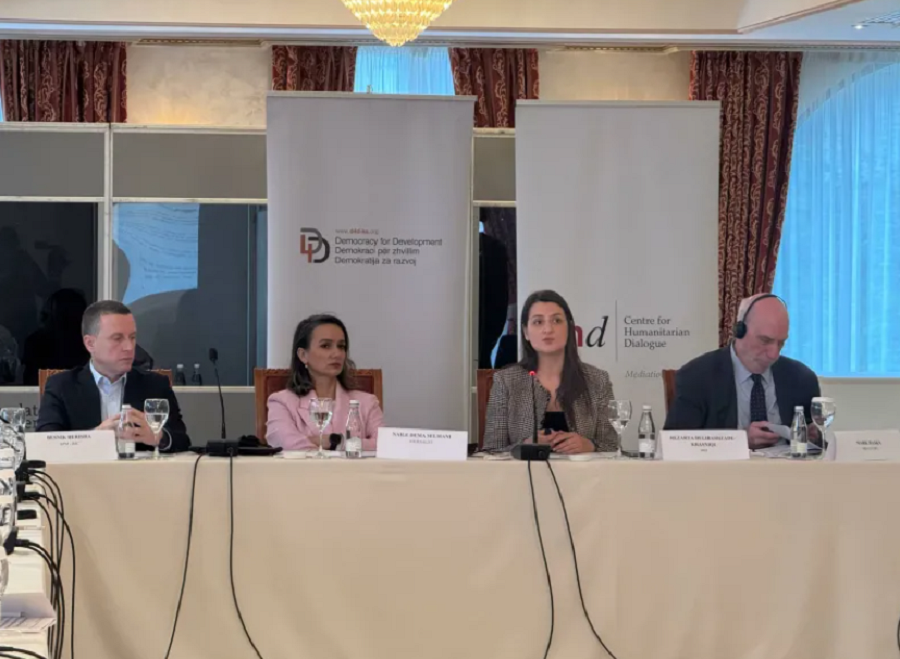
These findings were published on Wednesday by Democracy for Development (D4D) and the Centre for Humanitarian Dialogue (HD).
The executive director of D4D, Rrezarta Delibashzade-Krasniqi, said that the monitored platforms included online media and social networks throughout the pre-campaign and election campaign, KosovaPress reports.
She stated that their monitoring identified 152 violations of the code of good conduct, signed by political subjects, media, and civil society organisations.
“From our monitoring findings, we identified 152 violations of the code of good conduct signed by political parties, media and NGOs. These violations were mainly committed by political entities. The platforms with the highest number of violations were Facebook with 95%, followed by TikTok and Instagram.
The types of violations were: 66% by candidates for municipal assemblies, 33% by the media, 11% by political analysts, 10% by mayoral candidates, and 1% by political parties.
The parties with the most violations in the 18 monitored municipalities were Vetëvendosje, followed by the Democratic Party of Kosovo and the Alliance for the Future of Kosovo. With lower percentages follow the Serb List, LDK and Guxo,” she said.
She also explained which parties were most frequently targeted with hate speech and disinformation.
“If we look at the most targeted political parties, PDK comes first, followed by Vetëvendosje, LDK, AAK, the Serb List, Guxo and others.
The violations include hate speech; 14% was personal harassment, which has been significantly higher this year compared to previous monitoring. We also recorded disinformation, incitement to violence, and ethnic or religious attacks,” Delibashzade-Krasniqi added.
Meanwhile, Mark Baskin, senior adviser at the Centre for Humanitarian Dialogue, said that social networks have become a dominant form of communication in Kosovo. He added that 95% of households have internet access, while 90% of Kosovars aged 15–35 use the internet daily.
For this reason, he said that information disorders—including hate speech, false and manipulative content—can threaten Kosovo’s democracy.
“Let me underline two points: First, social media has become a dominant form of communication in Kosovo. According to international and local data, 95% of households have some form of internet access, 90% of Kosovars aged 15–35 use the internet daily, and 83% of people up to age 74 use it daily.
The widespread circulation of fake news, exaggeration and defamation undermines citizens’ ability to make informed electoral decisions and to hold government accountable.
These information disorders—including division, sexist and harsh language, hate speech, false content, distorted and manipulative information—can threaten Kosovo’s democracy, as they can threaten any democracy. This is why we are involved, because such trends can lead to conflict. During the 2025 local elections we explored these dynamics,” he said.
The code of good conduct was drafted in 2021 jointly by political parties, civil society and the media. /