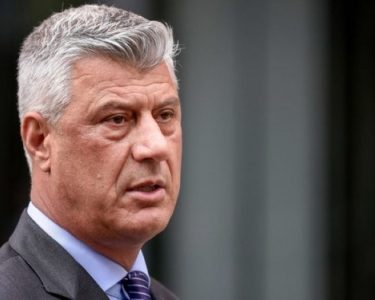

The decision of the Kosovo Specialist Chambers to reject the motion filed by the defense of former Kosovo Liberation Army (KLA) leaders—who had requested the dismissal of certain charges—has sparked reactions in Kosovo. The court is being criticized for a lack of objectivity and actions that are “in favor of Serbia.”
The Kosovo Specialist Chambers in The Hague decided to fully reject the motion submitted by the defense of former KLA commanders, which requested that charges related to incidents before May 1998 and after June 20, 1999, be removed from the indictment.
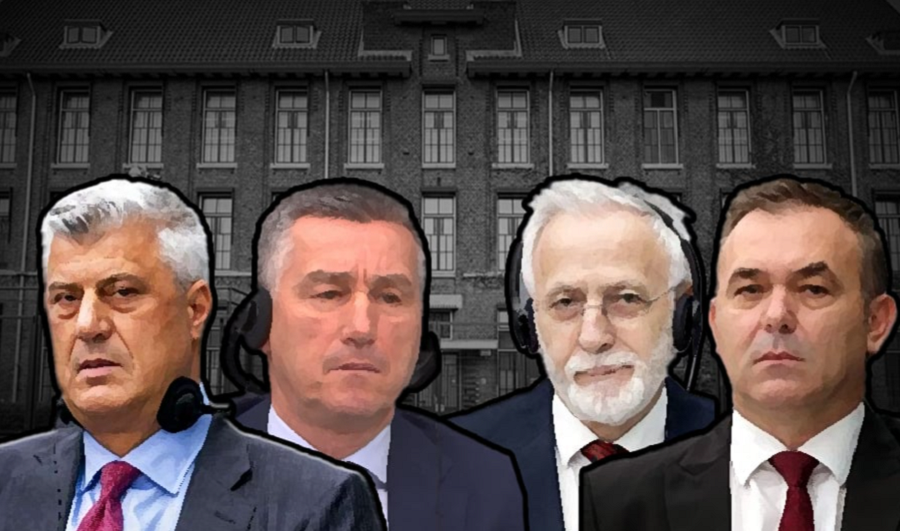
The lawyers of Hashim Thaçi, Kadri Veseli, Jakup Krasniqi, and Rexhep Selimi submitted a joint filing requesting that charges concerning incidents from outside the wartime period [prior to May 1998 and after June 20, 1999] be dismissed, arguing that these do not fall within the temporal scope of the war.
“What the defense is challenging is not a standalone charge, but part of a charge in the form of specific material facts that make up points in the indictment,” said the presiding judge, Charles Smith, during the hearing held in The Hague on July 16.
Attorney Ardian Bajraktari criticized the trial panel’s decision, calling it a lack of objectivity by the court.
Bajraktari emphasized that the court is interpreting the wartime period in Kosovo too narrowly.
“The trial panel and the Specialist Court failed to demonstrate objectivity in their handling of the case against the former KLA leaders. The issue of objectivity in the process so far is extremely contentious. Despite the fact that the panel’s interpretation was extremely narrow and restrictive regarding the motion, this is only one stage of the proceedings. It remains to be seen in the ongoing trial what role and efforts the defense will bring forward, which will be crucial. If justice prevails, then I believe the outcome will be the expected one—acquittal of the former KLA leaders. Because from what we’ve seen thus far, the prosecution has not managed to substantiate its claims or accusations. It is important to emphasize that the very functioning of this court, including the legal acts upon which it operates, has demonstrated this. Notably, the defense has no right to appeal this decision that was issued today,” Bajraktari said.
June 12, 1999, marks the day NATO forces entered Kosovo, marking the end of the war during which Serbian forces killed over 13,000 people.
NATO’s peacekeeping campaign, which lasted 78 days, concluded on June 10 of that year.
In Kosovo, the deployment of 50,000 NATO peacekeeping troops began to secure peace. Before this was the Kumanovo Agreement, which stipulated the complete withdrawal of Serbian forces from Kosovo—this occurred by June 20, 1999.
The head of the KLA War Veterans Organization, Hysni Gucati, told KosovaPress that the latest decision by the Specialist Chambers is a “historic disgrace” and an act that, according to him, only serves Serbia’s interests and those of its collaborators.
Gucati described the decision as unjust and political, stating that “there is no factual basis to consider post-June 12, 1999 events as war crimes.”
“It’s a disgrace what the judges in The Hague did today with the defense motion for Thaçi and the others… The war in Kosovo ended on June 12. After June 12, there was no war in Kosovo. I don’t know where the Specialist Court gets these facts to consider incidents after June 12—or before May 1998—as war crimes. Even in May 1998, there was already frontal war in Kosovo. Where exactly did it happen? In 1998 and afterward, it was Serbia that committed crimes in Kosovo. This is the greatest disgrace, that the court has worked with Nazim Bllaca and his associates… This decision only serves Serbia and Serbian spies, no one else, and people who do not want what’s best for Kosovo,” said Gucati.
Meanwhile, trial monitor Amer Alija from the Humanitarian Law Center in Kosovo told KosovaPress that the defense raised several very important points, noting that “the armed conflict in Kosovo ended with the signing of the Kumanovo Agreement, that is, on June 9.”
“The criminal procedure differs compared to the one in Kosovo. In Kosovo, indictment objections are raised at the start of proceedings, whereas at the Specialist Chambers, they occur after the prosecution has presented its evidence. I think the defense raised several very important points because it is indeed true that the armed conflict ended with the Kumanovo Agreement, on June 9, which provided that within 11 days—that is, by June 20—Serbian forces would withdraw from Kosovo. After their withdrawal, there were no more firefights, no war, and this period cannot be considered an armed conflict after June 20. However, crimes against humanity can still be committed during peacetime, even after a war has ended. The trial panel didn’t need to go deeper into justification at this stage. These issues should be evaluated at the end of the judicial process without prejudging the final outcome,” said Alija.
Alija explained what the next steps of the judicial process will look like.
“They [the judges] will give their conclusions and justifications in the final verdict, after the completion of all evidence presentation. Right now, the phase involves evidence submissions from the victims’ representatives—two experts proposed by the victims’ lawyer will be heard. Then, witnesses proposed by the defense will testify. If the accused wish to testify, they will be heard as well. Then come the closing statements, followed by the verdict. I believe we are approaching the end of the main trial. I believe next year we could have the first-instance judgment,” Alija added.
Earlier on Wednesday, the head of the Democratic Party of Kosovo, Memli Krasniqi, also reacted.
He called the decision a “missed opportunity,” as he wrote, to strengthen trust in international justice and its core principles: objectivity, impartiality, and respect for the truth.
“The liberators, their families, we, and every citizen of Kosovo have never asked for favors, only justice. Justice that is not influenced by prejudice. That does not confuse freedom with guilt. Because freedom is not a crime. It never has been. It never will be,” Krasniqi wrote on Facebook.
The former KLA commanders—Hashim Thaçi, Kadri Veseli, Jakup Krasniqi, and Rexhep Selimi—have been in pre-trial detention in The Hague since November 2020.
The Specialist Prosecutor’s Office has charged them with alleged war crimes. They have pleaded not guilty to all counts in the indictment.
The trial began on April 3, 2023—nearly three years after the indictment was confirmed and since the former KLA leaders have been held at the detention center in The Hague.