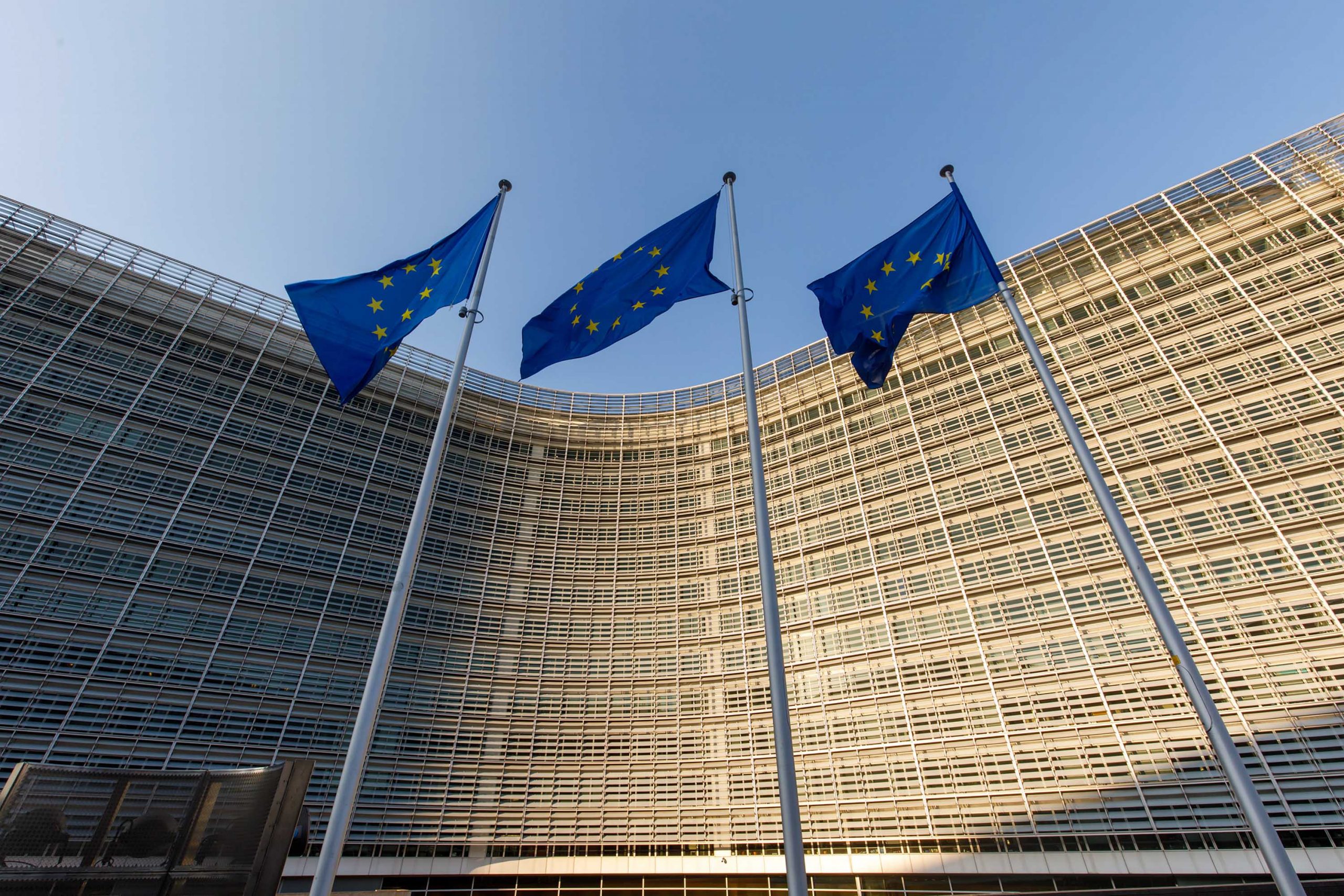
The European Commission published on Tuesday the 2024 Progress Report for Kosovo, stating that the country has made progress, albeit limited, in several areas, while highlighting the impact of the political deadlock on Kosovo’s European path.
The EU prepares these reports for countries seeking membership in the bloc.
“The reporting period was affected by divisive domestic politics and a campaign of confrontations ahead of the general elections on 9 February 2025, followed by a post-election political deadlock due to the inability and lack of political will of parties to find a way to form institutions. The government has been in a caretaker status since 23 March 2025, with limited executive functions to carry out daily operations,” the report states.
According to the Progress Report, since May of this year, the European Union has taken steps for the “gradual lifting” of restrictive measures it imposed on Kosovo in 2023 due to the tense situation in the Serb-majority northern region of the country.
The report notes that Kosovo has not ratified agreements that would allow it to benefit from the EU Growth Plan for the Western Balkans “due to the political deadlock.”
Since the 9 February elections, Kosovo has still not managed to form a new executive, preventing the ratification of international agreements in the Assembly.
The Growth Plan, a package worth 6 billion euros, aims to accelerate the EU integration path of Western Balkan countries. Kosovo’s share amounts to about 900 million euros, making it the largest beneficiary per capita of these funds, according to Radio Free Europe.
Political deadlock and the EU agenda
Regarding the 9 February elections, the report notes that they were held freely and democratically, while the electoral campaign was competitive, often featuring harsh rhetoric, misuse of public resources, and socio-political pressure in areas with Serb-majority populations.
Concerning governance, challenges in the relationship between municipalities and central institutions continue, the document says.
“On 5 December 2024, the government adopted a number of laws through an accelerated procedure, raising concerns about democratic principles. The opposition, critical of this practice, challenged several laws in the Constitutional Court,” the report adds.
Speaking on the European integration process, the report notes that while Kosovo publicly reaffirms its commitment to the EU agenda, divisive domestic policies and lack of prioritization have hindered effective implementation.
Regarding the Assembly, the report states that the composition of the previous mandate was marked by “lack of political consensus, procedural violations, boycotts, frequent extraordinary sessions, and accelerated legislative procedures.”
“Despite isolated improvements, such as the use of the electronic voting system and the publication of individual MPs’ votes, the Assembly’s performance declined,” the Progress Report states.
The document also highlights MPs’ failures to constitute the Assembly after the 9 February elections, noting that these failures “seriously undermined the functioning of key democratic institutions.”
The Assembly was finally constituted at the end of August after several failed attempts and some rulings from the Constitutional Court.
Anti-corruption efforts
Kosovo has made “limited progress” in combating corruption, according to the main findings of the Progress Report.
“Kosovo has made further progress in prosecuting high-level corruption cases, resulting in a significant number of final court decisions and sentences, while the total number of investigations and convictions for lower-level corruption has declined.”
The European Commission [EC] stated that Kosovo still lacks a strategic framework for anti-corruption efforts.
“Despite declarations of political commitment to improve anti-corruption measures, there is no coherent approach. To have an effective fight against corruption at all levels, Kosovo must better use existing anti-corruption laws, including the Law on Confiscation. Preventive tools such as asset declarations and integrity plans for public institutions should be better utilized to identify and tackle the roots of corruption.”
Governance with not-so-clean hands
The EC recommends that Kosovo further strengthen the capacity of the Anti-Corruption Agency, particularly regarding staff and expertise, enforce existing legislation, and adopt a national strategy and action plan for anti-corruption for 2025–2025 in line with EU best practices and standards.
Government approves amendments to the Law on the Agency for Confiscation of Illegally Acquired Assets
Asset declarations by politicians: Who got richer and who didn’t?
The country is also advised to improve the quality of investigations in high-level corruption cases and to strengthen the capacity of the special police investigation unit to cooperate better with the Special Prosecutor’s Office.
Regarding organized crime, the report finds that Kosovo has made progress in this field.
Judiciary and freedom of expression
Kosovo has made limited progress in the functioning of the judicial system, the EC says, noting improvements in addressing case backlog and highlighting measures taken toward digitalization.
The document states that Kosovo consulted the Venice Commission on a package of judiciary laws, taking steps toward alignment with European standards.
However, the report notes that two institutions, the Judicial and Prosecutorial Councils, continue to operate without full membership.
“Due to the current political blockade, delays in drafting judicial reforms have negatively impacted efforts to strengthen accountability and efficiency within the judiciary and prosecution. Inappropriate influence from both internal and external sources remains present.”
Regarding human rights, Kosovo needs to make greater efforts to promote, protect, and implement them, the Progress Report says.
The report mentions progress in the verification process of degrees from the University of North Mitrovica, and the verification commission’s mandate has been extended.
“Implementation of legislation protecting the rights of persons belonging to non-majority groups, including language rights, needs strengthening. Some new measures approved by the government have further weakened access to basic services for these groups. The adoption of the Civil Code and amendments to the Law on Freedom of Religion remain unfinished.”
“I will deregister children from school” – Serb reactions to integration
Regarding freedom of expression, the report notes that the Constitutional Court annulled the Law on the Independent Media Commission, providing authorities with clear guidance to ensure the rapid drafting of a new law.
Kosovo’s government on press freedom: Media standards decline
“While the media landscape is pluralist, it faces challenges related to transparency in media ownership and financial sustainability. The environment in northern Kosovo remains restrictive, encouraging self-censorship among the public, media, and civil society,” the report states.
This year, according to the Reporters Without Borders index, Kosovo recorded the largest decline in media freedom in the past 15 years, ranking 99th out of 180 countries.
Regarding public administration reforms, the report calls on Kosovo to fully address EU recommendations concerning the Law on Public Officials and the Constitutional Court ruling on public sector salaries.
Raising salaries more complicated than it seems
Recommendations include strengthening civil service capacity through merit-based hiring, performance evaluation, implementing measures for gender equality, reducing vacant and acting positions, finalizing job classification and systematization, and ensuring the new salary system functions properly.
The EC also recommends increasing the number of e-services to reduce administrative burden.
The reporting period for this document is from 1 September 2024 to 1 September 2025. The report is compiled from data collected from multiple sources, including the Government of Kosovo, EU member states, European Parliament reports, and information from various international and local NGOs.