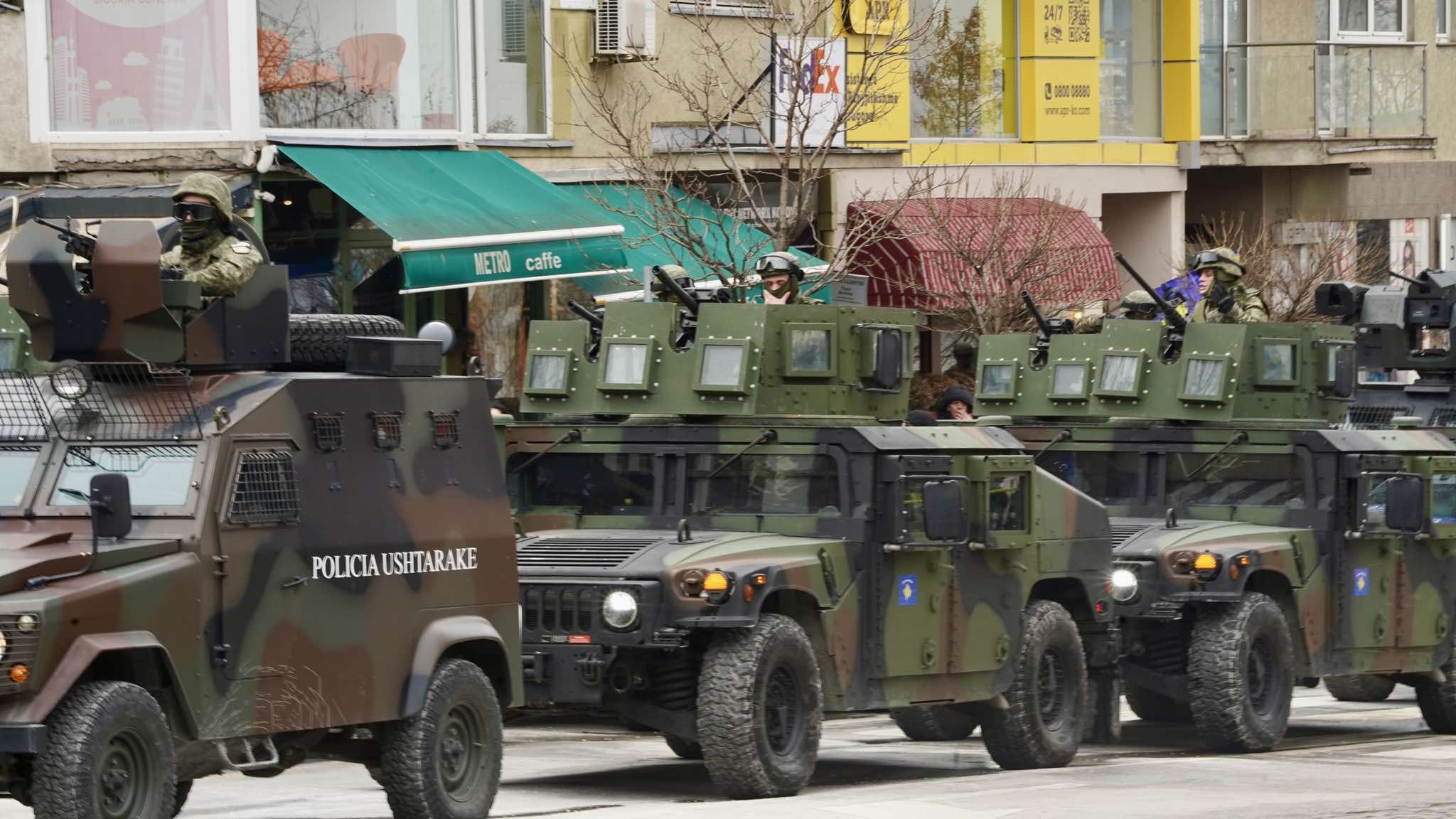
Military power investments in regional countries
Geopolitical circumstances in the world have made the increase in military spending in the six western Balkan countries inevitable.
These developments reflect a new security reality, where countries in the Balkans are preparing to face possible challenges.
While Kosovo, Albania, and Croatia have increased defense spending, Serbia has already begun investing significantly in this area.
Security experts see investments in defense as a strategic necessity, given regional tensions and global instability.
As a result of geopolitical circumstances in general, and the specific threat from Serbia, Kosovo has also increased its defense investments in recent years.
Kosovo's defense budget has been increasing year by year. In 2021, 69 million euros were invested, in 2022, 97 million euros, in 2023, 116.4 million euros, and in 2024, 153 million euros. In 2025, Kosovo's defense budget will increase to 208 million euros.
The Acting Prime Minister of Kosovo, Albin Kurti, has promised a defense budget of over 1 billion euros for the next four years.
Serbia is the country in the region that has invested the most in its military, allocating 2.2 billion euros for defense in 2025, compared to 1.5 billion euros in 2021.
Albania has also increased its defense budget for 2025, with a planned budget of 526 million euros, compared to 270 million euros in 2021.
Croatia is also not left behind, with its defense budget for 2025 reaching approximately 1 billion euros. Other countries in the region such as North Macedonia and Montenegro have also increased defense spending.
North Macedonia's defense budget in 2024 was 329 million euros, of which 106 million euros were for purchasing new equipment and modernizing the army, while Montenegro allocated 150 million euros for defense in 2024.
Gurakuc Kuci from the Octopus Institute says that after the start of the war in Ukraine, the demand for rearmament is high from states, but in our region, the reasons for arming differ. He points out that countries like Kosovo, Albania, and Croatia arm themselves mainly for the defense of their own country, while countries like Serbia arm themselves with expansionist intentions, aiming to complete the idea of a 'Serb world.'
University professor Mazllum Baraliu told KosovaPress that with the geopolitical changes in the world, a new world order is developing, where risks are evident, and it is strategically right for the countries in the region to arm themselves.
In addition, CNN reported that the public reprimand that Donald Trump gave to Ukrainian President Volodymyr Zelensky at the White House was like a thunderclap for the transatlantic alliance, shattering the remaining illusions in Europe about whether the U.S. would stand by it in the face of Russian aggression.
Shaken and perhaps even frightened, Europe may finally have come to its senses about its defense needs in the Trump era.
The continent has begun to break decades-old taboos on defense issues. Policies that until just a few weeks ago would have been unimaginable are now being discussed.
The biggest change has come from Germany, Europe's largest economy. After the federal elections, the incoming Chancellor Friedrich Merz won a vote in parliament to remove the "debt brake" from the German constitution – a mechanism that limited government borrowing.
In neighboring France, President Emmanuel Macron – who has long called for European strategic autonomy from the U.S. – has said he is considering extending France’s nuclear defense to its allies, who currently rely on American nuclear weapons.
CNN writes that even mandatory military service is returning to the continent, and traditionally neutral countries are reconsidering their positions.
Meanwhile, the President of the European Commission, Ursula von der Leyen, presented a multibillion-euro defense spending plan, initially called “ReArm Europe.” Spain and Italy opposed it. The plan is now renamed “Readiness 2030.”