Kosovo, the most vulnerable country to hybrid warfare
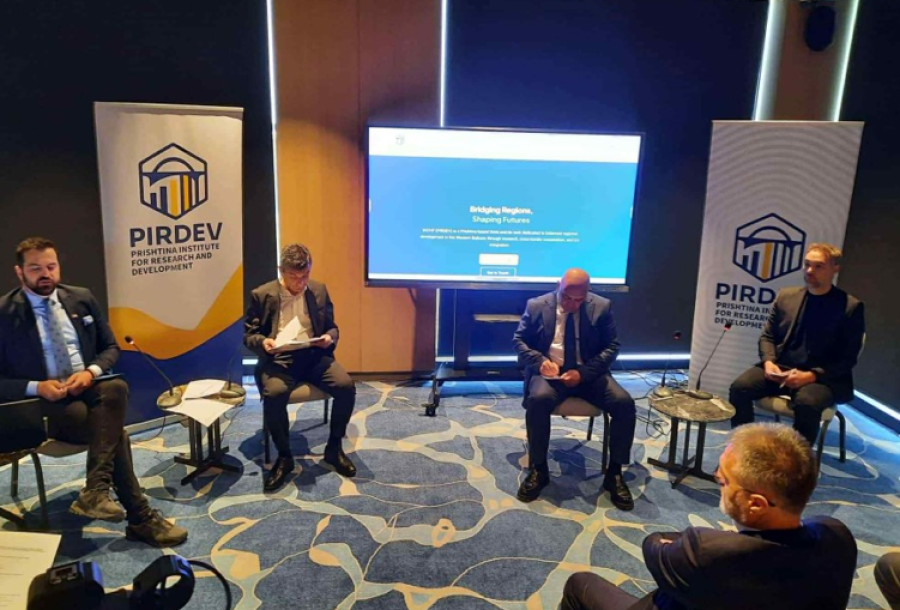
The Institute for Research and Development in Prishtina (PIRDEV) held a conference on Thursday regarding cross-border cooperation, with the theme “A New Integration Model for the Western Balkans,” KosovaPress writes.
The first panel discussed democracy in the hybrid era, hybrid threats, election integrity, and external influences. Among other points, it was stated that Kosovo is the most vulnerable country to hybrid warfare.
The conference also featured the Deputy Prime Minister of North Macedonia, Izet Mexhiti, who said that his country faces hybrid warfare and fake news but is continuously working to build defenses against this type of warfare.
Speaking about election integrity, he said that the fairest electoral system is when the mandate is taken directly from the citizen and not delegated. He even praised Kosovo for its electoral system and open lists, stating that in North Macedonia, the proportional system is used, where deputies are mostly those loyal to the political leader.
“North Macedonia faces fake news and hybrid warfare, and we try to keep up even though we are limited by budget. However, work is ongoing to build protection against this warfare, which is a current problem for any government, especially in the region. In principle, I believe it is fairer when the mandate is taken directly from the citizen rather than delegated, although those models have their nuances. But I think the best model is Kosovo’s open lists, which allow deputies to be those who are most voted for and supported. In North Macedonia, the proportional system is used, which mostly respects loyalty to the leader,” he said.
Kosovo, according to the Mayor of Gjakova and Deputy Chairman of the Alliance for the Future of Kosovo, Ardian Gjini, is the most vulnerable country to hybrid warfare in the region.
During the discussion, he said hybrid warfare has been used in the most sophisticated way for a long time in Kosovo. He believes that the main goal is to create confusion among citizens.
Regarding democracy and election integrity, Gjini emphasized the need to remove preferential voting in Kosovo, as he believes representation in the Assembly is not qualitative.
“Kosovo is more vulnerable than any other country in the region to hybrid warfare. Hybrid warfare, in its most sophisticated form, has been used for a long time. We have been the target of that war for a long time. It aims to create confusion and uncertainty about what we want… The quality in the Kosovo Parliament is increasingly fragile. Open lists are not the problem. The list system works in other countries and is not problematic because open lists allow any candidate with greater support to rank higher. But the problem lies with preferential voting, which is useless. This happened because some representatives fear there could be significant changes in the lists,” Gjini stressed.
On the other hand, the director of Plug and Play Tech Center for the Western Balkans, Uranik Begu, raised his concern that technological development will become more sophisticated and will give more opportunities to those aiming for destabilization and interference in different countries, mainly through fake news.
“This is a phenomenon and process that will escalate even more. The possibility and development of technology will enable those aiming for destabilization or to create what is called ‘fake news’ to have sophisticated technology,” he added.
Additionally, the conference discussed cross-border cooperation and micro-regions.
/KosovaPress/