Kosovo on the brink of a demographic change: Population decline requires urgent action
Kosovo has experienced a decline in population in recent years, driven primarily by two factors: high emigration and a drop in birth rates. As a result, the population decrease requires urgent action from the state.
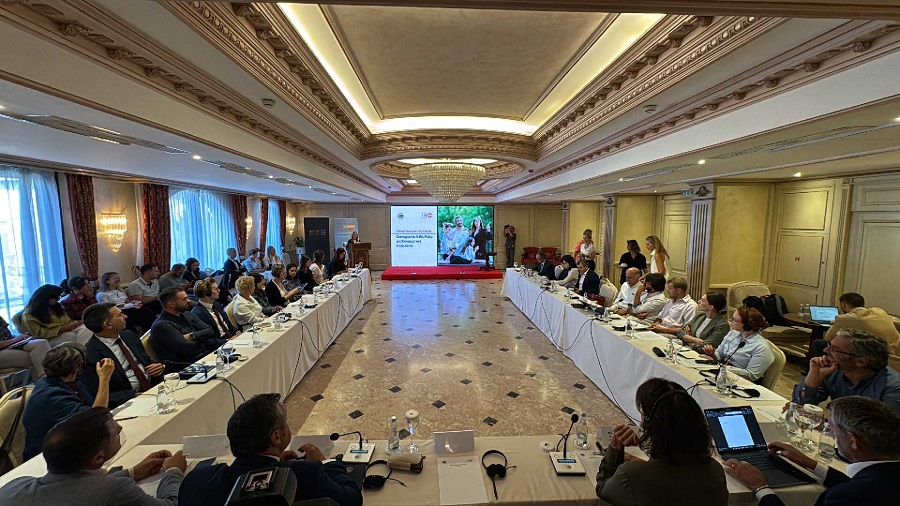
This was emphasized today in Pristina, during a roundtable held as part of the World Population Day observance.
The United Nations Population Fund (UNFPA) presented its global report
"The State of World Population 2025: The Real Fertility Crises," addressing one of the most serious modern-day challenges—the inability of many individuals to build the families they want.
Visare Mujko-Nimani, Head of the UNFPA Office in Kosovo, stressed that the real issue is not the declining fertility itself, but the systems that prevent individuals from having the children they desire.
She emphasized the need for immediate investment in affordable childcare, paid parental leave for both parents, and flexible working conditions that do not penalize parenthood.
“The real crisis is that many people can't have the families they want. The UNFPA Global Report ‘State of World Population’ shows that people still want an average of two or more children. But often, the system stands in their way. They cannot afford childcare. Housing is too expensive. Jobs are insecure and workplaces inflexible. Women in particular face impossible choices between motherhood and career progression. Marginalized groups, including single parents and LGBTQI+ individuals, still face legal, social, or financial barriers. Kosovo is no exception… Rather than trying to ‘fix’ fertility, we must fix the systems that are failing families. We must invest in quality and affordable childcare, giving parents real choices. Provide paid parental leave for both parents, to share the care and prevent women from being penalized. Promote flexible working conditions so that having a child doesn't mean losing a career,” Mujko-Nimani said.
Arnhild Spence, UN Resident Coordinator in Kosovo, stressed that Kosovo must act now to benefit from the demographic dividend before it begins to shrink.
She also warned of visible demographic shifts in the country, highlighting that Kosovo’s population is no longer growing.
“Although the population is still very young, it is no longer growing and, since the last census in 2011, the population has declined by 8 percent. Fertility has dropped from 2.3 to 1.8, and there is a growing share of elderly people. This shift presents both challenges and urgency, and the window to benefit from the demographic dividend is narrowing. Kosovo must act now to build a future that retains its people, supports families, and creates conditions where everyone can thrive. This means investing in human capital, education, healthcare, social protection, and skills—as well as in stronger care systems that recognize unpaid care work, women, professional caregiving, and the right to family life,” she said.
Alban Hashani, Executive Director of the Riinvest Institute, said that the 2024 census data clearly shows that demographic transformation is accelerating.
He underlined that spatial inequalities are increasing, with cities like Pristina continuing to grow, while small municipalities, especially in border areas, are becoming depopulated.
“With the conclusion of the 2024 population census, we now have comprehensive and reliable demographic data that shows significant transformations in Kosovo’s society. The results call for deep reflection. Kosovo has experienced a population decline driven mainly by two factors: high emigration and declining birth rates. At the same time, improved healthcare services and living standards have increased life expectancy, meaning Kosovo is transitioning into an aging society, and the window to benefit from its youth is narrowing and requires immediate action. The report also highlights spatial and social inequalities. While major centers like Pristina are growing, smaller municipalities—especially those in border areas—are experiencing significant shrinkage. It’s been documented that many settlements which had residents in 2011 now have zero population,” he said.
According to official data, from 2020 to 2024, over 151,700 citizens of Kosovo left the country for more developed states in search of a better life, as reported by KosovaPress.