Janjic: Serbia is experiencing “military repression” – regional stability at risk
Interviews
Read in: 3 min.
10 month ago
Link copied
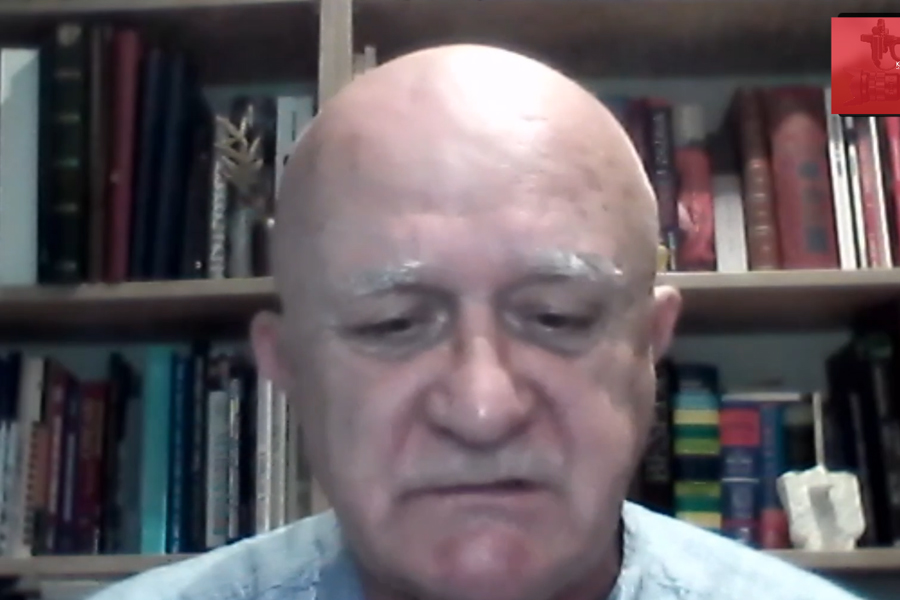
Serbia is facing a dangerous escalation of the security situation, which Serbian analyst Dusan Janjic describes as “military repression” against citizens. In an interview for KosovaPress, he stated that police forces, the prosecution, and other institutions are acting on the side of President Aleksandar Vucic’s loyalists, which also include paramilitary groups linked to crime and drug trafficking.
The crisis in Serbia escalated following the tragedy of November 1, 2024, in Novi Sad, where the collapse of a train station roof left 16 dead and triggered a wave of student-led protests against corruption and institutional incompetence. For more than 10 months, citizens have taken to the streets to express discontent with the government, while Vucic’s regime has used open violence to suppress them.
The situation with the protests in Serbia further escalated on Tuesday, when supporters of the Serbian Progressive Party attacked demonstrators in Backa Palanka and Vrbas.
Escalation of violence
“It is true that over the past two nights, Serbia’s security destabilization has intensified. Essentially, we can now speak of a kind of military repression, not just police repression against citizens. What is truly strange is that the police forces, prosecutors, and others are siding with the so-called loyalists—people who support Vucic and his government—but they act against the citizens,” he said.
Presence of paramilitaries linked to crime
According to Janjic, dangerous criminal structures are also among Vucic’s “loyalists.”
“An interesting security element is that among the so-called loyalists, who label themselves as such, there are many paramilitaries who are criminals connected to drug trafficking. All this, combined with the lack of legality and public support for the president, shows that we are facing a deep security crisis, where the president himself, who does not act like a president, behaves as the leader of a publicly non-existent movement. He is very active in announcing repression and leading a kind of war—propaganda,” he said.
Risk to regional stability
Janjic warned that the current situation may have consequences beyond Serbia’s borders.
“We now have a situation that can be considered a very serious risk for Serbia, including crossing the line into police torture, various clashes between citizens and police, as well as possible military conflicts between citizens and people supporting the president. It is not only a matter of Serbia’s stability and security. Preventing escalation, according to information from international sources, has also become an issue of regional stability and security,” he emphasized.
Vucic’s political paradoxes
While violently suppressing protests, Aleksandar Vucic declared on Thursday that he would not run in the next presidential elections, claiming that he is “not a dictator.”
Janjic noted that this is another example of the paradoxes of his politics, citing the example of the Serbian List, which after boycotting local elections in northern Kosovo, is now returning to the elections.
“This [Vucic’s statement that he is supposedly not a dictator] shows the paradoxes or the ‘schizophrenia’ of Serbian police policy and Vucic’s politics,” he said. /N. Jakupi