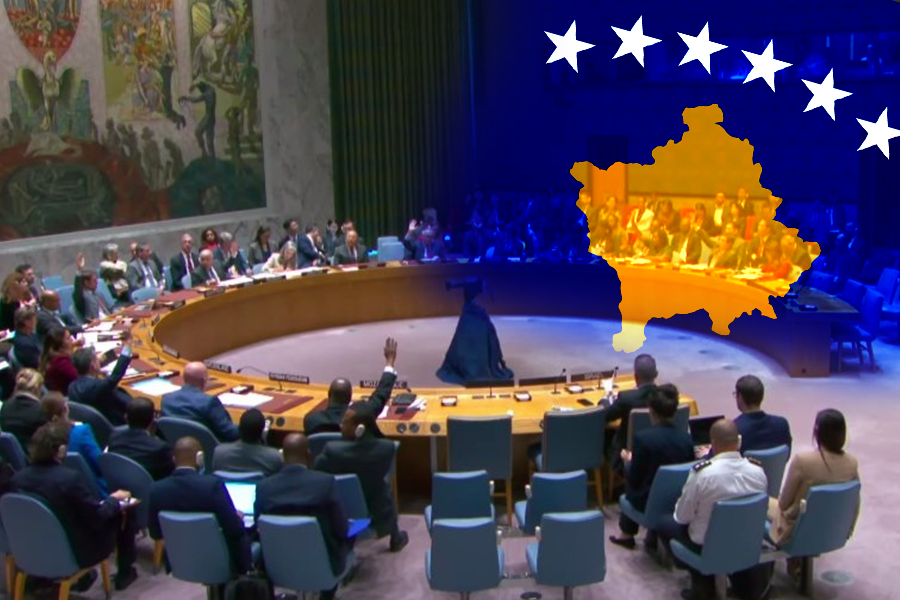
How is Kosovo's representation in the UN being assessed?
Kosovo’s representation during the High-Level Week of the 80th Session of the United Nations General Assembly is being considered weak and lacking official high-level meetings, according to international relations experts. They say that Kosovo’s President, Vjosa Osmani, and acting Minister of Foreign Affairs, Donika Gërvalla, are “meeting diplomats only in the corridors,” referring also to the meeting that the head of state had with U.S. Secretary of State Marco Rubio, KosovaPress reports.
After acting Prime Minister Albin Kurti also traveled to participate in the margins of the UN summit, the same experts say that the lack of formation of new institutions and the absence of full competencies presents a negative image internationally. On the other hand, the official meeting that Serbian President Aleksandar Vučić had with U.S. Secretary of State Marco Rubio is also seen as concerning.
KosovaPress sent questions to the Presidential Office about whether Osmani would hold official meetings with other senior U.S. officials, but no response has been given.
According to announcements from Osmani and Gërvalla, they have held numerous meetings with international counterparts and representatives.
In addition to the meeting with Rubio, President Osmani announced that she held a meeting with senior U.S. State Department official Brendan Hanrahan. These meetings occurred a few days after the United States decided to suspend strategic dialogue with Kosovo, reportedly due to actions by Kurti’s acting government.
She also held an official meeting with the EU High Representative for Foreign Affairs and Security Policy, Kaja Kallas.
Nevertheless, international relations professor Dritëro Arifi told KosovaPress that since there have been no official meetings with senior U.S. administration officials, it is seen that Kosovo does not have strong U.S. support. In the absence of this support, Kosovo officials are seen holding weak corridor meetings.
Regarding this, he says the impact of these meetings on changing foreign policy toward Kurti’s government is small.
“Two reasons explain why our foreign policy is weak at the UN session. First, there are two very large wars that take energy and carry high risk, conflicts bigger than ours, such as the war in Ukraine and Gaza. Second, it is weak because Kosovo does not have strong U.S. support. Without U.S. backing, meetings like those of the president or acting foreign minister are extremely weak, not to say laughable. We are talking about 2025, and in the corridors we met before and after the war, but since independence, the approach has changed, and it seems we have returned to pre-independence times, meeting fourth- or fifth-tier figures. Their impact on changing foreign policy toward this government or this governance mentality is zero,” he emphasized.
Meanwhile, another international relations professor, Afrim Hoti, says that Kosovo’s weakness in the international arena and its meetings during the High-Level Week of the 80th UNGA session is due to the lack of formation of new institutions.
According to him, despite acting Prime Minister Albin Kurti’s participation, Kosovo is showing on the international stage that it does not have the maturity to form its own institutions.
“Yes, for this time period we can only talk about losses. It is absolutely anachronistic to try to say anything positive. After all, our elections have been more or less held, and the U.S. elections too. There, power was transferred from one party to another, the government was taken over, and today the global order has almost changed. Unfortunately for us, we still have not managed to constitute the Assembly, and this is naturally seen as a negative action for the political and legal international image. Kosovo on the international stage has shown it does not have the maturity to form its own institutions,” he emphasized.
Referring to Serbian President Vučić’s official meeting with U.S. Secretary of State Rubio, Professor Arifi says this should be an alarm for the acting government and the president.
“When Serbia manages to meet with the number one person at the State Department, it should be an alarm for all citizens of Kosovo, and especially for the government and the president. They should ask themselves where they have failed,” he added.
Meanwhile, the Prime Minister’s Office announced on Thursday that acting Prime Minister Albin Kurti has traveled to the 80th UNGA session, where he will hold bilateral meetings with leaders.
Meanwhile, President Vjosa Osmani, as part of her meetings in New York during the High-Level Week of the 80th UNGA session, met with NATO Assistant Secretary General, Ambassador Boris Ruge.
The Ministry of Foreign Affairs announced that Gërvalla has held a series of meetings with senior representatives of states and international organizations, where the most important global challenges—from security and regional issues to economic development and strengthening cooperation between countries—will be addressed.