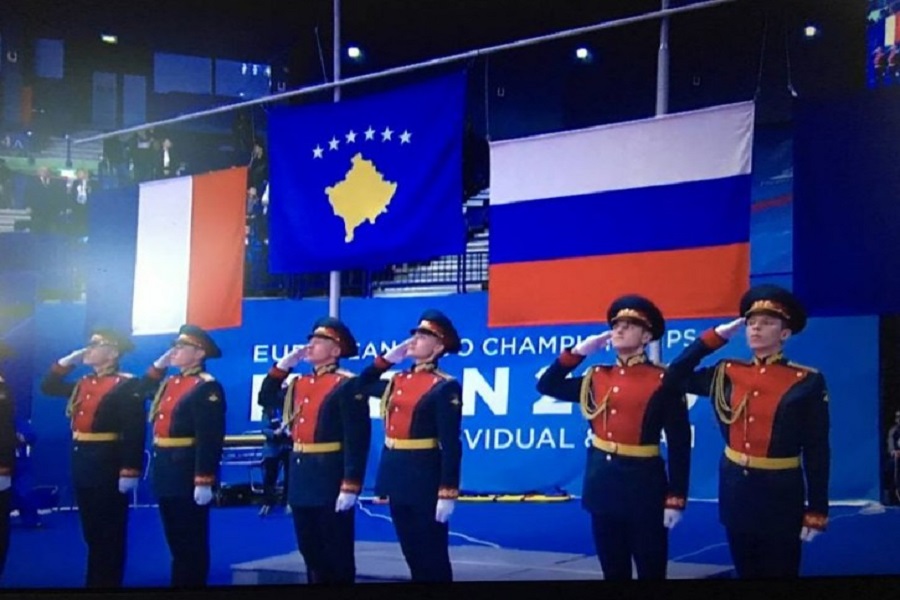
Today, on February 17, Kosovo marks the 18th anniversary of the declaration of independence, a journey that, alongside political and social challenges, has also been accompanied by remarkable sporting successes, which have raised the flag of Kosovo on the international stage and made history.
The sport that brought Kosovo its greatest international glory is undoubtedly judo.
The historic peak came at the Rio 2016 Olympic Games, where Majlinda Kelmendi won the Olympic gold medal, giving Kosovo its very first Olympic medal.
Success continued with Distria Krasniqi and Nora Gjakova, who won gold medals at the Tokyo 2020 Olympic Games, turning Kosovo into an Olympic powerhouse in judo, despite its small size.
The admission of the Football Federation of Kosovo into UEFA and FIFA in 2016 marked a new era.
A memorable moment was the 2–1 victory over the Czech Republic in the UEFA Nations League, as well as Kosovo’s historic promotion to League B—a success that placed Kosovo among Europe’s competitive national teams.
Footballers like Vedat Muriqi became ambassadors of the state in Europe’s top leagues.
Kosovo also made its debut in European basketball qualifiers, achieving historic wins against established teams. The national basketball team showed that Kosovo has potential and a promising future in this sport as well.
Beyond judo, Kosovar athletes have achieved significant successes in boxing, karate, athletics, and weightlifting, winning medals in European and world championships for both youth and senior categories, making Kosovo an integral part of international sport.
Over these 18 years, sport has become one of the main pillars of Kosovo’s state identity, a powerful form of diplomacy, and an endless source of pride for its citizens.
From Olympic medals to historic football victories, from world competitions to European podiums—Kosovo has proven that it may be small in territory, but it is big in heart and talent.
In its 18th year of independence, Kosovo enters a new ambitious chapter in football. The national team aims, for the first time, to qualify for the 2026 FIFA World Cup, a historic goal that would mark the pinnacle of Kosovo’s football development.
With a generation of footballers active in Europe’s elite leagues and the continuous improvement of quality, Kosovo enters these qualifiers with confidence, ambition, and strong support from its fans.
Beyond competitive goals, Kosovo is also preparing for a historic organizational moment: hosting the 2030 Mediterranean Games.
This major international event, expected to take place in Pristina and other cities across the country, will place Kosovo at the center of Mediterranean sport, boosting the development of sports infrastructure, tourism, and the international recognition of the state.
The 2030 Mediterranean Games are considered not just a sporting event, but a strategic national project that demonstrates Kosovo’s institutional maturity and organizational capacity.
KosovaPress