
The Kosovo Energy Regulatory Office’s decision on businesses entering the open energy market has an almost destructive effect on the local economy.
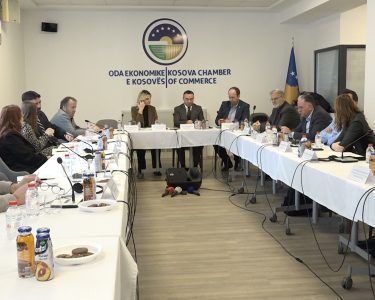
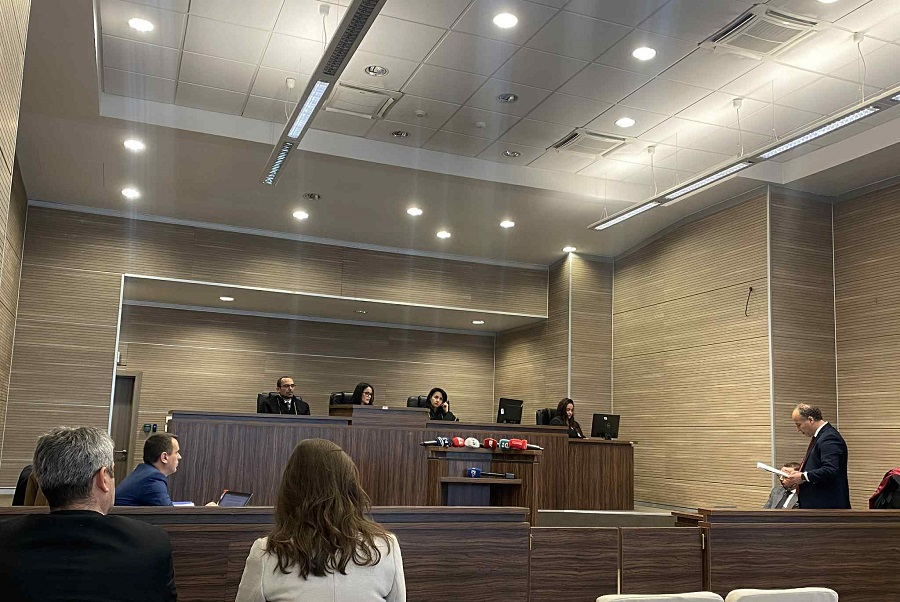
This was stated by the lawyer of the Kosovo Chamber of Commerce (KCC) at the Supreme Court hearing regarding the lawsuit filed by KCC against the Energy Regulatory Office (ZRRE) over the mandatory transition of businesses to the liberalized electricity market. During this hearing, which focused on electricity issues, there were occasional power outages.
The lawyer of KCC, Ekrem Hoxha, while presenting the lawsuit, stated that the business community was not prepared for this process, which he assessed as having an almost destructive effect on the local economy.
“Not that they opposed the process of liberalizing the electricity market, but they emphasized the need for a transitional phase to reach this process, since the business community or non-household consumers were unprepared for a radical change with an almost destructive effect on the local economy. The defendant, with stubbornness and unjustified administrative-legal refusal, despite having a legal obligation from the law on electricity to implement the transitional phase mentioned in the lawsuit, violated the law — here the illegality comes into play, as it had the legal duty to conduct a real competition analysis in the electricity sector, which it did not do, and consciously avoided this legal obligation, creating advantages for a private operator like KESCO, as well as some other recently licensed commercial operators, to mask the so-called real competition in the market,” he declared.
Hoxha emphasized that ZRRE’s reasoning that the liberalization of the energy market is a legal obligation is weak.
“Real competition in the market is also proven by public data, which does not exist at all. Why do we say this? Because these other operators do not guarantee electricity supply, and in 90% of cases they do not even submit offers in response to non-household consumer requests. The electricity law itself states that it is partially aligned with EU directives, and the defendant’s reference that liberalization is a requirement from these directives is only a weak justification for a decision made by ZRRE,” Hoxha stated.
Meanwhile, ZRRE’s legal representative, Ymridin Misini, stated that the lawsuit filed by the Kosovo Chamber of Commerce has no legal or factual basis.
“ZRRE completely rejects the lawsuit and the plaintiff’s claims as legally and factually unfounded. All contested acts were issued in direct implementation of ZRRE’s legal powers under the Energy Regulatory Law and the Electricity Law… The 2017 Guide and subsequent amendments were temporary acts that determined phases and deadlines for the gradual opening of the electricity market… At the time the lawsuit was filed, these acts had fulfilled their function and legal effects, as all measures outlined in them had been completed, while the liberalization of the market for commercial consumers had already been implemented and was in effect according to the Electricity Law. Therefore, these acts no longer produce any legal effect and cannot be subject to annulment,” he declared.
Misini added that the process of liberalizing the energy market is a legal obligation, and ZRRE has acted in accordance with its legal and international competencies.
ZRRE’s legal representative emphasized that the liberalization of the electricity market has not left any consumer without electricity supply.
“ZRRE acted fully in compliance with its legal obligations, and the plaintiff’s claims that ZRRE acted beyond its competence are unfounded… All commercial consumers have signed contracts with private suppliers, and the electricity market for this group of consumers is liberalized and functioning in accordance with legal obligations. Based on this, we propose that the Supreme Court reject the plaintiff’s lawsuit as inadmissible and unfounded,” he declared.
At the end of this Supreme Court hearing, the judicial panel announced that the decision will be communicated to the parties within the legal timeframe.
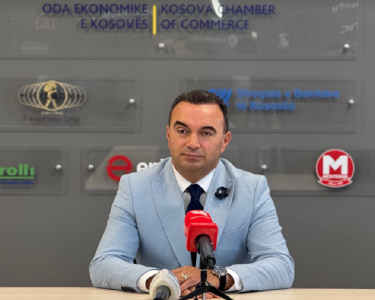
After the Supreme Court hearing, the President of the Kosovo Chamber of Commerce, Lulzim Rafuna, stated that they had argued before the court that the liberalization of the electricity market did not go as it should have.
“These were unsustainable facts, and we argued the opposite before the judicial panel. We argued that the process of liberalizing the electricity market did not proceed in the proper manner or according to the principles recognized not only by Kosovo law but also by EU directives on market liberalization. We had the opportunity to present arguments from a legal perspective, showing how the legal acts were not in order according to legal provisions, as well as how the liberalization process itself was flawed. ZRRE’s notice caused a material effect with a negative impact on businesses, affecting the businesses themselves. We have full confidence that the judicial panel will review all the evidence and facts and deliver a fair decision that will protect businesses and the Kosovo economy,” Rafuna said.
On August 19, 2025, the Kosovo Chamber of Commerce submitted a lawsuit against the Energy Regulatory Office regarding the transition of businesses to the liberalized electricity market.
ZRRE’s decision on market liberalization came into effect on June 1, 2025, mandating that all companies with more than 50 employees or an annual turnover above €10 million must transition to the open market.
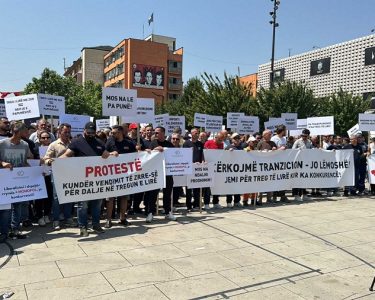
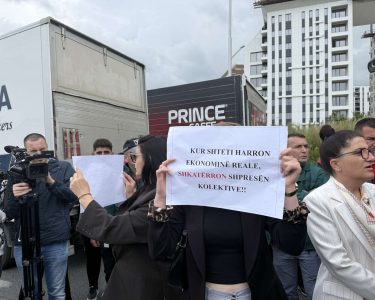
Local businesses have expressed deep concern over the liberalization of the energy market, which, according to them, seriously risks their financial stability, the existence of many companies, and the potential mass layoffs of employees.