Women’s participation in employment continues to be one of the main challenges in Kosovo, often limited to certain sectors, with lower wages and undignified working conditions.
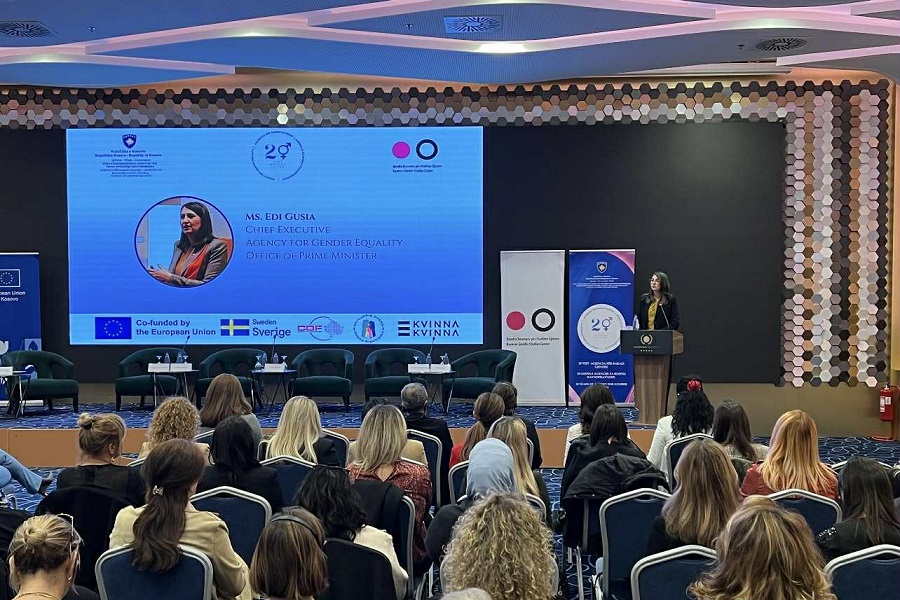
This was stated at a consultative meeting organized by the Agency for Gender Equality within the Office of the Prime Minister on the topic “Women’s Safety in the Workplace.”
The Executive Director of the Agency for Gender Equality, Edi Gusia, emphasized that the inadequate inclusion of women and girls in the labor market constitutes a serious obstacle to the country’s economic development.
“Inadequate inclusion of women and girls in the labor market is not only an issue of equality; it is also a serious obstacle to the country’s sustainable economic development. Women’s participation in the labor market is challenged by multiple factors: lack of institutions and childcare support, the daily struggle to balance school-aged children’s needs with work schedules, and harmonizing work hours with mothers’ responsibilities. Women’s participation in employment remains low, often limited to certain sectors, with lower productivity, lower wages, and undignified working conditions,” said Gusia.
Meanwhile, the Deputy Head for Cooperation at the European Union Office in Kosovo, Alessandro Bianciardi, highlighted the importance of civil society’s role and women’s empowerment in the labor market.
Empowering women to work free from fear, discrimination, and harassment, according to Bianciardi, is essential for Kosovo’s European perspective.
“Civil society remains a key partner in monitoring, awareness-raising, and reporting. Empowering women to work free from fear, discrimination, and harassment is crucial for Kosovo’s European perspective, social justice, and sustainable economic growth. Let today’s consultation strengthen our joint commitment to move from policy to practice and ensure that the safety, dignity, and potential of every woman are fully protected in the workplace,” emphasized Bianciardi.
Meanwhile, the Head of UN Women in Kosovo, Vlora Tuzi Nushi, stated that the number of women in the formal labor market remains low, while her organization is working to address the causes preventing this inclusion.
“In Kosovo, according to all reports and even the latest analyses prepared for the Gender Equality Plan, we remain in a very small number of women in the formal labor market. As UN Women in Kosovo, we have also worked on addressing these reasons, first by conducting a comprehensive analysis of the legal framework related to the labor market, including relevant laws. We have also worked with the labor inspectorate on training and capacity building for inspectors in investigating cases of sexual harassment,” said Tuzi Nushi.
The consultative meeting with institutional actors, experts, and representatives from civil society continued with panels discussing further the challenges faced by women and girls in the workplace.