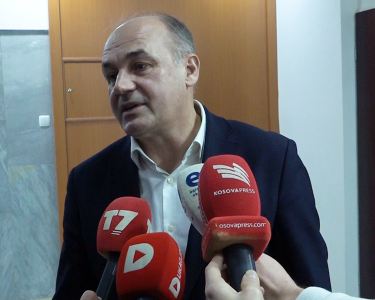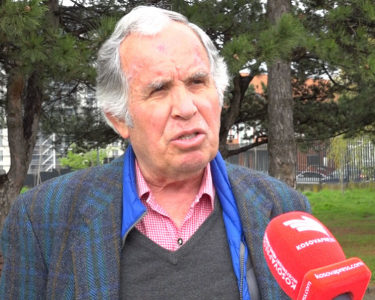

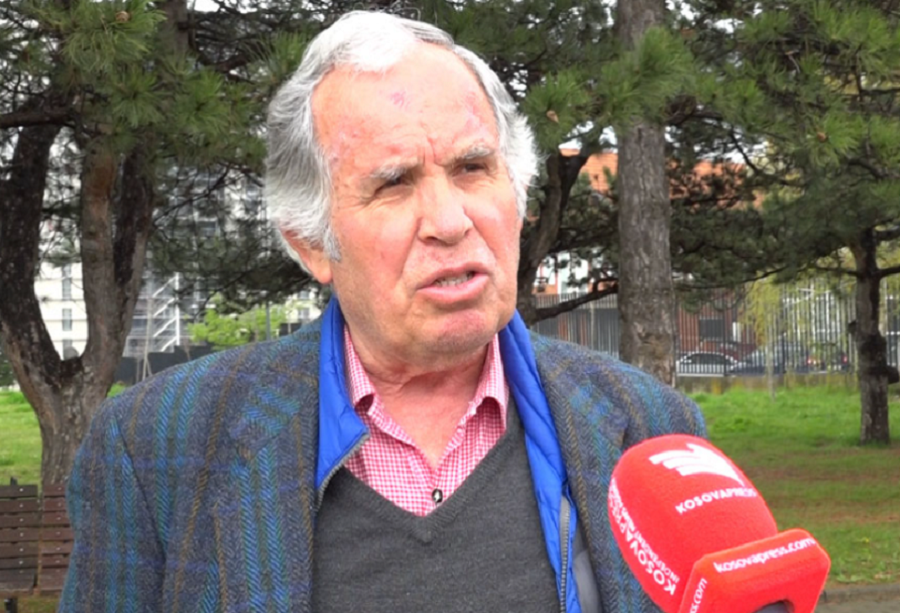
At least two candidacies with thirty MPs’ signatures are needed to convene a session of the Assembly for the election of the president, says constitutional expert Mazllum Baraliu.
Explaining the presidential election procedures, he states that in the first two rounds a candidate must receive 80 votes to be elected president. If this is not achieved, then in the third round the candidate who secures at least 61 votes becomes president, but again on the condition that at least 80 MPs are present at the session. Otherwise, according to him, the country goes to early elections. In addition, he says the Constitution is silent on whether more than one session may be held for the election of the president before March 4, which is the final deadline for this process.
The mandate of President Vjosa Osmani ends on April 4. According to the Constitution of Kosovo, a new president must be elected no later than 30 days before the end of the current president’s mandate — meaning by March 4.
What are the procedures for electing the president?
“The necessary condition to be nominated and to run as a candidate for president is that every citizen of Kosovo who holds Kosovar citizenship and is over 35 years old must secure at least 30 MPs’ signatures in order to be nominated and compete in the Assembly. Then, at the Assembly session scheduled to elect the president, there must be a secret ballot; secondly, there must be a quorum of at least 80 MPs. Thirdly, all of them must vote in favor, against, or abstain. In the first two rounds, if the candidate is elected by a majority of votes, he or she is elected. If not, in the third round the Constitution says there is a possibility that the future president can be elected with 61 MPs’ votes. If this does not happen in the first, second, or third round, the Constitution states that the Assembly is dissolved and within 45 days new, early and extraordinary elections must be organized,” he says.
According to Baraliu, the Constitution does not mention at all the possibility of convening more than one session for the election of the president before March 4, in case of a possible failure.
“The Constitution is silent — I am explaining the silence of the Constitution — on whether another session should or can be organized, as you suggested in your question, potentially having two sessions and so on. The Constitution is not defined in these elements. It remains to be interpreted, naturally by the Assembly and possibly by the Constitutional Court, if we come to such a situation,” Baraliu declares.
The constitutional expert says MPs are obliged to remain in the hall at the moment of voting for the president, referring to the latest ruling of the Constitutional Court of Kosovo regarding the constitution of the Assembly.
“In those decisions of the Constitutional Court, its rulings clearly and openly state that MPs, being representatives of the people, are obliged, in the case of voting for the Speaker or Deputy Speaker of the Assembly, to be present in the hall and to vote in favor, against, or abstain. The same applies in this case and this is very important that you raise it as a question and that it is understood, because it is not being mentioned often or given special emphasis — that opposition MPs, who are announcing, or political party representatives who are saying they will or will not be present, have the duty to be there and to vote in favor, against, or abstain,” Baraliu stresses.
He also has a call for Lëvizja Vetëvendosje and Lidhja Demokratike e Kosovës, which according to him should vote for Vjosa Osmani as president.
“Not nominating Ms. Osmani by Vetëvendosje would bring damage and consequences both to Vetëvendosje and to LDK. Therefore, it is in the interest of both parties, because she has announced her political ambitions, she is young, prepared, sufficiently experienced and authoritative even in the international arena, and she can form a political party. Naturally, that political party would compete and take votes if elections are held, because if the president is not elected, we will go to elections. Then it certainly harms, organically and essentially, both LDK and Vetëvendosje,” Baraliu concludes.
The current president, Vjosa Osmani, has expressed ambitions to run for another five-year term, but so far has not begun collecting the thirty signatures. Recently, the candidacy for president was also announced by Academy member and former PDK official Arsim Bajrami.