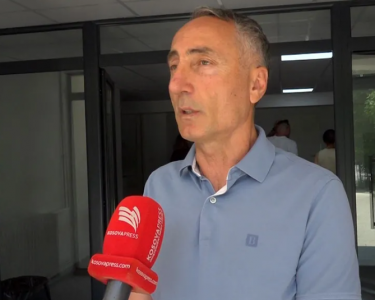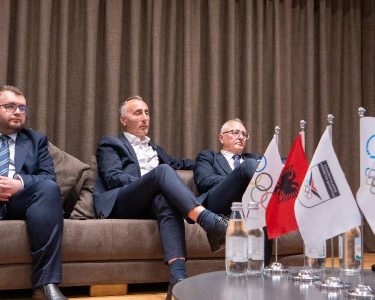

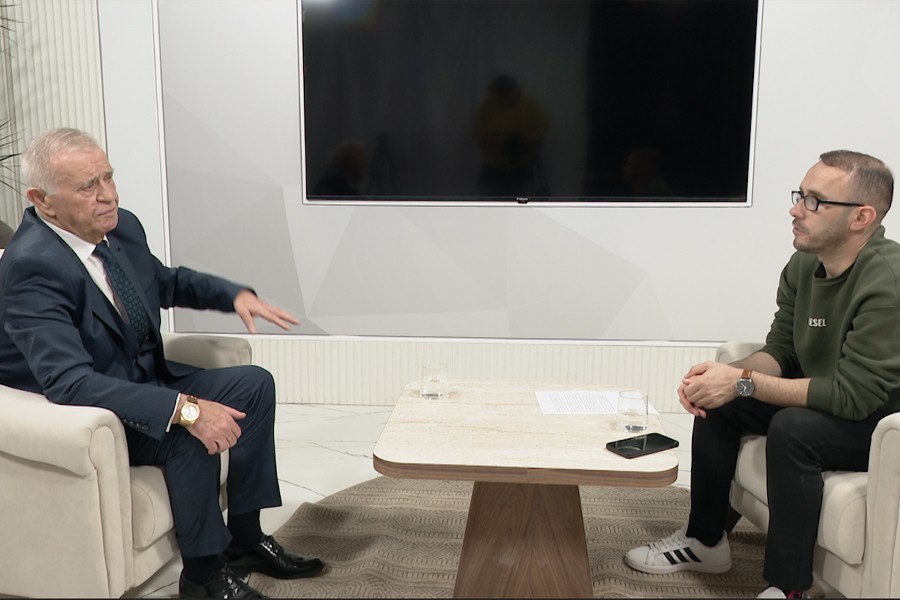
Mehmet Bogujevci, former boxer and champion of the Mediterranean Games, believes that Kosovo has the potential and the human capacities to successfully organize the Mediterranean Games.
Bogujevci, who won the gold medal in the welterweight category (up to 67 kilograms) representing Yugoslavia at the 1979 Mediterranean Games held in Split, shared his assessments of the organizational challenges and expectations for Kosovar athletes.
According to Bogujevci, hosting the Mediterranean Games is a major obligation for any host country, as it requires extensive infrastructure and logistical conditions. He emphasized that the increase in the number of participating countries further adds to the complexity of the organization, making it essential to build an Olympic village, ensure accommodation, and create suitable conditions for hosting and accompanying delegations.
Bogujevci expressed confidence that the Kosovo Olympic Committee (KOK) has the right professional team to handle an event of the scale of the Mediterranean Games, while stressing that institutional support from the state will be decisive for the success of the organization.
“It is a very big obligation. Many conditions are required because there are 25 or 26 countries now—there were 24 when I competed. Now with 26 countries, the number of participants increases. It is very challenging: conditions, the Olympic village is needed, accommodation. Then reception, accompaniment, you need people who know how to speak their languages. There are obligations and major problems, but I hope that with the help of the state we can organize them. The Kosovo Olympic Committee is an exceptionally well-organized organization… and I hope, and not only hope but I am convinced, that we will organize them well because the Committee has a team of people who are capable of organizing them,” Bogujevci says.
Speaking about the sporting aspect, Bogujevci stated that Kosovo will not be left without medals at the Mediterranean Games. He singled out judo as a discipline with world-class level, thanks to continuous international results, especially in women’s competition. He also mentioned other individual sports such as boxing, wrestling, athletics, and swimming, stressing that preparations for potential athletes must begin immediately.
“We have judo without any problem, we have Driton Kuka, we have no issue—without medals we will not remain because we have world-class level. Our girls, the judokas, are at the peak of world sport. But we also have other sports, boxing and other sports, wrestling, individual sports, athletics, swimming. We have candidates who must be prepared. The time is to start preparations so that potential candidates, those who show promise, must start now. Today—tomorrow is late. They must start today,” Bogujevci declares.
Speaking to KosovaPress, Bogujevci shared his personal experience from the Mediterranean Games in Split, where he competed under special circumstances, as at the time he was serving in the army. He recalled that despite military duties, he managed to train and compete, with his success earning him a medal and qualification for the Olympic Games.
“At the Mediterranean Games in Split, I was a soldier. Even from the army I trained, though not as one would like, but at the Mediterranean Games in Split there were 24 countries, the competition was not extremely strong. They told me, ‘You will box in this category.’ After I won the medal, I also earned the right to participate in the Olympic Games. Then at 67 kilograms I earned the Olympic qualification, and I had to box at 67 kg there as well. In fact, my category was 63.5 kilograms,” Bogujevci reveals.
Bogujevci emphasized that his preparation was key to his success, mentioning a three-month period of intensive training at a sports center in Belgrade.
He also recalled tough bouts in the ring, including a problematic semifinal that ended with the disqualification of his opponent, sending him on to the medal.
“I had good opponents, but I was well prepared because I spent three months solely in preparation. On top of that, I trained every day, but for three months I stayed there at the sports center in Belgrade. I was well prepared, I didn’t have any major problems. In the semifinal I boxed against an Italian, I had a problem—he bit me twice. When the referee saw it, he was disqualified. And later, when he won the bronze medal, in the sports hall after the final, when the winners were announced and his name was mentioned, the crowd started booing him,” Bogujevci further emphasized.
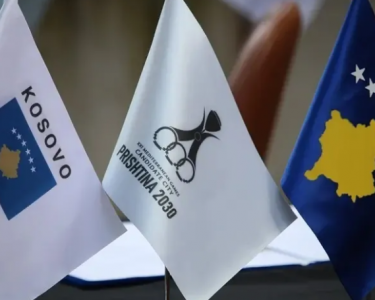
The Mediterranean Games are among the most important multi-sport events in the region, which beyond sporting competition carry messages of cooperation, development, and sports diplomacy. Hosting them in Kosovo in 2030 represents a historic moment for sport and the state, placing the country at the center of international attention and opening the way for long-term investments in infrastructure, organizational experience, and the promotion of Kosovo’s image through sport.