
High-ranking international officials visiting Kosovo are not meeting the acting Prime Minister, Albin Kurti, in his office, as they do not wish to give support to a government without full legitimacy, political analysts say.
According to them, this is a political message of distancing from the current acting government.
Kosovo has not formed its institutions even six months after the parliamentary elections of February 9.
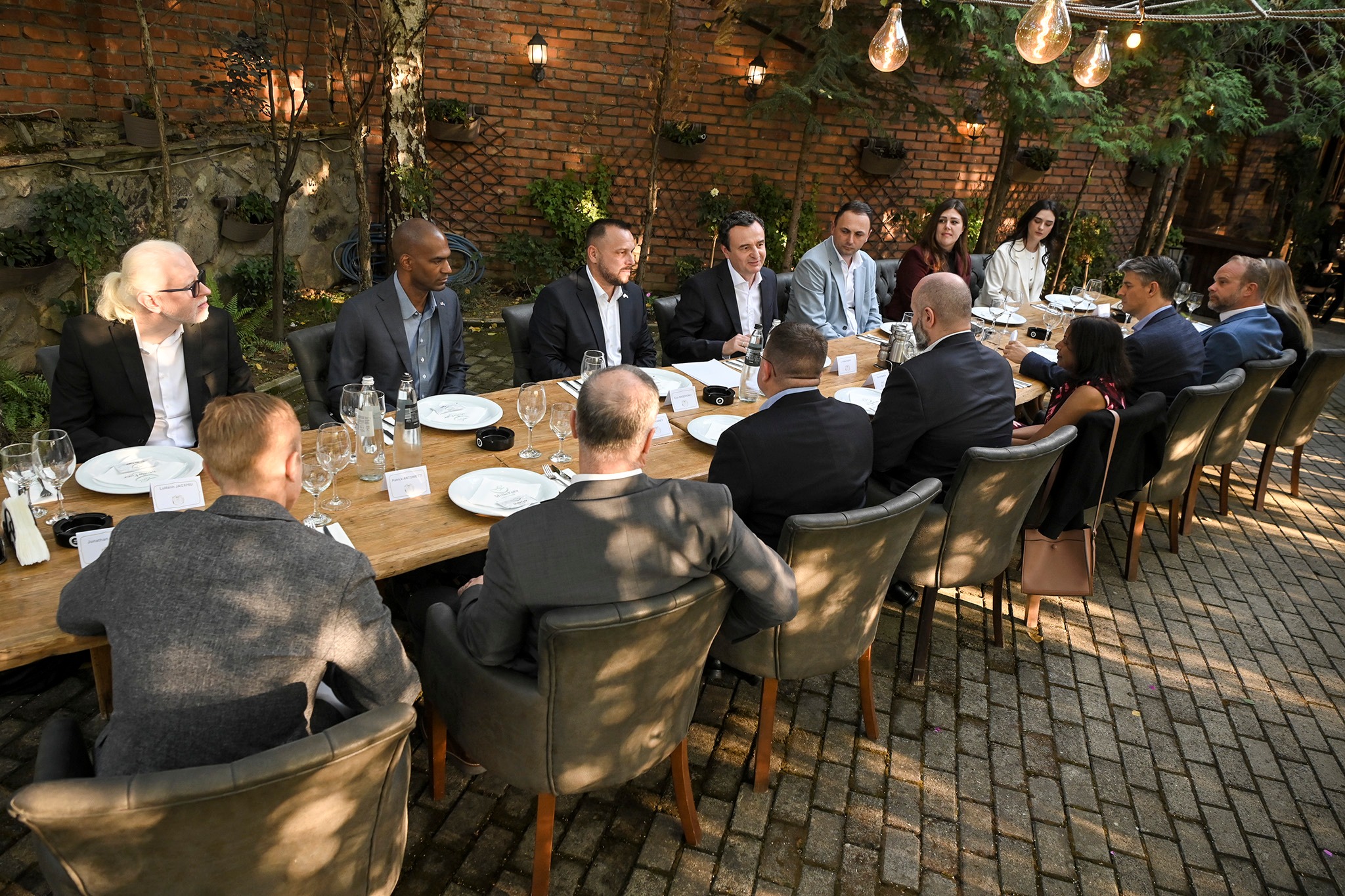
Meanwhile, during this period, the country has been visited by the EU High Representative, Kaja Kallas; the U.S. Senior Bureau Official for the Bureau of European and Eurasian Affairs, Brendan Hanrahan; and most recently, the U.S. Deputy Assistant Secretary of Defense for European and North Atlantic Treaty Organization (NATO) Policy, David Baker — all of whom have met with Kurti, but not in the Prime Minister’s Office, but at official dinners.
The only ones who visited him in the office were the QUINT ambassadors and the EU Special Representative for the Kosovo-Serbia Dialogue, Peter Sorensen.
The Supreme Court, a few weeks ago, issued a decision stating that holding the post of minister while also being a certified MP is in conflict with constitutional provisions.
Professor of European Integration, Dritëro Arifi, told KosovaPress that Kurti’s meetings with international representatives visiting Kosovo are being held outside state institutions because those representatives do not wish to give support to the acting prime minister.
“He has managed to restore himself in government. This is the logic in which Mr. Kurti is operating, consciously or unconsciously. This is normal, as Westerners work according to laws and constitutions. The Constitution of Kosovo does not recognize a situation where half the government consists of both MPs and ministers, including the prime minister. This is an anomaly in how we perceive the law and constitution. Western officials are meeting him in restaurants because they do not want to be indirectly seen as supporting any individual or government without full legitimacy,” he said.
Meanwhile, former diplomat Blerim Canaj says the current institutions lack legitimacy, which is why internationals are meeting Kurti more as the chairman of Vetëvendosje.
According to him, shifting meetings to informal venues is a political message: the international community is keeping its distance from the current government.
“Rule-of-law states usually refer to court decisions. The Supreme Court’s decision has made it clear that we do not have legitimate institutions, and they are more reserved in communicating, for example, with Albin Kurti as prime minister or with ministers who are said to be ministers… For example, usually, in embassy offices, representatives of political parties are invited, or meetings are held in party offices, but not in institutions, because institutions communicate with institutions. If the prime minister of another state visits us, he communicates with our prime minister as an institution. But the prime minister of our state now, according to the Supreme Court decision, is no longer prime minister. And naturally, meetings are then held in different offices, meaning they are simply meeting a person from a political party who has the potential to be prime minister, and they discuss topics,” he said.
After 54 failed attempts to constitute the Assembly, the Constitutional Court ruled on Friday that MPs must elect the Speaker of the Assembly through open voting within 30 days. The Court also ruled that the same candidate can only be voted on up to three times, and that all MPs must participate in the vote.
Parliamentary parties have so far been unable to elect the Assembly’s bodies. Vetëvendosje’s candidate for Speaker, Albulena Haxhiu, has failed six times in open voting to secure the required 61 votes, while in 48 attempts the vote for a secret ballot committee has failed — a process the Court deemed unconstitutional. /E. Zeqiri/