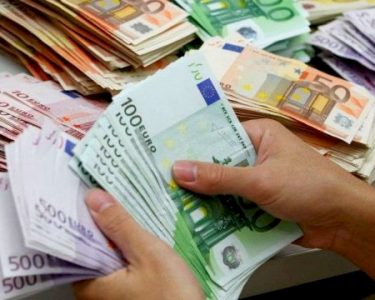

Kosovo citizens have taken on 1.2 billion euros in debt from Kosovo’s banks during the January–May 2025 period alone. This amount marks an increase of 200 million euros compared to the same period last year. The total active loans by the end of May this year reached 6.3 billion euros, compared to 5.2 billion euros in May 2024, according to KosovaPress.
Economic experts believe that loan interest rates remain high and that institutions should do more to bring changes.
Alongside this, there has also been an increase in bank deposits. During the first five months of 2025, new deposits reached over 480 million euros, more than 133 million euros higher than in the same period of 2024.
Economic experts note that the diaspora dominates in depositing funds.
Meanwhile, citizens say loans are taken due to the financial difficulties they face.
“A loan is never small, only taken out of necessity,” says Ejup Musolli.
“A loan is never small, only necessity… I take loans for furniture, for some things. I’ve never taken a big loan for a house,” says Musolli.
Another citizen says he took out a loan years ago.
“I took a loan 30 years ago. Was it hard to repay? No, because it was deducted from my salary,” he said.
The President of the Kosovo Chamber of Commerce, Lulzim Rafuna, says that the rise in household loans is not a good sign. According to him, it shows that families in Kosovo are forced to take out new loans.
“If there’s an increase on household loans, it’s not a good sign. That means our families are having difficulty repaying loans or making purchases, and are therefore forced either to take out new loans or to reschedule them to reduce installment payments and spread them over a longer period,” said Rafuna.
He points out that interest rates in Kosovo’s banks remain high.
Rafuna says the executive, and the Central Bank of Kosovo (CBK) should work harder to lower interest rates.
The average interest rate for new loans is 6.0 percent.
“It’s high. The country’s institutions—in this case, the executive, and the Central Bank of Kosovo—must work harder to lower the interest rate. Many factors influence interest rates. The first is legal security or reform in the rule of law. Not the situations where banks and businesses wait years for cases to be resolved, but they must be solved in a much shorter period,” Rafuna said.
Regarding the increase in deposits, Rafuna says it comes because the diaspora and citizens of Kosovo are no longer investing as much in real estate as before.
“The rise in deposits is, I assume, mostly from Kosovo citizens, but also from our diaspora. If we look at last year’s trend and the beginning of this year, there has been a decline in real estate purchases from our diaspora. Now, the diaspora, as well as citizens of the Republic of Kosovo, are depositing and not investing in real estate as they did before,” said Rafuna.
According to CBK data, during the first five months of 2025, the amount of new loans issued was 1.2 billion euros, compared to 998.0 million euros in the same period of 2024.
The CBK says the total loan portfolio reached 6.3 billion euros at the end of May 2025, compared to 5.2 billion euros in May last year—an annual increase of 1.1 billion euros or 20.9%.
Meanwhile, regarding deposits, in their response to KosovaPress, they say that during this five-month period, new deposits amounted to 480.9 million euros, compared to 347.6 million euros last year.
“During the first five months of 2025 (January–May), the amount of new loans issued was 1.2 billion euros, compared to 998.0 million euros in the same period of 2024. Also, the total loan portfolio at the end of May 2025 reached 6.3 billion euros from 5.2 billion euros in May 2024, marking an annual increase of 1.1 billion euros or 20.9%. During the first five months of 2025, total new deposits were 480.9 million euros, compared to 347.6 million euros in the same period of 2024. Total deposits at the end of May 2025 reached 6.9 billion euros from 6.1 billion euros in May 2024, marking an annual increase of 856.2 million euros or 14.1%. The average interest rate for new loans in May 2025 is 6.0%, which represents a slight decrease compared to May 2024, when this rate was 6.14%,” the CBK response states.
Economics professor Mustafë Kadrijaj says that the increase in loans and deposits points to a deterioration of the economic situation in the country.
According to him, citizens and businesses are turning to loans to meet short-term needs because they lack the means to circulate funds or survive economically.
As for deposits, Kadrijaj assesses that the majority comes from funds sent by compatriots, who deposit them in banks.
“In a situation like this, when we have an increase in loans to local citizens and businesses, as well as an increase in deposits, I believe this indicates an escalation of the situation. Local citizens and businesses clearly lack the ability to circulate funds and survive. They try to solve immediate needs through loans. Unfortunately, in most cases, loans end up being suffocating for both households and businesses. While, when we talk about deposits, I think that the vast majority are from compatriots who deposit in Kosovo either to buy real estate or housing,” says Kadrijaj.
In a statement to KosovaPress, Kadrijaj says the economic situation in the country is worsening also due to a lack of institutional functioning.
“This shows there is a serious lack of state policies. At the moment, we have neither a mandated government nor a functioning parliament. This situation will escalate more and more negatively each day, which will suffocate the country’s economy,” Kadrijaj said.