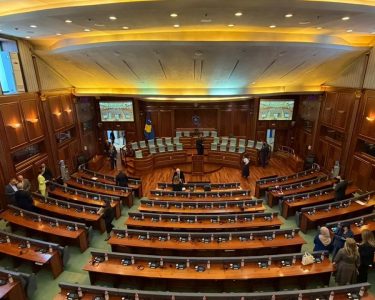

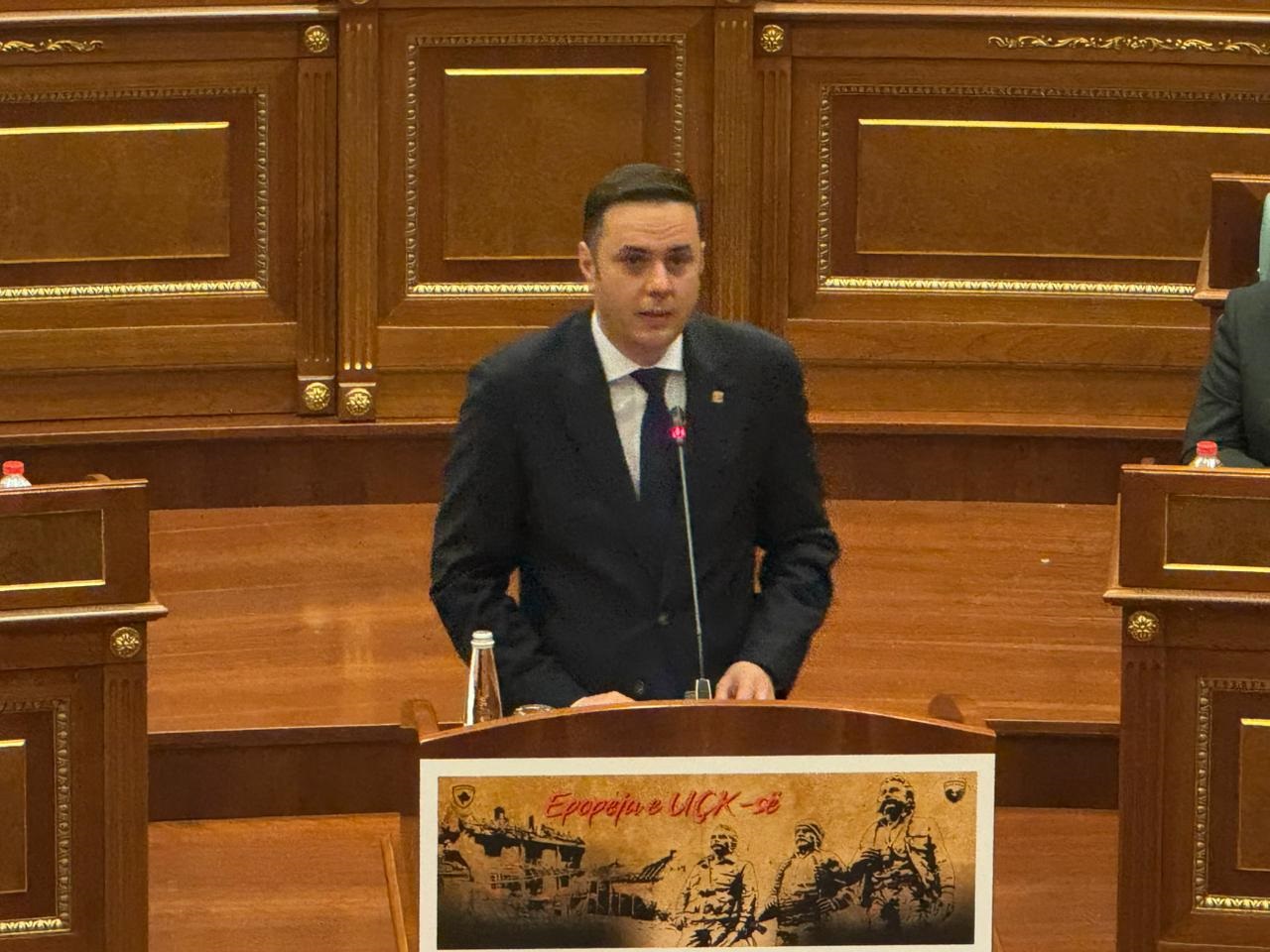
The leader of the Democratic League of Kosovo (LDK), Lumir Abdixhiku, spoke about the moral and historical significance of the Kosovo Liberation Army (KLA) Epic and the sacrifice of the Jashari family in Prekaz, KosovaPress reports.
During the commemoration of the 28th anniversary of the KLA Epic, Abdixhiku emphasized that the moral trials of the KLA present a profound dilemma for any people: what they are willing to live for and what they are ready to sacrifice.
“These profound moral trials pose a simple yet heavy dilemma for many generations today: the question of what a people are willing to live for and what they are ready to sacrifice. In such moments, peoples are no longer measured by numbers, territories, or military strength. They are measured by their spirit, by their willingness to protect what they consider sacred—more sacred than themselves. In these decisive moments, history demands people who rise to its height. People who understand that their lives no longer belong only to them but are destined for a far greater national fate,” he said.
While honoring those who fell for freedom, Abdixhiku noted that sacrifice is not merely an act of war but a philosophy of life itself.
“These are people who may be born like everyone else, live like everyone else, but at the moment of an epochal test, they rise above fear and the survival instinct that any of us might have and become bearers of a responsibility far greater than their own lives. In short, they sacrifice. Sacrifice is a magnificent act—the most magnificent that humanity on Earth, and in its relationship with the divine, can achieve. Sacrifice is not just an act of war; it is a philosophy of life. In this sense, sacrifice is not loss. It is a rare form of creation. Through it, the deepest meaning of a people for themselves is born,” Abdixhiku stated.
Abdixhiku also recalled the figure of Adem Jashari, highlighting his historical roots and the role of his family in shaping his personality.
“Adem Jashari, first and foremost a man of an oppressed land, was a man of an unfree country, from a noble home and a family with a inherited memory. In his daily world, where stories of previous generations’ resistance blended with the daily life of his own generation, history was never distant. It was a constant presence, among the walls of a tower full of friends. From that ever-present reality, Adem was shaped,” said Abdixhiku.