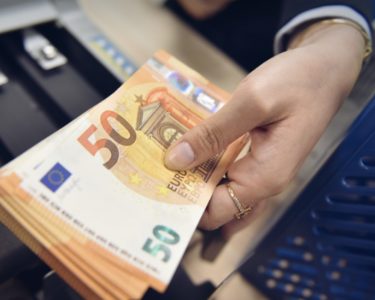
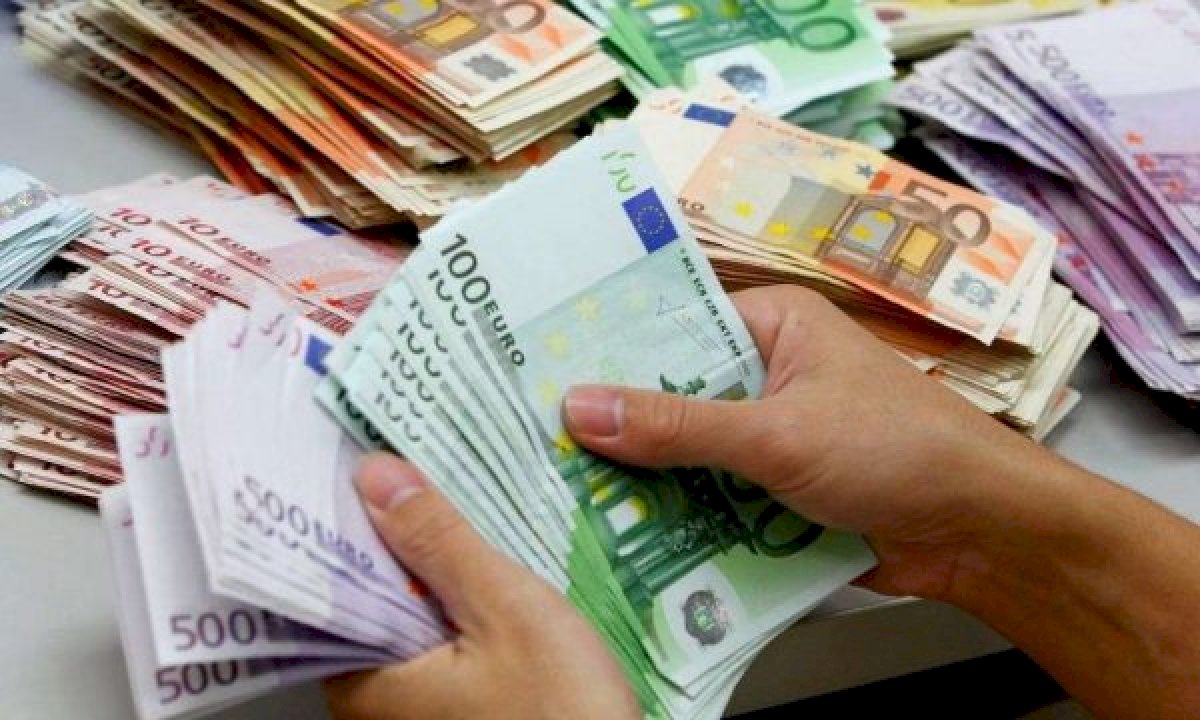
Over 651 million euros were sent by the diaspora to Kosovo during the period January–June of this year. This value is more than 21 million euros higher compared to the same period last year.
Economy experts assess that the increase in remittances to our country comes as a result of rising inflation, and consequently high prices, which worsen the economic situation of families in Kosovo, KosovaPress reports.
They say that the growth of remittances is not a good indicator for the country’s economy.
Economic affairs expert Safet Gërxhaliu considers diaspora remittances vital for Kosovo’s economic and social stability. He stresses that the main problem is that this money is spent mostly on consumption, purchasing goods and services, and not on productive investments.
According to him, the increase in remittances in the first six months of this year, compared to 2024, should not be seen only as a positive sign, but rather as a consequence of several factors such as rising inflation in Kosovo and Europe, and the growing need for social assistance.
These conditions, Gërxhaliu explains, have led the diaspora to send more money in order to maintain social stability and support their families in Kosovo.
“The role of the diaspora through remittances is substantial for Kosovo’s economic and social stability. The greatest pity is that these remittances entering Kosovo are pre-destined for imports of products or immediately spent on purchasing goods and services… In 2025, we see an increase compared to 2024, but all of this must be analyzed in a different dimension. Inflation in Kosovo, as well as in other European countries, is on the rise, the need for social assistance is increasing and definitely all this affects us to have this increase in remittances from the diaspora to maintain social, but also economic stability in Kosovo, by supporting family members and relatives”, said Gërxhaliu.
The former head of the Kosovo Chamber of Commerce, Safet Gërxhaliu, told KosovaPress that the enormous increase in prices and the growing demand for social assistance are the main factors that have boosted diaspora support for families in Kosovo.
“We are facing enormous price increases and the need for assistance or social aid is very high. Therefore, it should not surprise us that alongside diaspora investments in real estate, there is also an increase in social aid in Kosovo — because what you could buy two years ago for 100 euros, today you cannot buy even with 200 euros,” emphasized Gërxhaliu.
According to data from the Central Bank of Kosovo (CBK), provided to KosovaPress, during the period January–June of this year, remittances from the diaspora reached 651.7 million euros, while data for June remain preliminary.
Compared to the same period last year, when remittances amounted to 630.1 million euros, this year saw an increase of 21.6 million euros, writes KosovaPress.
“For the period January–June of this year, the recorded amount of remittances is 651.7 million euros (data for June are preliminary). Compared to the same period last year, there is an increase of 21.6 million euros. Remittances for the period January–June 2024 were 630.1 million,” CBK stated in its written response.
In this regard, economic analyst Arton Muhaxheri considers that the increase of remittances is not a sign of economic improvement, but rather indicates the deterioration of the situation in Kosovo.
According to him, all economic indicators from 2021 until today — inflation, trade deficit, and the rise of essential goods prices — show that the economic situation is worsening.
Speaking to KosovaPress, Muhaxheri said that remittances are expected to increase next year as well, not as a result of development, but as a consequence of the need for survival.
“The increase in remittances does not mean economic growth for the country, but rather a deterioration of the economic situation within Kosovo. The more remittances grow, the more it signals that Kosovo, with its own indicators, is on the worst possible path economically. Every time remittances are higher, our economy is weaker… Economic trends in Kosovo are in decline, and as a result, remittances are also expected to be higher next year. Diaspora members send remittances to their families so they can live better and get through the month. This is not a very positive indicator for the economy… From 2021 until today, whether it is inflation, trade deficit, or the increase of essential goods prices, all parameters show that the economic situation in our country is deteriorating — which in turn forces diaspora members to send more money to Kosovo,” said Muhaxheri.
On the other hand, economist Florin Aliu told KosovaPress that remittances continue to be an important pillar of Kosovo’s economy, sustaining aggregate demand and ensuring the well-being of many families.
According to him, the main question is what happens if remittances decrease, since a decline would negatively impact the country’s economic development.
“Remittances remain an important part of Kosovo’s economy. Even in these last three years, there has been no noticeable decline in remittance levels; on the contrary, they remain steady. However, the important question is: what if these remittances decrease? This would mean a drop in Kosovo’s development, since they make up a crucial part of economic growth. They are essential both for aggregate demand in Kosovo and for supporting families. We must also think about what would happen if remittances decrease — what the consequences would be for Kosovo’s economy. We always operate with the expectation that remittances will stay at the same level or slightly increase in the following year,” said Aliu.
The value of remittances in the first half of 2023 was around 633 million euros. Meanwhile, during the same period in 2022, the diaspora had sent over 555 million euros to Kosovo. /Z. Zeneli/