
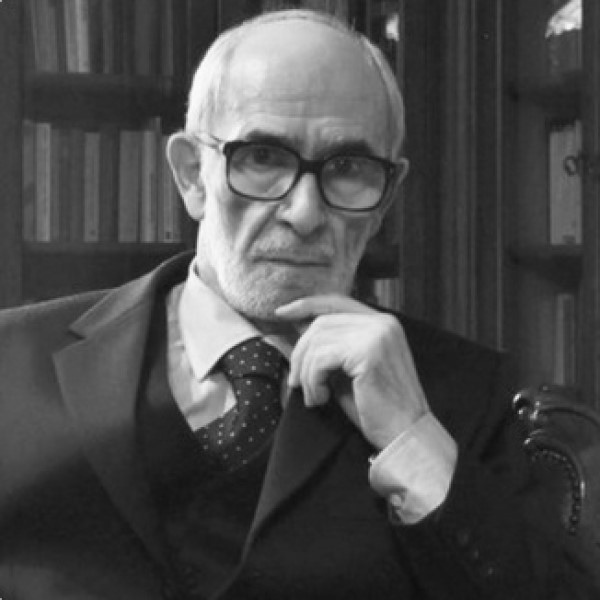
The special session of the Kosovo Assembly began with a minute of silence in honor of academician Rexhep Qosja, who passed away on April 23 at the age of 90.
Speaker of the Kosovo Assembly Albulena Haxhiu said that Qosja was a clear voice against oppression, injustice, and attempts to deny national identity.
She added that Qosja was among those who transformed culture into a space of thought, debate, awareness, and historical responsibility.
“Rexhep Qosja lived and created at a time when Albanians were constantly required to prove their language, history, identity, and political rights. He responded with works, studies, polemics, public positions, and a rare intellectual discipline in public life. He built his thought on the values of the national renaissance, on the heritage of European Enlightenment, on humanism, and on figures that gave Albanians historical direction. As a writer, he showed that literature can be both art and conscience. In his works, he portrayed the individual facing fear, power, injustice, and the dilemmas of our time,” Haxhiu said.
She added that the memory of Qosja will remain in critical thought, the Albanian language, and the political and spiritual history of Kosovo.
“Albanians have lost the last Renaissance figure,” said Deputy Prime Minister and Minister of Foreign Affairs and Diaspora Glauk Konjufca.
The second-in-command of the government said that Qosja was one of the most important intellectuals, writers, and activists of the Albanian nation.
“For us Albanians, one of the most important intellectuals, writers, and activists of our nation has passed away. Every creator is defined by a supreme guiding principle, which is the true driving force of their work. But what was Qosja’s principle? His driving force was national freedom. Therefore, everything he produced takes the form of a struggle against oppression, and struggle is strategy. Its first foundation, the base layer, is awareness, and on top of it is built securely the structure of the national state. In this sense, it was rightly said these days that he is the last Renaissance figure,” he said.
Ardian Gola, a member of the Vetëvendosje Movement, said that academician Rexhep Qosja left behind an unparalleled intellectual corpus with the Albanian nation at its core.
Speaking on behalf of the parliamentary group, Gola said it is both uncomfortable and paradoxical to speak from the parliamentary podium about a figure who continues to challenge power even after his death, adding that Qosja was the voice and intellectual guardian of a people deprived of freedom under conditions of denial.
Bedri Hamza, leader of the Democratic Party of Kosovo, said that academician Rexhep Qosja was among the most important figures of the Albanian nation.
Speaking at the commemorative session of the Assembly in honor of Qosja, Hamza said that his passing is a great loss for the Albanian nation.
Besnik Tahiri, head of the Alliance for the Future of Kosovo parliamentary group, said that the freedom and independence of Kosovo have deep roots in the intellectuals of the Albanian nation, including Rexhep Qosja.
Speaking at the commemorative session in honor of Qosja, Tahiri said that Qosja did not surrender during the most difficult times of former Yugoslavia and Serbia.
Academician, writer, and literary critic Rexhep Qosja passed away on Thursday at the age of 90, according to his family. In his honor, April 24 in Kosovo was declared a day of mourning.
Jehona Lushaku, head of the parliamentary group of the Democratic League of Kosovo, said that academician Rexhep Qosja was a powerful voice in the Albanian debate for more than half a century.
Lushaku said that Qosja’s works constitute an indelible legacy in shaping generations of scholars.
Academician, writer, and literary critic Rexhep Qosja passed away on Thursday at the age of 90. In his honor, April 24 in Kosovo was declared a day of mourning.