75 years of the Kosovo Archives, Turkish ambassador: Write your own history, otherwise others will write it
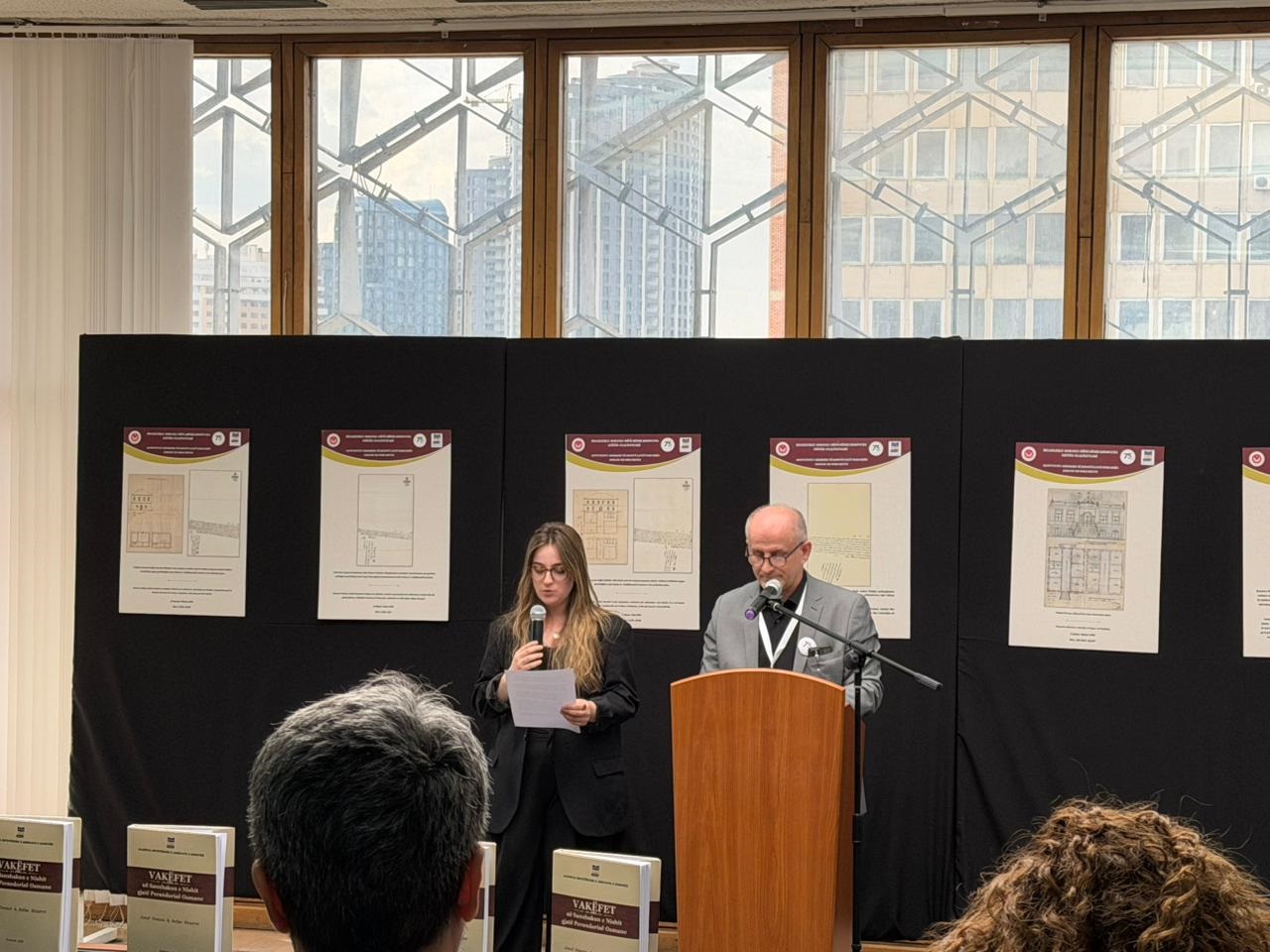
On the 75th anniversary of the establishment of the Kosovo Archives, the exhibition “Educational Activities in Kosovo During the Ottoman Period, Through Archival Documents” was opened.
The book “Waqfs in the Sanjak of Nish During the Ottoman Empire” was also presented at the premises of the National Library “Pjetër Bogdani”. These activities were co-organized with the Directorate of the State Archives of the Presidency of the Republic of Türkiye.
The Director of the Kosovo State Archives Agency, Bekim Aliu, said that the activities between the two countries have contributed to advancing professional capacities for the handling of Ottoman documents.
“As part of the cooperation with the State Archives of Türkiye, important research has been conducted through which more than 100,000 archival documents, maps, and other materials of historical value for Kosovo have been secured, including important Ottoman registers related to the Kosovo Vilayet, as well as other administrative documents from the Ottoman period. A result of this cooperation is the publication of the work by author Professor Dr. Jusuf Osmani, entitled ‘Waqfs in the Sanjak of Nish During the Ottoman Empire’, which is based entirely on documents researched in the archives of Türkiye, particularly in the Ottoman archives in Istanbul and the Waqf Archives in Ankara,” he said.
According to him, this study is of particular importance as it addresses a topic rarely covered in the country’s historiography.
This cooperation was also praised by the Turkish Ambassador to Kosovo, Sabri Tunc Angili, who said that “to know yourself, you need to know yourself through documents.”
“I think your archives agency and your historians and researchers are as important as the soldiers in the KSF or the Kosovo Police Force. Because you need to write your own history, otherwise someone else will write your history, which might not be the same history or the same perspective that you want to express into the world. And my humble opinion, for all the people of all the countries in the region, it's impossible to write the histories without referring to the archives of the Ottoman Empire. That's why this event, and the series of events that you also kindly invite me, (5:16) is extremely important because we think that Kosovo is not just a friend to us, but also a brother,”he said.
On the 75th anniversary of the founding of the Kosovo Archives, Deputy Chief Executive Mehmed Xhemajli said it is a starting point for the future and for deepening international cooperation.
“For 75 years in a row, the Kosovo Archives have been the guardian of our historical memory, preserving documents that testify to the integrity, development, and challenges of our society. Over the decades, archival work has often been quiet, but of extraordinary importance, because every preserved document is a part of our history, as evidence for the generations to come and a foundation on which the future is built. Your presence today gives this anniversary a special dimension, and demonstrates not only respect for this institution, but also the importance of international cooperation in the field of archives. Expertise and cooperation are invaluable to us, especially at a time when we are facing new challenges such as digitalization and the preservation of materials in various electronic forms,” he stated.
As part of the 75th anniversary of the establishment of the Kosovo Archives, a ceremonial academy will be held tonight, attended by international delegations, ambassadors, and representatives of the academic and cultural community. A documentary titled “75 Years of the Kosovo Archives – Memory, Document, History” will also be screened there.