For the upcoming local elections, the major political parties in Kosovo will enter the race separately, avoiding pre-election coalitions and focusing their strategy on strengthening their identity and measuring voter support.
Although they are in a coalition at the central level, LVV (Vetëvendosje Movement), Guxo, and Alternativa have decided to run separately in the local elections on October 12th, but will support each other’s candidates in certain municipalities, such as in South Mitrovica, where LVV supports Guxo’s candidate for mayor, Faton Peci, as reported by KosovaPress.
According to the Central Election Commission, only some parties from non-majority communities have formed pre-election coalitions for the local elections, while other major parties like PDK, LDK, AAK, and Nisma will also run independently.
The absence of pre-election coalitions, according to election process monitors, is a practice established by parties who prefer to compete alone and negotiate cooperation only after the first round ends.
Arbër Rexhaj, an MP from the Vetëvendosje Movement (LVV), told
KosovaPress that his party is in the final phase of selecting mayoral candidates and will mostly run alone, taking into account the specific characteristics of each municipality.
However, he said they will cooperate with their central-level allies, Guxo and Alternativa, in certain municipalities and also in the second round runoff.
Rexhaj said that in the local elections on October 12th, they will aim to repeat the victory they had in the parliamentary elections.
“I think within a period of ten days we will finalize all the candidacies for mayors. Of course, we enter this race to repeat the victory of the parliamentary elections. However, considering that parliamentary elections differ from local ones, we will try to give our best with our program. In places where we consider that we should run separately, we will do so. There are also municipalities where we will run together. Based on how we consider and analyze the situation on the ground, we will decide for each municipality separately,” he said.
On the other hand, Haxhi Avdyli, a member of the Guxo leadership, told KosovaPress that in most municipalities, his party will run with a separate assembly list, while for mayoral candidates they will discuss with partners depending on the specific municipalities.
He emphasized that in the local elections they aim to measure Guxo’s electoral weight.
Guxo co-chair, Faton Peci, received LVV’s support on Thursday to run for mayor of South Mitrovica municipality.
“In most municipalities, we will run with a separate assembly list, while for mayoral candidates we will discuss case by case. The central and local levels differ, and each municipality has its own specifics. For example, Malisheva differs from Prishtina in cooperation, as does Peja from Prizren. For this, we will insist and try not to harm our political partner LVV in different municipalities, but we will insist that the Guxo party, in the local elections, be a separate subject and measure our political weight among citizens by offering lists and people who will be candidates for the assembly,” he declared.
Another LVV partner at the central level, Alternativa, also intends to test itself locally.
Mimoza Kusari-Lila, chairwoman of Alternativa, told KosovaPress that in the local elections they will run in several municipalities at the level of municipal assemblies, while in Prishtina, Gjakova, and Peja they will have candidates for mayor.
According to her, this will help in building their structural capacities as well as strengthening their liberal identity.
“Of course, with discussion and cooperation possibilities, either in the second round runoffs or after the electoral processes at the assembly level. Our list will be in several municipalities and will carry our party logo. This will help in strengthening our structural capacities. Potentially, we are in the bigger municipalities: Prishtina, Gjakova, Peja – certainly with candidates. Then with lists in Prizren, Ferizaj; we are also considering cooperation with Guxo in Gjilan. This is an open opportunity for us to strengthen our identity as a liberal party,” she added.
No pre-election coalition has been formed for the local elections by the Democratic Party of Kosovo (PDK) either.
PDK MP Ferat Shala told KosovaPress that they are competing alone and strongly.
Speaking about PDK’s mayoral candidates and especially the internal competition for Drenas municipality, Shala said this is part of party democracy.
“PDK competes alone and strongly at all levels. Internal competition is part of our democracy. We have no reason and no request to take any other position. The internal competition within PDK has been and remains one of the highest values of this political subject,” Shala emphasized.
KDI researcher Eugen Cakolli explained to KosovaPress why parties avoid pre-election coalitions in local elections.
He stressed that parties aim for cooperation only after the first round ends to increase political bargaining in the second round.
“In local elections, big coalitions are rarer. Political subjects try to enter the race individually, and coalitions usually happen between the first round and the runoff. This is done for reasons of representation in municipal assemblies, as pre-election coalitions carry the risk of being considered a single political subject. I believe even the largest party and the two parties that are part of an informal coalition will try to enter the race individually. Even Guxo might be part of LVV. Meanwhile, other parties will participate individually to increase bargaining between the two voting rounds, where the main and most frequent coalitions happen – which are already a trend in local elections,” he concluded.
The local elections will be held on October 12th. Political parties have already started presenting their mayoral candidates.
In Prishtina, all mayoral candidates for the capital are close to being finalized.
The current mayor, Përparim Rama, has not yet been officially nominated by LDK to remain in office for another four years, although he has the party’s trust.
Meanwhile, LVV has nominated the acting Minister of Culture, Hajrulla Çeku; PDK is expected to officially nominate Uran Ismaili, who also ran in the 2021 elections; AAK has nominated Bekë Berisha, and PSD nominated Besa Shahini.
The Alliance for the Future of Kosovo (AAK) has approved candidates such as Nazim Gagica – Gjilan, Besnik Krasniqi – Prizren, Xhemile Murati – Ferizaj, Qazim Nimani – Mitrovica, Faton Jakupi – Kamenica, Ukë Blakaj – Istog, Agron Kuçi – Junik, Vildane Latifi – Fushë Kosovë, Baki Feta – Podujevë, Labinot Bislimi – Viti, Ilir Tasholli – Lipjan, Zenun Elizi – Klinë, Bali Muharemaj – Suharekë.
The Social Democratic Party (PSD) recently announced the candidacy of Natyra Kuçi for mayor of Deçan municipality. This municipality is currently led by Bashkim Ramosaj from the Alliance for the Future of Kosovo.
On the other hand, so far LVV has also confirmed second-term support for the current mayors of Shtime, Qemajl Aliu; Podujeva, Shpejtim Bulliqi; Kamenica, Kadri Rahimaj; and proposed candidates for mayor of Viti, Arsim Ademi, and Jeton Raka in Kaçanik.
Meanwhile, the Democratic League of Kosovo (LDK) has so far publicly announced Arbër Ismajli as candidate for mayor of Gjilan, and Gazmend Muhaxheri, who is currently mayor of Peja municipality.
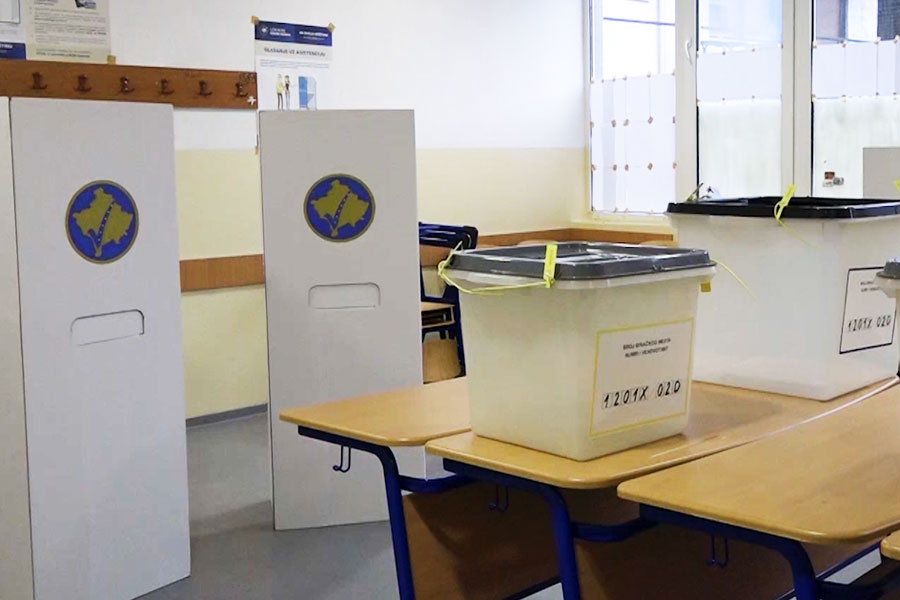
The Central Election Commission has approved 945 voting centers for the local elections and presented the preliminary voter list. According to CEC, over 2 million Kosovar citizens are expected to have the right to vote in the local elections on October 12th.