“The Night of Terror” that Mitrovica will never forget: a planned massacre by Serbian criminals without justice
Night fell over Mitrovica, but with it did not come peace. Between February 3 and 4, 2000, the city was engulfed by gunfire, screams, and the silence of those who were meant to protect civilians. For Halil Barani, head of the Council for the Defense of Human Rights and Freedoms (KMDLNj) for the Mitrovica region and a direct witness to the events, it remains “the night of terror.” Inside their homes and apartments, 10 Albanians were executed, among them a 13-year-old child, Nderim Mehmeti. The violence did not end with the killings—dozens more were wounded and brutally mistreated, while thousands were forcibly expelled.
Twenty-five people were wounded by gunfire, while 93 others were physically abused in the most barbaric manner, regardless of age or gender. Two of the wounded later succumbed to their injuries and died at the Pristina hospital.
All of this, according to Barani’s testimony, occurred in the presence of the French military and UNMIK police, who remained mere observers of a crime that, even nearly three decades later, has yet to see justice.
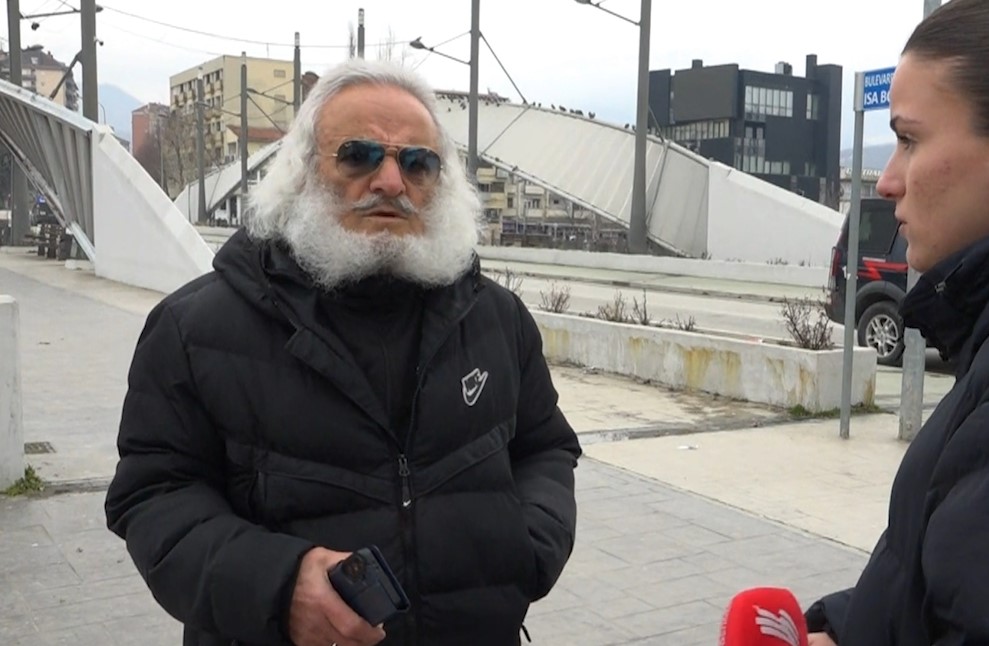
“The night between February 3 and 4, 2000, is remembered not only by me, but by all the citizens of Mitrovica, specifically those of the occupied part of the city, as a night of terror. In the presence of the French military and UNMIK police, 10 Albanians were shot dead inside their homes and apartments—six women and six men. Among them was a 13-year-old child, Nderim Mehmeti. In the presence of these forces, or so-called ‘peacekeepers,’ almost all Albanians living in the occupied part of the city were forcibly expelled from their homes. On that night of terror, not only were these 10 people executed, but 25 others were wounded by firearms, regardless of age or gender. Ninety-three others were physically abused in the most barbaric way, two of whom later died on February 27 and 28, 2000, at the Pristina hospital. All of this happened in the presence of the French military and UNMIK police. Many Albanians sought help that night from the French forces and UNMIK police, but they merely watched and offered no assistance. Only after the Serbian Chetnik criminals had finished their crimes did they take the wounded and transport them to the improvised Moroccan hospital in the Bair neighborhood of Mitrovica. Meanwhile, the bodies of the 10 executed Albanians were transported from the occupied part of the city to the other side of Mitrovica,” Barani told KosovaPress.
He says the massacre was not accidental. According to him, after the 1999 war, Mitrovica became a refuge for individuals who had committed crimes against Albanians across Kosovo. On February 2, 2000, armed Serbian civilians entered the northern part of the city and identified apartments inhabited by Albanians. One night later, on February 3, around 9:00 p.m., the attack began and lasted until the early hours of February 4, leaving behind victims and deep wounds.
“It is well known that immediately after the war, in 1999, when peacekeeping forces entered Kosovo, all those criminals who had committed crimes against the Albanian population across Kosovo gathered in Mitrovica. The same individuals—among them Oliver Ivanović, who was later killed by his own accomplices—were the leaders or chief criminals. He led them as they executed people inside their apartments. It should be noted that on February 2, 2000, a large number of armed Serbian civilians came to the occupied part of Mitrovica and identified the homes and apartments where Albanians lived. Then, on February 3, 2000, starting at 9:00 p.m., the massacre of Albanians began and lasted until 4:00 a.m. on February 4. During this time, Albanians were executed, wounded, and physically abused in the most barbaric way,” he said.
Barani stated that on February 25, 2013, he submitted all witness statements related to the April 14, 1999 case and the February 4, 2000 case to the EULEX Prosecution.
However, even after nearly three decades, justice for this massacre is still absent. Barani emphasized that more than 400 massacres were committed across Kosovo, and the Mitrovica massacre remains among the most serious precisely because it occurred in the presence of international forces. He recalled that although he testified in The Hague about crimes committed against Albanians, no one has been held accountable for what happened that night in Mitrovica.
“There has been no justice for any of the more than 400 massacres across Kosovo, let alone this one. But this is the most horrifying and the most serious because it was carried out in the presence of so-called peacekeeping forces, UNMIK police, and the French military. In February 2002, I testified in The Hague against the butcher of the Balkans for the crimes committed with the army, police, and armed Serbian civilians in Kosovo, and all of these crimes were presented. In Mitrovica alone, there were 12 massacres in 1998–1999. This was the last massacre, committed before the eyes of those who came as peacekeepers. Later, Oliver Ivanović was charged and sentenced to nine years in prison, but the case was returned for retrial and he was released. He was later killed by his own accomplices, leaving no one convicted. There were others, known by name and surname, who were brought to court, but to this day there has been no justice,” Barani said.
In a city where a total of 544 Albanian civilians were killed—including children, pregnant women, the elderly, and disabled individuals executed in their beds—the families of the victims continue to live with memories, pain, and endless waiting. Today, they are remembered only rarely, usually during election campaigns, as Barani says, while the “night of terror” remains an open wound in the memory of Mitrovica and Kosovo.
“The families of the victims—not only those of February 3 and 4, 2000, but all of them, because in Mitrovica alone 544 Albanians were killed, regardless of age or gender. Among them were children, pregnant women, elderly men and women, even paralyzed elderly people shot in their beds. They waited a long time, but they have now lost hope, because no one mentions them except when elections come. Then they are mentioned briefly, and everything passes,” he emphasized.
February 3–4, 2000, remains a living reminder of a crime. That night, the following were killed: Nderim Ajeti, Nerimane Xhaka, Remzije Canhasi, Selime Berisha, Nezir Voca, Shqipe Voca, Bashkim Rrukeci, Nimon Sejdiu, Sebiha Abrashi, and Muharrem Sokoli.