Over 75 percent of citizens believe that individuals with political influence are less likely to be punished by the law
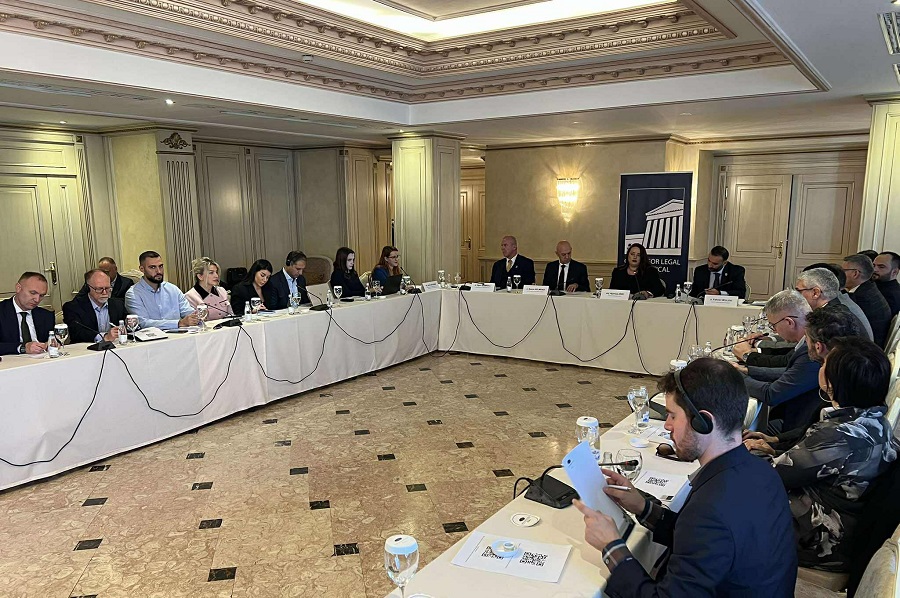
The Group for Legal and Political Studies (GLPS) has presented the ninth edition of the Index of Performance of Rule of Law Institutions in Kosovo, where some of the biggest challenges faced by the prosecutorial and judicial systems in the country were highlighted. Among them, the most critical were mentioned as political influence on justice, lack of punitive policies, delays in judicial procedures, the low level of confiscation of illegally obtained assets, and the lack of adequate budget for justice institutions.
From the responses given in this survey, it results that around 76 percent of citizens believe that persons with political influence are less likely to be punished by law. Meanwhile, only 22.7% of them think that regardless of whether individuals have political influence, they still have chances to be punished based on legal provisions.
The Executive Director of GLPS, Njomza Arifi, said that justice institutions continue to be under the critical lens of civil society and of domestic and international evaluations.
“Justice institutions continue to be under the critical lens of both civil society and domestic and international evaluations. Most often mentioned are the lack of punitive policies, political influence, delays in case processing, and the low level of confiscation of illegally obtained assets. We consider that all these setbacks cannot be addressed only by the bodies and persons managing them, but part of the responsibility also lies with the executive and legislative powers. With the executive, in the creation of policies — and in these four years, we have seen that the main policies the government is known for have not been realized, among them Vetting and the Bureau for Asset Confiscation. We should also mention the role of the Assembly and the neglect of budgetary requests, as well as the insufficient allocation of funds for the bodies that manage the prosecutorial system,” said Arifi.
The Acting Chief State Prosecutor, Besim Kelmendi, emphasized that the prosecutorial system is making efforts to increase transparency and efficiency, although public perception remains challenging.
“The Prosecutorial System of Kosovo is doing a great deal of work to ensure transparency and a different approach in relation to the public. Our efficiency is at 90 percent of resolved cases out of those received. For me, it is surprising the perception of citizens — about 71 percent of respondents are people who have never had a case in the prosecution. I highly value citizens’ opinions, but this percentage and their participation in our procedures show how directly informed they are about our activities and work as a prosecution. When we talk about independence, citizens perceive the police as more trustworthy than the prosecution... Regarding confiscation, citizens are right, and we must be self-critical; we are still not at the required level. When we had the Banjska case, most of it was automatic confiscation, but when we talk about civil confiscation of unjustified property, I have supported every initiative in this regard, but my support has been little realized because the government has determined that only the property of public officials should be confiscated. This law on the Bureau must be amended and supplemented,” said Kelmendi.
Meanwhile, the member of the Kosovo Judicial Council, Fahret Velija, said that the lack of budget remains one of the main obstacles to improving the functioning of the judicial system.
“In this case, we have six percent of those surveyed who have had dealings with the judicial system, while the rest have not been part of it. Despite the fact that in recent years the judicial system has achieved good progress, this has not been conveyed to the public, and now part of the burden falls on the judicial system. We have tried during this period to have cooperation also with non-governmental organizations and media to hear the criticisms you have towards the judiciary. In every court, a special office has been designated only for contact with the public, which is very necessary,” added Vellija.
Meanwhile, the Acting Deputy Minister of Justice, Vigan Qorrolli, emphasized the need for justice to be more visible and responsive to citizens.
According to GLPS, structural challenges, lack of financial resources, political influence, and the lack of sustainable policies continue to hinder the progress of the rule of law in Kosovo, while citizens’ trust in justice remains at low levels.
In the survey conducted to assess citizens’ evaluations of justice institutions, 1,065 citizens were included.