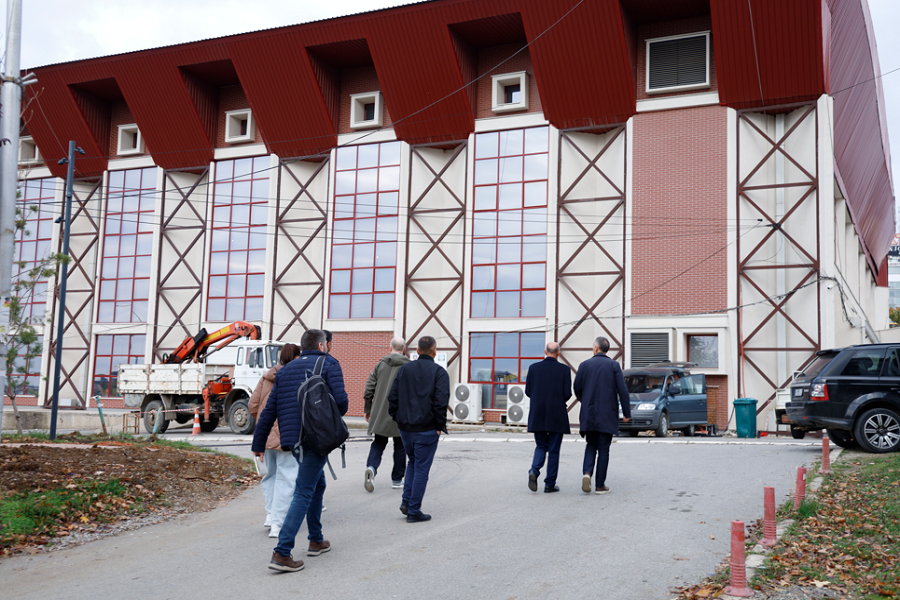
Mediterranean Games: International delegation inspects sports facilities in Prishtina
From November 4 to 6, the first on-site visit took place in Prishtina by representatives of RCAG, the company awarded the project for the 2030 Mediterranean Games. The main goal of this visit was to initiate practical collaboration in the preparatory phase of the project and to establish a common understanding between the parties regarding expectations and the direction that the work should take.
The delegation closely inspected the current sports infrastructure in Kosovo, visiting major sports facilities such as “Fadil Vokrri” Stadium, the Palace of Youth and Sports, the boulevards of Prishtina (the location for 3x3 basketball competitions), the Olympic swimming complex, Germia National Park, the proposed site for the Athletes’ Village, the Kosovo Olympic Committee Center, as well as hotels planned for the “Games Family.”
The Secretary General of the Kosovo Olympic Committee, Besim Aliti, told KosovaPress that the visit had two main objectives.
“There are two key levels they will focus on. Number one is the operational and service plan we will offer to the Mediterranean Games family visiting Kosovo, and of course the element without which we cannot succeed, which is the sports and general infrastructure that must be developed to organize the Mediterranean Games. One of the very important topics will be human resources—how we can ensure that as many local professional staff as possible are involved in the Games. Our plan and projections foresee over 500 young people from Kosovo being engaged in various levels of Games management,” Aliti stated.
According to Fidan Shatri from the Ministry of Sports, the recommendations from this visit will be included in the master plan for the Mediterranean Games.
Mediterranean Games master plan
“The idea of the visit is for the master plan company to be physically here to gather detailed information to feed into the preparation of the ‘Prishtina 2030’ Mediterranean Games master plan. In this context, we have a foundation, since hosting these Games is based on a document initially prepared at the time—the bid book and the capital’s contract, which also serves as the Kosovo government’s guarantee for hosting or bidding for the ‘Prishtina 2030’ Mediterranean Games,” Shatri explained.
Meanwhile, the Chief of Staff of the Mayor of Prishtina, Vllaznim Osmani, emphasized that after this visit, it will be clearer which sports infrastructure points require immediate intervention.
“This is an initial meeting, and it is understandable that some existing facilities in the capital and beyond should be assessed to determine what interventions are needed to make these arenas usable for the Games. From our own studies, we know that these facilities are insufficient and very limited, but it is useful to have a thorough analysis from a company with extensive experience in this field to understand which elements need to be improved and what new infrastructure investments are required,” Osmani stated.
RCAG representative Rob Clarke said that now is the time for Kosovo to start concrete on-site work for the Mediterranean Games.
“Our impression is that the timing is good. Now is the moment to begin the strategy and implementation plan. I believe the four to four-and-a-half-year period offers a good opportunity to think in detail about the legacy impact of the Games—not just planning for the Games themselves, but also considering the legacy, including physical and infrastructural aspects. Finally, we discussed the development plans for the Games infrastructure. We also considered economic aspects, such as potential business opportunities for local companies to assist in providing goods and services for the Games,” Clarke said.
The agenda included introducing the main parties involved in the project, familiarizing them with the city and sports facilities, and aligning objectives for the implementation of the next phases of planning.