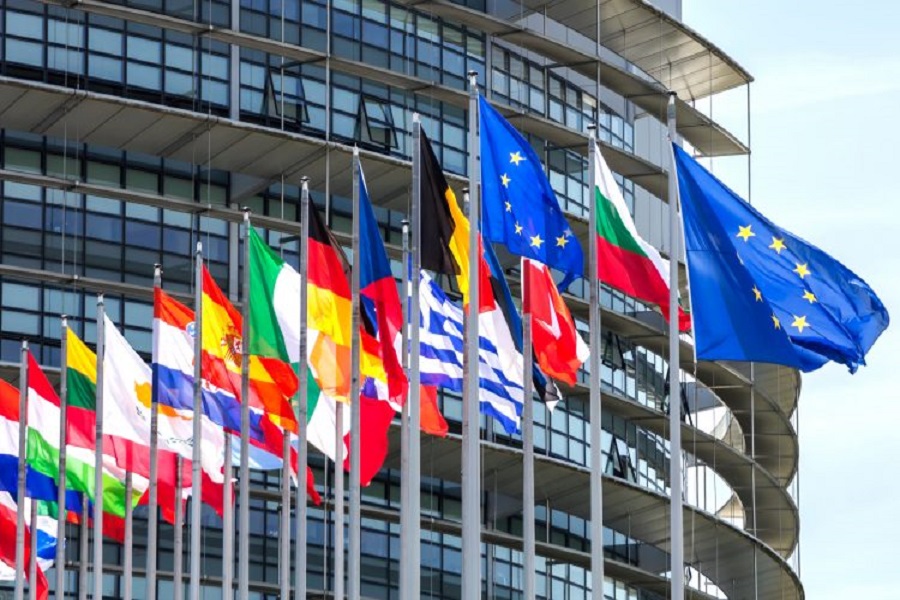
Is there hope for integration into the European Council this year?
Kosovo will not be able to join the Council of Europe this year either, without submitting the draft statute—proposed by the European Union—for the Association of Serb-majority municipalities to the Constitutional Court, according to the German embassy in Kosovo. They state that the ball is in Kosovo’s court, and if the necessary steps are taken before the next ministerial meeting of the EUCO, the agenda could be changed to include a vote on Kosovo’s membership in the leading human rights organization.
On the other hand, the Ministry of Foreign Affairs expects Kosovo’s application to be addressed this year, emphasizing that the country has met all the necessary membership requirements.
Experts in international relations remain skeptical about progress in this regard, arguing that even submitting the draft statute to the Constitutional Court under the current circumstances would not guarantee Kosovo's membership in the European mechanism.
The Council of Europe’s Committee of Ministers will convene on May 13, 2025, with the agenda being prepared in April by the secretariat of this decision-making body.
In 2024, Kosovo secured the necessary votes for membership in the Parliamentary Assembly of the Council of Europe but failed to pass the final step as it was not included on the agenda of the Committee of Ministers—the body responsible for membership decisions, which meets only once a year.
The obstacle last year was Kosovo’s refusal to fulfill the request of three key EU countries—Germany, France, and Italy—to submit the EU-proposed draft statute for the Association of Serb-majority municipalities to the Constitutional Court.
The German embassy in Pristina told KosovaPress that this requirement remains valid and regrettably, Kosovo’s institutions have yet to take this step.
According to them, securing a successful vote for Kosovo’s membership is crucial. Holding a vote without ensuring the necessary majority could jeopardize Kosovo’s aspirations and lead to negative outcomes.
Nevertheless, they affirm that Kosovo deserves a place in the Council of Europe and that Germany remains steadfast in its full support for Kosovo’s membership aspirations.
"Ensuring a successful vote for Kosovo's membership is critically important. Voting without securing the necessary majority would endanger this aspiration and could lead to negative results, which must be avoided at all costs. We have been consistent and transparent, together with our partners, in outlining the key step needed to secure the majority: Submitting the draft statute for the ASM [Association] to Kosovo’s Constitutional Court. Unfortunately, this crucial step has not yet been taken. The ball is now in Kosovo’s court, as emphasized in the May 2024 letter from President Macron, Chancellor Scholz, and Prime Minister Meloni. The agenda for the Committee of Ministers is prepared by its secretariat. If the necessary steps are completed before the meeting, we are convinced that the agenda can—and should—be changed to include a vote on Kosovo’s membership," said Christian Boettcher from the communications office at the German embassy in response to
KosovaPress.
However, Acting Deputy Minister of Foreign Affairs and Diaspora, Kreshnik Ahmeti, told KosovaPress that Kosovo has met all requirements and expects its application to be addressed in the Council of Europe’s May ministerial meeting.
Asked whether Kosovo has lobbied member states to secure the majority, he stated that the MFA has continued its campaign to finalize the process as soon as possible but did not specify whether the draft statute for the Association of Serb-majority municipalities would be sent to the Constitutional Court.
"Based on the Statute and Rules of Procedure of the Council of Europe, after receiving the opinion of the Parliamentary Assembly, Kosovo's application should be addressed in the next ministerial meeting. As you know, this opinion was issued in April 2024 and was extremely positive. It confirmed that the Republic of Kosovo has met all the requirements for membership and, in some cases—such as minority rights—exceeds the legal standards of the Council of Europe and its mechanisms. It also stated that Kosovo should be granted full membership without additional conditions. The Ministry of Foreign Affairs and Diaspora has continued its campaign to conclude this process as quickly as possible according to the opinion of the Parliamentary Assembly of the Council of Europe, as outlined in the Statute and Rules of Procedure of the Council of Europe," his response to KosovaPress stated.
International relations professor Dritëro Arifi told KosovaPress that under the current political circumstances, sending the draft statute of the Association to the Constitutional Court is not the right decision, as it would not guarantee Kosovo’s membership in the EUCO.
According to him, it would also be too late for such a move, especially since it is still unclear who will form the next government after the February 9 elections.
He also criticized the outgoing government, stating that it has not taken concrete diplomatic initiatives to advance Kosovo’s membership in the Council of Europe, following the current deadlock in which major EU states have conditioned the process on submitting the draft statute of the Association to the Constitutional Court.
"I think we are very late now, and this is not the right decision as circumstances have changed. Kosovo's government—whoever forms it—must be careful about what steps are taken and what is received in return. There need to be concrete diplomatic initiatives on how to move forward. The ball is in our court, but not entirely. It depends on various elements that will change global politics, and our position depends on our consistency in content, not just in numbers," Arifi emphasized.
Kosovo's institutions have not accepted the EU-drafted statute for the Association and have opposed sending it for review to the Constitutional Court.
A few days ago, President Vjosa Osmani stated that the draft is in contradiction with Kosovo’s Constitution and European values.
Last year, a day before the Committee of Ministers' meeting, Foreign Minister Donika Gërvalla sent a letter to the President of the Parliamentary Assembly of the Council of Europe, pledging that Kosovo would draft and submit a proposal to the Constitutional Court—but not the EU’s version. However, this was not accepted, and as a result, Kosovo's issue was not included in the agenda of the EUCO ministerial meeting.
Kosovo applied for membership in the Council of Europe in 2022.