INDEP: If electricity prices continue to rise, the country could face energy poverty
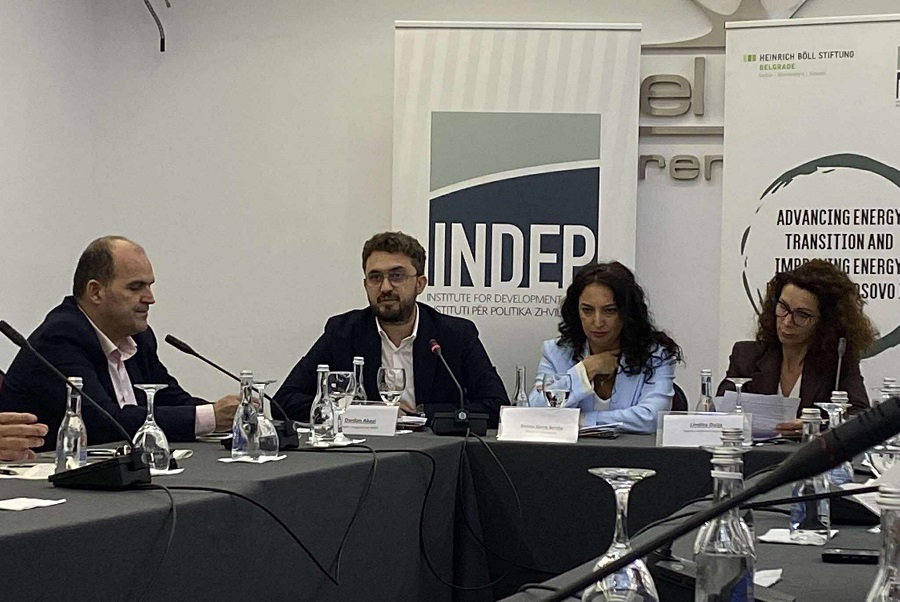
If electricity tariffs continue to rise while wages remain unchanged, Kosovo could face significant levels of energy poverty. This was emphasized during a discussion panel organized as part of the project “Energy Poverty in Kosovo II” by the Institute for Development Policy (INDEP).
Burim Ejupi, Executive Director of INDEP, said that Kosovo is on the edge of energy poverty due to rising electricity prices. He warned that if electricity tariffs keep increasing while wages remain stagnant, the country could experience energy poverty levels similar to those in 2007.
Granit Gashi, a representative of the Heinrich-Böll-Stiftung, noted that their goal is to advance frameworks that would enable Kosovo’s energy transition.
During the panel discussion on “Energy Communities for Poverty Alleviation and Inclusive Transition”, Besiana Qorraj Berisha from the Ministry of Economy highlighted that their role is to develop policies and lay the groundwork for energy communities. She emphasized that the Energy Strategy of the Republic of Kosovo for 2022–2031 includes promoting energy from renewable sources as one of its key objectives.
Lindita Daija, an expert in Capacity Development, said that Kosovo has already reached an advanced stage in terms of legislation. However, she noted that work still remains on secondary legislation, particularly regarding the organization of committees and defining concrete steps for how this organization should operate.
Meanwhile, Zanfina Kabashi, an energy resources expert, pointed out that Kosovo has potential for a wide variety of renewable energy sources.
According to INDEP’s report, “Energy Communities and Energy Poverty in Kosovo”, the country is at a critical juncture. Without clear regulations and financial mechanisms, energy communities risk remaining only on paper.
The report outlines several recommendations. It calls for the Ministry of Economy and the Energy Regulatory Office (ZRRE) to establish a joint working group within six months to complete the legal framework for energy communities. This process should not be limited to approving secondary legislation stemming from the Renewable Energy Law and ZRRE support schemes, but should also include amendments to existing laws.
Additionally, the Ministry of Economy, in cooperation with other institutions, should adopt within 12 months a National Program for Decentralized Energy Production, giving energy communities a central role. This program should begin with communities most vulnerable to the energy transition and fluctuations in energy prices, following the guiding principle of “leave no one behind.”
The report also states that ZRRE and KOSTT should publish a national map within 18 months detailing network capacities (LV/MV), proximity to substations, load points, technical limitations, and the territorial distribution of energy poverty.
Furthermore, the report recommends setting national targets by the end of 2026 and launching an awareness campaign, prioritizing the inclusion of technical schools to educate the next generation.