EMA: Degraded rivers are putting citizens at risk
The Emergency Management Agency (EMA) has announced that during the recent floods, they carried out 196 interventions, evacuating 42 people. The agency emphasized that every river is degraded and needs maintenance, and it also provided detailed recommendations.
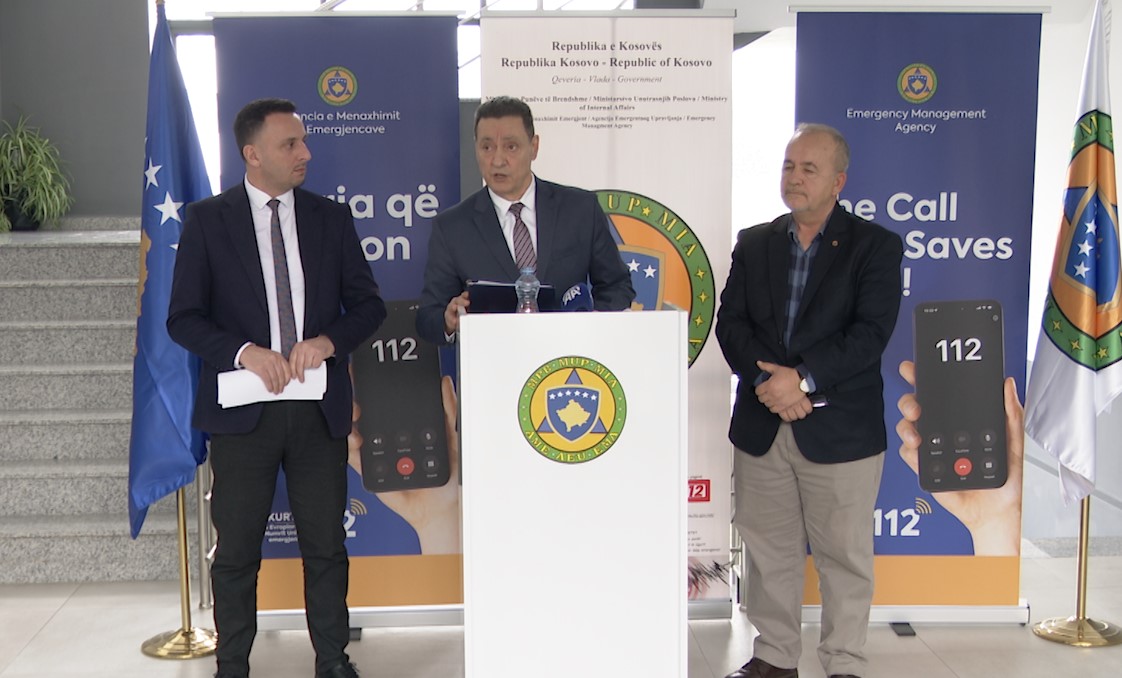
The Executive Director of the Emergency Management Agency, Shefki Abdullahu, spoke at a press conference about the situation caused by the recent January floods, as well as the actions and engagements of the agency.
“The floods affected several municipalities. We highlighted mostly those municipalities that experienced the most severe flooding, including Malishevë, Gjakovë, Klinë, Junik, Drenas, Skenderaj, Mitrovicë, Suharekë, Gjilan, and Prishtinë. Specialized EMA teams, professional firefighting and rescue units, the Kosovo Security Force, Kosovo Police, and the Kosovo Search and Rescue Association carried out numerous interventions, including water extraction with high-capacity pumps at key facilities like KEK, which EMA operates. At the same time, professional firefighting and rescue units also used their own pumps… The number of coordinated cases was 1,070. The number of flood interventions was 196, high-capacity pump operations 24, technical interventions 63, and 42 people were evacuated,” he said.
He added that barriers and sandbags were placed against floods in Mitrovicë, particularly in the Ura e Ibrit neighborhood.
Abdullahu emphasized that the lack of river maintenance, riverbed deformations after the war, and the dumping of waste have significantly increased the risk of flooding in many municipalities in Kosovo.
“We will include in the report maps of rivers that pose risks, and we will provide all details, because all rivers in Kosovo cause floods in municipalities, often repeatedly. These are rivers that have not been contained or properly maintained, and their beds were severely deformed after the war, meaning sand has been extracted by various companies, along with waste being dumped into free-flowing rivers. This has caused… every river is degraded and must be maintained and cleaned. It is primary to ensure the safety of citizens, the environment, and property, and also for living creatures. For everyone, we need to maintain these rivers, which we have specifically for these reasons—pollution and river degradation,” Abdullahu stressed.
At the end, he also provided some recommendations.
“From our analysis and lessons learned, we have drawn recommendations: regular cleaning and maintenance of riverbeds, continuous monitoring of high-risk areas, drafting and implementing local disaster risk management plans, clear division of responsibilities between local and central levels, prohibition of construction in flood-prone areas and strengthening building inspections, increasing emergency response capacity through regular training and adequate equipment for local structures, raising citizen awareness about risks and natural disasters, and strengthening the early warning system,” he said.