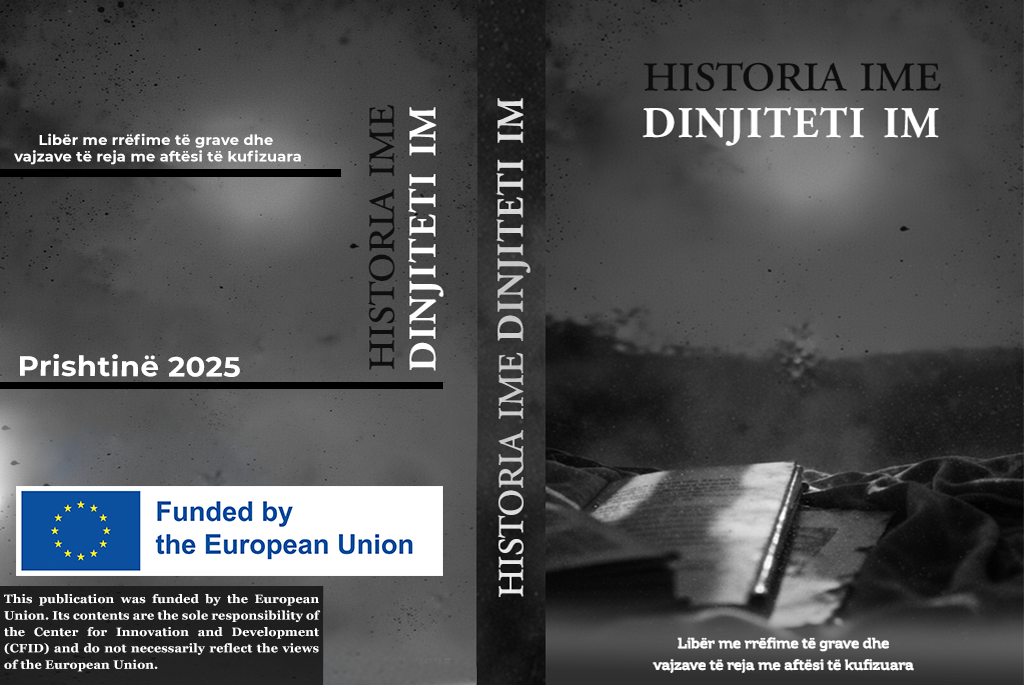
Digital book "My Story, My Dignity" published
The digital storybook “My Story, My Dignity” was published on Wednesday, created by the Center for Innovation and Development (CFID).
The book authored by journalist Shqipe Pajaziti, compiles 10 stories of women with disabilities and mothers who are primary caregivers of children with disabilities. They speak openly about challenges, family, society, institutions, and, in particular, the lack of opportunities for education and employment, physical barriers, prejudices, and daily discrimination they face.
The book is available in three languages—Albanian, English, and Serbian—and can be accessed online through CFID’s channels.
You can read My Story, My Dignity here.
The goal of publishing the book is to raise awareness, both socially and institutionally, about the rights, dignity, and contributions of these women to society. Readers are invited to explore the book and help spread the message—that having a disability is not a barrier to being an active and contributing member of society.
More about the book:
The digital storybook “My Story, My Dignity” was developed as part of a project funded by the European Union Office in Kosovo, titled “My Story, My Dignity: Addressing Gender-Based Discrimination and Violence Against Women and Girls with Disabilities and Mothers Who Are Primary Caregivers of Children with Disabilities”, implemented by Handikos Gjilan in partnership with NGO Inkluzioni, Handikos Ranilug, and the Center for Innovation and Development (CFID).
Over the years, the “My Story, My Dignity” project has provided support to women and girls with disabilities and mothers who are primary caregivers of children with disabilities, combining rehabilitation, empowerment, and advocacy. Through a mobile clinic, the project has offered psychosocial services as well as medical and legal assistance at home for hundreds of families, ensuring access to care and public services. The project also created self-support groups that promoted solidarity, emotional well-being, and leadership among women, turning beneficiaries into active advocates for their rights.
Furthermore, the project strengthened cooperation between civil society and institutions, encouraged inclusive policy changes, and raised public awareness through multimedia content, including this digital book. By amplifying the voices of these women and girls, the project has built a sustainable network of empowerment and inclusion, transforming vulnerability into resilience and stories of hardship into stories of strength and dignity.
This publication, sharing the same title as the initiative—“My Story, My Dignity”—gives a voice to women and girls with disabilities, as well as mothers who are primary caregivers of children with disabilities, who face daily obstacles yet continue to rise with strength, resilience, and dignity.
Published during the 16 Days of Activism Against Gender-Based Violence, this digital book is a testament to the power of storytelling to inspire reflection, dialogue, and transformation. The book is also a call to society and institutions to recognize, support, and protect the rights of women and girls with disabilities and mothers who are primary caregivers of children with disabilities, ensuring that their stories of hardship are transformed into stories of inclusion and dignity.