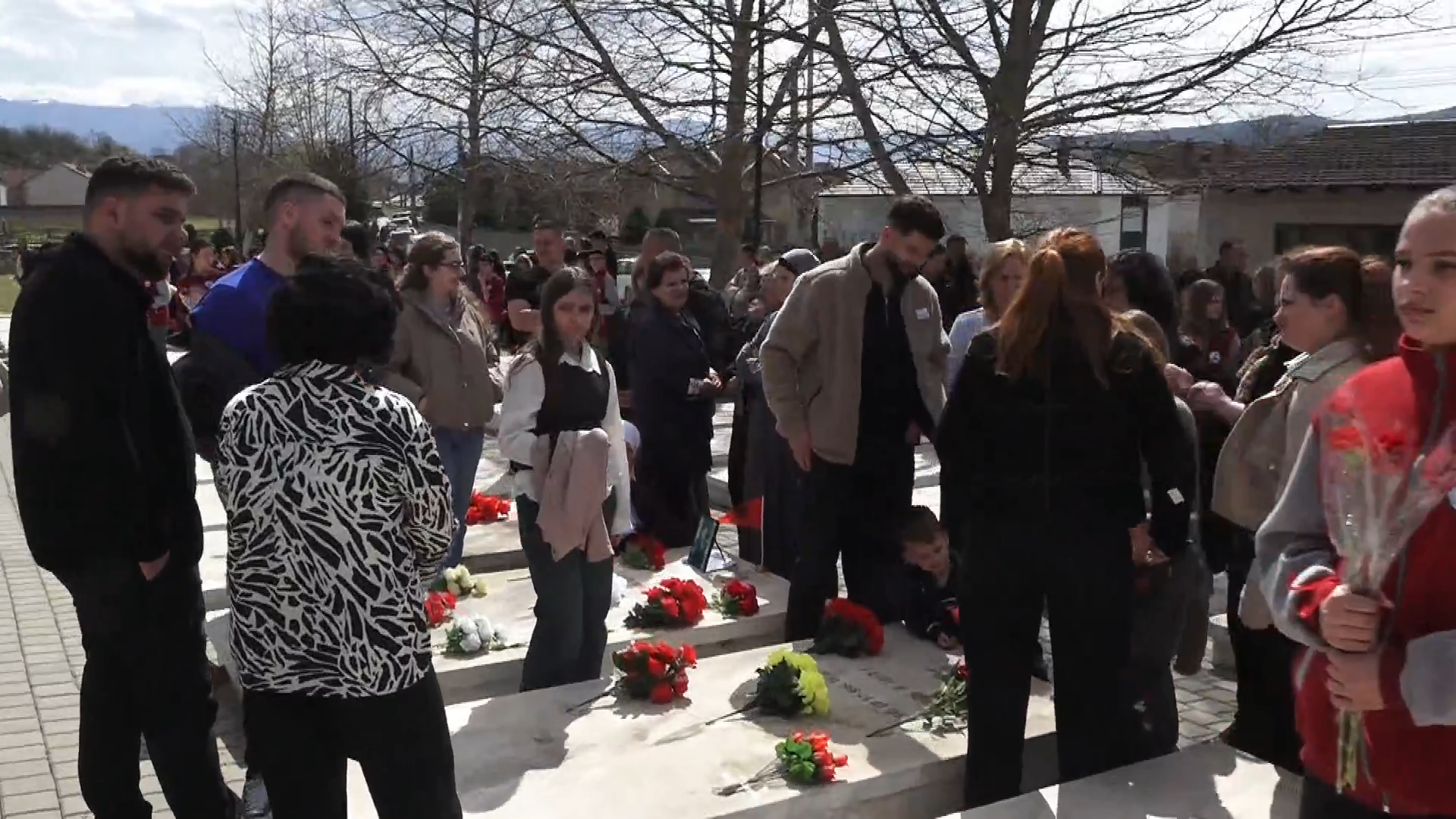
“As he loved freedom, so he died for it”: the touching story of a mother from Krusha e Madhe
Sitting beside her son’s grave, with tears in her eyes, she remains overwhelmed with grief. Not only on this anniversary, but for the past twenty-seven years, Alltane Duraku has lived with deep pain and an unending longing.
Her son, Jeton, from Krusha e Madhe, was killed by Serbian perpetrators.
On the anniversary of the Krusha e Madhe massacre, like many other mothers, she went to pay tribute at her son’s grave. He was only 17 years old at the time.
Twenty-seven years after the war, Krusha e Madhe today was filled with tears and sorrow for all the lives lost.
“This is my son’s grave; this date is very important for us. He was 17, but he was very devoted to freedom, and just as he loved freedom, he died for it… He really wanted to be a soldier; he went to enlist, but they did not accept him because he was young. He kept some symbols of the KLA, with many pockets on his clothes, and they separated him in the village. He was in a group when they asked for his ID, and he immediately handed it over. They told him, ‘you are KLA.’ One villager, uncle Sinan, said ‘what KLA, he is young,’ but they shot him with a single bullet and laid him down,” she recounted.
Memories of her son follow her everywhere. She says she will never forgive the aggressor who caused so much suffering to innocent people.
“So much pain—not only on this date, but every time I wake up in the morning, whatever I eat or drink, the loss of a child is very heavy,” she said.
Hundreds of family members and citizens paid tribute today at the Krusha e Madhe Memorial Complex, where the bodies of those killed and massacred are laid to rest.
Almost all with tears in their eyes, bringing flowers to honor the martyrs who fell for freedom.
Among them was also the nephew of 82-year-old Shefki Hoti, who has around 20 family members killed.
“We are all in mourning, all crying, our hearts are weeping, because many young people were taken from us. Even today, 64 are still missing. What can we say about this life—until we go to our graves, we will never forget, but we pray we never experience this again… This date always comes back to us, always with tears, always with pain. All those you see are crying—mothers, the elderly, the young, everyone,” he said.
Krusha e Madhe today commemorated those killed and massacred by Serbian forces.
On March 25, 26, and 27, 1999, 243 people were massacred in Krusha of Rahovec. To this day, the fate of 64 people remains unknown.
Meanwhile, in Krusha e Vogël, Ajvaz Shehu—who had been missing for 27 years—was reburied today. His remains were found in Shiroka eight years ago, but he was not reburied at the time because his mother could not accept that the remains belonged to her son.