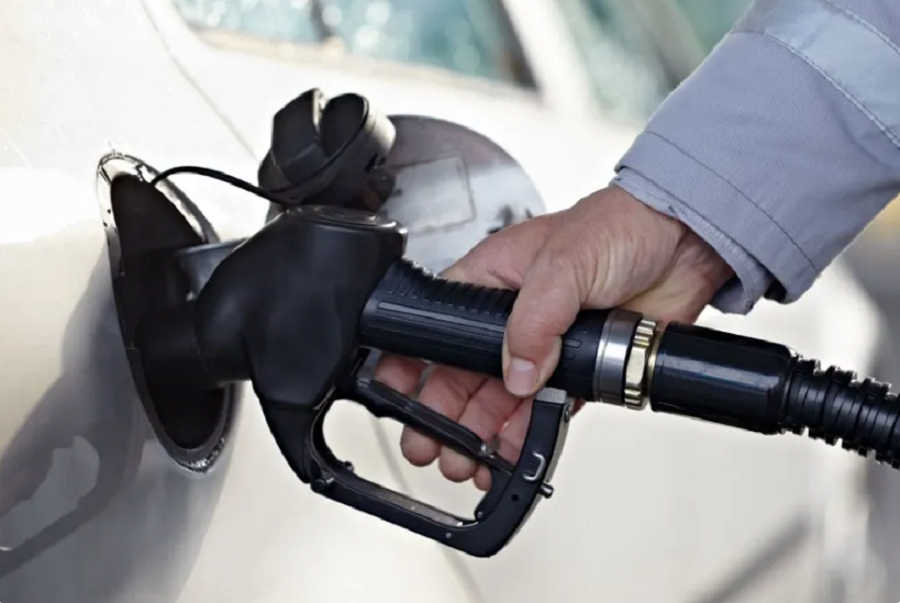
Are fuel prices increasing with the arrival of our compatriots and the harvest season?
Fuel prices in our country remain high, despite the end of the conflict between Israel and Iran in June. Current diesel prices in the Kosovo market range from €1.18 to €1.30 per liter. Prior to the conflict between these two countries, fuel prices were around €1.15.
However, there are growing doubts that fuel prices remain high every year during the holidays when compatriots come to Kosovo, as well as during the harvest-threshing season due to increased demand for agricultural machinery.
In this regard, the former Minister of Trade has called on the Competition Authority to investigate whether there are market manipulations or illegal agreements that distort the free market in Kosovo.
However, the President of the Association of Oilmen denies that the price of diesel remains high due to the harvest season or the arrival of the diaspora.
Economic expert Ismet Mulaj, while stating that fuel prices are high, emphasizes that this is entirely due to high consumption, including the harvest campaign and the arrival of compatriots.
He argues that the Competition Authority should investigate whether there are market manipulations or illegal agreements that distort the free market.
Meanwhile, the president of the Association of Oilmen, Fadil Berjani, says there is no reason to panic, as prices in Kosovo are cheaper than in Europe. He denies that the prices remain high due to the harvest season or the arrival of the diaspora.
The Ministry of Industry, Entrepreneurship, and Trade (MIET) told KosovaPress in a written response that inspections have increased to monitor the fuel market.
According to MIET, dozens of joint inspections have been carried out with the Tax Administration of Kosovo (TAK), and teams remain in the field to protect consumers and increase transparency.
“MIET, through the Central Market Surveillance Inspectorate (CMSI), has intensified supervision in the oil derivatives sector across the country through continuous on-site inspections of economic operators dealing with fuel trading, aiming to protect consumers, increase transparency, ensure fair competition, and eliminate market distortions. Market inspectors from CMSI, to oversee the implementation of MIET’s decision, have increased field inspections, conducted dozens of joint inspections with TAK inspectors, and even today, CMSI and TAK teams are in the field. In all cases where violations by economic operators are found, market inspectors will take all punitive measures in accordance with applicable legislation,” MIET said in a written response.
On the other hand, the Competition Authority stated that it has not yet found evidence of cartel agreements in this sector. However, according to them, any price change or similar pricing trends suggesting agreement will be investigated.
“MIET has set a cap on the maximum allowable trade margin for the sale of oil products as follows: wholesale up to €0.02 per liter, retail up to €0.12 per liter. This decision is accompanied by increased oversight by the Market Inspectorate, in cooperation with Customs, the Tax Administration, and the Competition Authority. The Competition Authority continuously monitors the oil derivatives market in Kosovo, and so far this year, there is no evidence of prohibited agreements between economic operators (cartel agreements) in this sector. However, any price changes or trends that suggest agreement will be addressed by the Authority,” the Competition Authority said in a written response.
It is worth noting that global oil prices have increased after Israel announced it had struck Iran, in a dramatic escalation of tensions in the Middle East.
When oil prices on international markets rose due to the conflict between Iran and Israel, Kosovo also felt the effects with increased fuel prices. The price for a liter of diesel in Kosovo ranged from €1.25 to €1.35.
Meanwhile, diesel imports in Kosovo increased during the first four months of this year, compared to the same period last year. Official data from the Kosovo Agency of Statistics (KAS) show that from January to April 2025, a total of 200,364 tons of diesel were imported, compared to 191,926 tons in the same period in 2024.
This represents an increase of approximately 8,438 tons, or 4.4% more than last year.
Meanwhile, local diesel production remains zero, making Kosovo entirely dependent on imports for this type of fuel. There have been no notable changes in exports or reserves, according to published statistics. /E. Krasniqi