

The recount of votes due to manipulation of votes for candidates for deputy is expected to delay the certification of the final results of the parliamentary elections of December 28. According to experts on electoral processes, this will lead to delays in the formation of new institutions, even risking the timely approval of the 2026 draft budget, the ratification of international agreements, and also raising dilemmas regarding the timely election of the country’s president.
Due to the failure to approve the 2026 budget, the caretaker government is using the previous year’s budget for the months of January and February; however, for the month of March, a decision of the Assembly is required for such a measure.
Researcher at the Kosovo Democratic Institute (KDI), Eugen Cakolli, tells KosovaPress that based on the current dynamics of the recount and the legally prescribed deadlines, the certification of the election results may occur around mid-February or, at the latest, by the end of the month.
According to him, this may limit the possibility for the constitutive session of the Assembly to be held within February, thus opening the way for the formation of the new government. He also raises concerns about possible delays in convening the session to vote for the president.
The mandate of President Vjosa Osmani ends on April 4, 2026. According to the Constitution of Kosovo, a new president must be elected no later than 30 days before the end of the current president’s mandate, which means by March 4, 2026.
“With such a dynamic, perhaps the most optimal and optimistic scenario in the current situation is that the results could be certified sometime around mid-February, whereas if there are complaints and other potential decisions by the Election Complaints and Appeals Panel (PZAP) or the Supreme Court, there is a risk that we may not have certification of the results until the end of February. The first consequence, naturally and most directly, is the limitation of the possibility for the constitutive session to be convened and held in order to vote on the constitution of the Assembly, the election of the government, and the budget within February, which implies that potential payments that were planned to occur at the beginning of March cannot take place. Because after the announcement of the final results there are 30 days for the Assembly to be constituted, and although the president may convene the session immediately, there is a deadline of at least five days, based on the rules of procedure, required for the preparation of the constitutive session. This means that we are already entering the deadlines for the completion of procedures related to the Assembly, the budget, international agreements, and then also the president. This risks plunging the country into political crises and a constitutional vacuum, because if the president is not elected by March 5, then we are already in constitutional violation,” he says.
The same concern is also addressed by Naim Jakaj from the Kosovo Law Institute. He tells KosovaPress that if the certification of results is delayed until the end of February, there must be an engagement for the vote on the new government to take place on the same day as the constitution of the Assembly.
“If we go into mid-February or the end of February, the situation will be more or less the same, where we will face scenarios in which at the end of February there will be no salaries for public sector workers for the month of March. This is because a government would need to be voted in to submit the budget law for the current year and for this vote to take place through an expedited procedure. In this case, if election results are certified in mid-February or at the end of the month, then the president, for as long as her mandate lasts, will need to convene the constitutive session faster than last time. Even when it is convened (the constitutive session), within 30 days the Presidency of the Assembly will need, within five days, to call representatives of political parties in order to prepare the agenda. Therefore, the president would need to act very quickly once the election results are certified, so that the Assembly is constituted and the Government is formed on the same day,” he declares.
To avoid delays in the execution of salaries in the public sector in the event of the budget not being voted on in time, Cakolli says that the caretaker government will attempt to disburse salaries at the end of February in order to avoid risks.
According to him, the main problem will be the allocation of supplements and pensions during March, as well as payments that the state or certain municipalities have entered into through contractual obligations.
“I believe that there will be attempts for salaries to be disbursed as such at the end of February in order to avoid the risks of further delays. The main problems may arise in relation to the allocation of supplements and other pensions, which are not received on the last day of the month as is usually the case. Moreover, perhaps an even bigger problem is the issue of allocations or payments for contracts into which the state has entered into obligations, or certain municipalities, which cannot be paid, and if there are further unjustified delays, there is a risk that the state will also have to pay penalties or interest due to delays in the payment of these funds that had been planned,” Cakolli emphasizes.
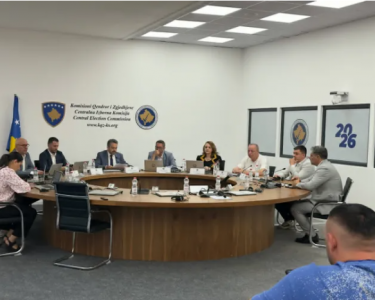
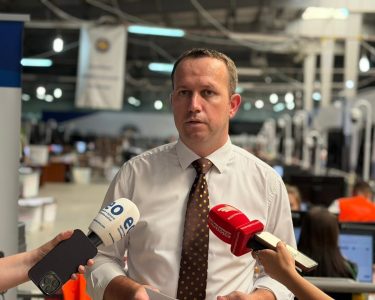
The Central Election Commission (CEC) has decided to carry out a full recount of all votes in polling stations across 28 municipalities. Previously, in these 28 municipalities, the CEC had decided that only 10 percent of polling stations would be recounted, while in 10 other municipalities it decided on a full recount. The decision of January 19 comes after, during the partial recount, large discrepancies were observed in the votes for candidates for deputy in the early parliamentary elections of December 28, 2025.