A historic and decisive moment for bringing peace is still considered today the Ohrid Agreement – a contract signed 24 years ago between Albanians and Macedonians. Nearly a quarter of a century has passed since the signing of this document that ended the armed conflict in North Macedonia, but the agreement was not fully implemented, experts on this process assess.
The Ohrid Framework Agreement affirms the unitary character of the state and the exclusion of violence for achieving goals, says analyst Xhelal Neziri, adding that with its signing “the state was modernized and democratized as a state of all citizens.”
“It was a historic moment and a historic decision, and now it should be viewed from this perspective to see what has been done and where mistakes were made. The most important thing is that this agreement brought peace and put Macedonia on the track of Euro-Atlantic integration, clearly setting it towards integration into NATO and the European Union. Meanwhile, other aspects of Albanian rights are dynamics present in other multiethnic countries as well, which require articulation and a stronger political voice among Albanians, especially to defend and realize these rights,” he said.
The Ohrid Agreement was reached through the mediation of the international community, which contributed to the political resolution of the interethnic crisis in the neighboring country.
This document has been implemented depending on the political will of governments, says Neziri, according to whom the current VMRO-DPMNE government “does not care about implementing the spirit of this agreement.”
“The Ohrid Agreement has mainly been implemented depending on the political will of governments or governing coalitions. When a Macedonian party had a sufficient number of MPs, giving it the comfort of not depending on Albanian parties, the implementation of the spirit of the Ohrid Agreement was at a minimal level. The Ohrid Agreement is not just a law, not just a constitution; it is a spirit of consensus, dialogue, and compromise. Everything should go through these filters – dialogue between all parties, in this case between ethnicities, compromise between the two ethnicities, consensus in decision-making. This spirit was not implemented when Macedonian parties had a large parliamentary majority and the government was not dependent on Albanians,” he stated.
He adds that there is no analysis of what has actually been adopted from this agreement.
“Now, 24 years later, unfortunately there is no concrete evaluation or analysis regarding what has been adopted from the Ohrid Agreement, how much of the normative solutions, laws, constitution that were embedded in the Ohrid Agreement within North Macedonia’s political system have been implemented, and how much the implementation of those laws and constitution produced the intended results. There are several dimensions that need to be analyzed, which have not yet been qualitatively analyzed. Unfortunately, the greatest blame here lies with the Albanian parties that have led the Secretariat for the Implementation of the Ohrid Agreement for a long time, which later was transformed into the Ministry of Political System, and all these analyses were not taken seriously,” he adds.
The Ohrid Agreement ended the conflict in then-Macedonia, which had been sparked by the discrimination against Albanians there.
The document brought changes to the Constitution and regulated the use of languages other than Macedonian.
Former diplomat Xhevdet Halili told KosovaPress that the deadline for the agreement’s implementation was three years after signing.
“The deadline for completing the implementation of the Ohrid Agreement was 2004. Today we are 20 years past 2004 and we still have matters that have not been implemented as they should. One of the biggest weaknesses of the implementation of the Ohrid Agreement so far is that it was privatized, politicized,” he says.
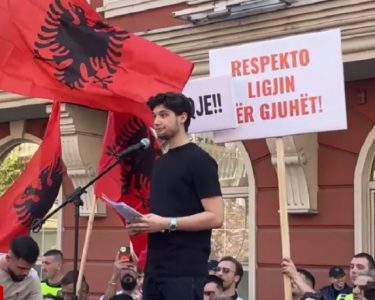
Twenty-four years after the signing of the Ohrid Agreement, he points out that Albanians are still facing injustice.
“The demand is to pass a law with all the criteria so that the Albanian language is not only official but also equal, because in the 1974 Constitution of the former Yugoslavia, Albanian was formally official and equal. The Constitution stated that Albanian and Turkish are official and equal. This law should be passed and approved, and of course accepted by the coalition partner, in this case VMRO, and start being implemented properly. Secondly, the claim by those in power that they have made a law on the method of adequate representation of Albanians and other citizens should begin to be implemented as it should. These are the two main points that both the opposition and Albanians insist on,” he says.
The Law on the Use of Languages in North Macedonia obliges state institutions to allow the official use of languages spoken by at least 20 percent of the citizens. This includes the Albanian language.
In North Macedonia, with about 2 million inhabitants, Albanians make up almost 30 percent of the population.
Meanwhile, the new Law on Languages – adopted in 2018 – provides for expanded use of the Albanian language, such as in judicial processes and on police uniforms.
The VMRO-DPMNE party, currently in power, opposed the adoption of this law, which later ended up in the Constitutional Court.
The issue of language is perhaps the most debated in North Macedonia when it comes to the rights of Albanians in the multiethnic state.