
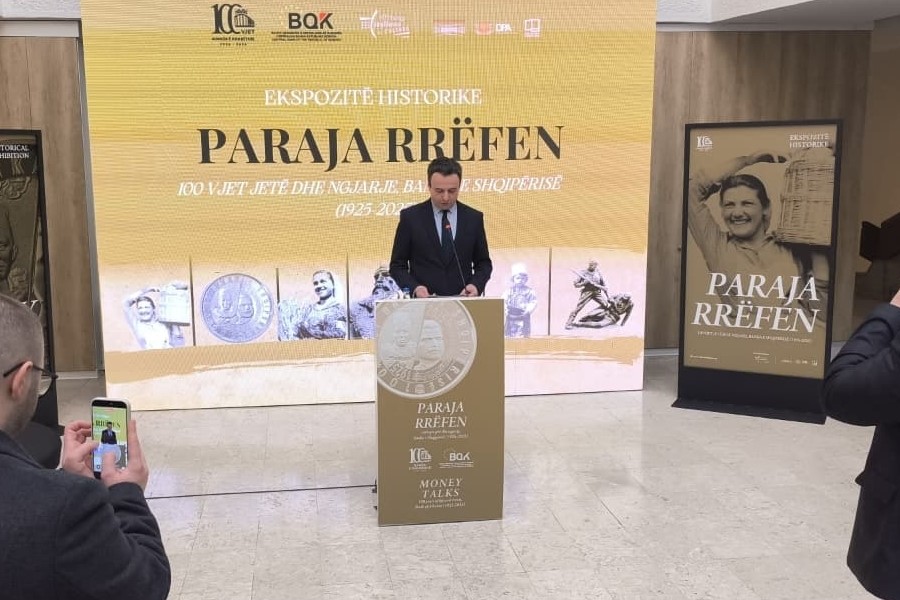
On the occasion of the 100th anniversary of the Lek in circulation, the Central Bank of Kosovo, in cooperation with the Bank of Albania, opened an exhibition in the CBK Hall titled “Money Tells a Story: 100 Years of Life and Events.”
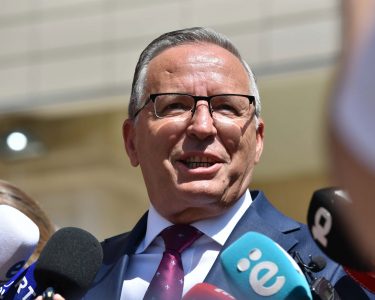
Present at the opening ceremony was the Prime Minister of Kosovo, Albin Kurti, who said that the exhibition reflects the connection between history and trust in the country’s institutions, as well as cooperation with Albania.
“The exhibition that brought us together today speaks the language of history; its message is relevant. It implies that money is a symbol of trust, institutional order, and the state itself, in addition to being a medium of exchange. This presentation is primarily about how our societies have built credibility over time, how institutions have been strengthened through challenges and efforts, and how the state is a legal structure, but also a relationship of commitment between citizens and their institutions. This story of trust also directly connects us to the relationship between the Republic of Kosovo and the Republic of Albania. Our cooperation is neither accidental nor temporary. The Government of the Republic of Kosovo and the Government of the Republic of Albania have built a level of cooperation centered on the needs and demands of citizens. Fifty-eight new agreements in just four years, achieved through joint government meetings, represent the highest level of cooperation,” Kurti said.
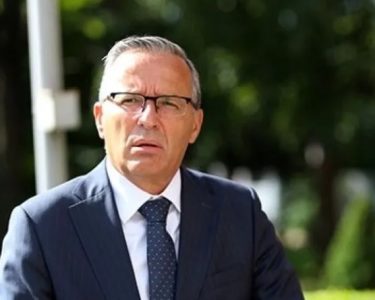
The Governor of the CBK, Ahmet Ismaili, said the exhibition helps the public understand the importance of financial stability and trust in the banking system.
According to him, the exhibition demonstrates that history, economics, and culture are inseparable.
“This exhibition is not just a display of coins and banknotes but a long narrative of our economic, social, and institutional history. It guides us through the evolution of Albanian money over a century, reflecting state-building processes, economic development, and the strengthening of financial institutions. Today’s exhibition in Kosovo comes in the context of the 100th anniversary of the Bank of Albania, as concrete evidence of the close and dynamic economic cooperation between our institutions and our shared commitment to present this heritage to the public in our countries. Its opening in Prishtina coincides with the week in which we mark the 18th anniversary of the independence of the Republic of Kosovo. Therefore, the exhibition ‘Money Tells a Story’ aims to raise public awareness about the role of money and central banks, as well as the importance of financial stability,” Ismaili said.
The Governor of the Bank of Albania, Gent Sejko, emphasized the historical and cultural significance of the exhibition.
“This stop in Kosovo has a special meaning. Our shared history, written with sacrifices, efforts, and vision. The Albanian League of Prizren and figures such as Ymer Prizreni, Sylejman Vokshi, Hasan Prishtina, Isa Boletini, Bajram Curri, and many others shaped the national legend and the Albanian state in those times. It is therefore natural that an exhibition about money, the CBK, and the development of the Albanian state visits Kosovo, because the history that money reveals is ours—it is the history of Albanians wherever they live. The history of the Central Bank and Albanian currency unfolds in three main eras, shaped by political changes, geopolitical developments, and economic events that have determined Albania’s fate… Today, financial decisions are made more frequently and are more complex. In recent decades, many central banks worldwide have expanded their communication with the public to build new bridges of interaction. Exhibitions, museums, school programs, and citizen activities are ways to make a complex institution more accessible, effective, and transparent to the public,” he said.
The exhibition “Money Tells a Story: 100 Years of Life and Events” will be open to the public, offering an opportunity to see the historical and cultural development of Albanian currency and the role of central banks in economic stability.