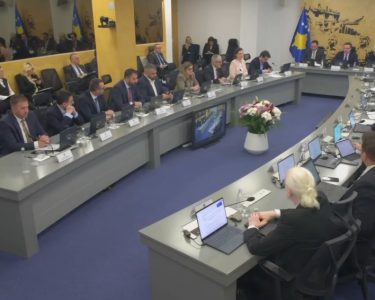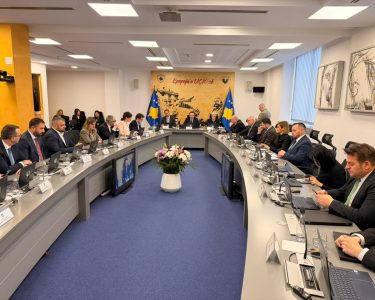
The caretaker government has approved a draft budget worth four billion euros for the year 2026.
In today’s meeting, the executive decided to increase pensions to 150 euros and raise child allowances by 50 percent starting in November this year. The caretaker government also decided to raise the minimum wage for 2026, which will increase in two phases: starting January 1, 2026, the minimum wage will be 425 euros, and from July 2026, it will rise to 500 euros.
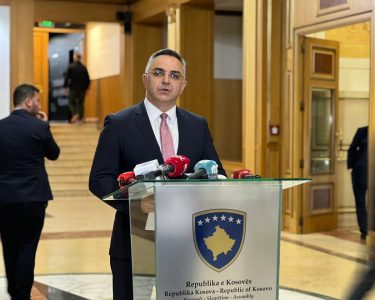
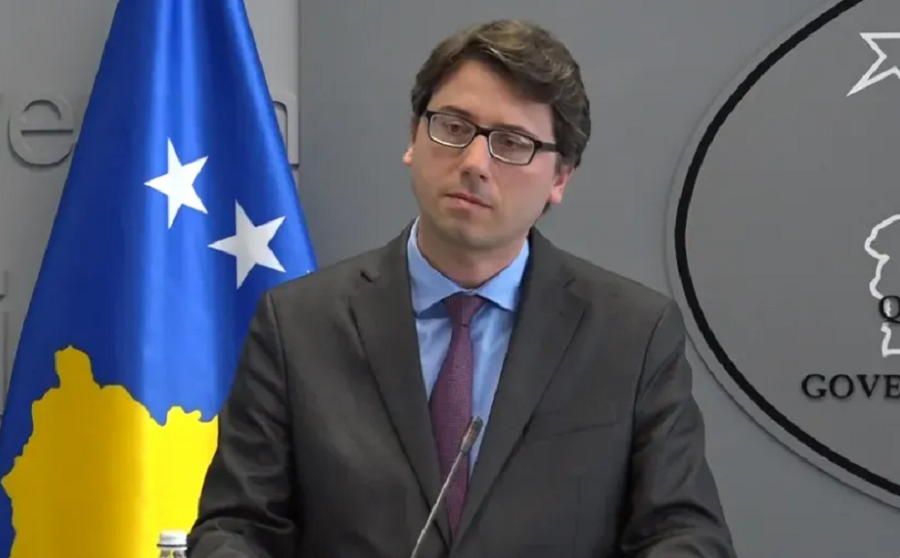
The caretaker Minister of Finance, Hekuran Murati, said that the 2026 budget, which also includes a 13th salary for public sector employees, complies with fiscal rules. He stated that the vast majority of the four-billion-euro budget for 2026 comes from indirect and direct taxes.
“We have a record budget in terms of size. Budget expenditures reach a value of four billion euros, or more precisely, 3 billion and 967 million euros planned for 2026. This represents an increase of about 10 percent compared to the 2025 budget. Revenues are projected at 3 billion and 637 million euros, mostly from indirect and direct taxes. The projected budget for next year adheres to fiscal rules. The deficit, according to fiscal rules, is 9 percent of the Gross Domestic Product. Regarding wage limitations, the total wage bill is 980 million euros, maintaining the set limit for annual growth. The GDP for next year is projected at 12 billion euros. When we took office, it was 7 billion euros, while next year it will be 12 billion,” he said.
Speaking about the increase in basic pensions to 150 euros and child benefits by 50 percent starting in November, Minister Murati said the total cost for the coming months is 11.4 million euros.
“This decision foresees an increase of the minimum pension from 120 euros to 150 euros per month. Specifically, it affects the following schemes: children with disabilities aged 1–18, disability pensions, family pensions, and work invalidity pensions. The total cost for the coming months is 11.4 million euros, funded by the Economic Recovery Program. When we took office, pensions were at 90 euros, child allowances were 0 euros — we introduced them for the first time. This is the second increase within our mandate. Today we are approving another 50 percent increase on the existing level,” Murati added.
The caretaker finance minister also said that the minimum wage increase will take place in two phases. According to him, from January 2026, the minimum wage will be 425 euros, and from July 2026, it will rise to 500 euros.
“After analyzing the potential impact on the private sector, enterprises, and workers, this new minimum wage will affect 150,000 employees in the private sector. After discussions with trade unions and business representatives, our proposal is that the minimum wage for next year be set at 500 euros, or 3 euros per working hour. To make this increase manageable for businesses and allow easier yearly planning, it will happen in two phases — similar to how we implemented pay raises in the public sector. Starting January 1, 2026, the minimum hourly wage will be 2 euros and 50 cents, about 25 percent higher than the current level, which corresponds to 425 euros per month. Starting July 1, the second phase will raise it to 3 euros per hour, or 500 euros per month. This proposal comes from the Ministry of Finance, as required by law — when there is no proposal from the Economic and Social Council, the initiative must come from the ministry,” Murati explained.
In today’s meeting, the government also approved the 2025 municipal budgets for Prishtina, Gjilan, and Zubin Potok. Minister Murati said it is now up to the Assembly of Kosovo to approve these budgets.
“By September 30, 2024, the budgets of these three municipalities — Prishtina, Gjilan, and Zubin Potok — had not been approved. They were also not approved in time to be included in the Law on Budget Allocations and parliamentary processes. These municipalities approved their budgets only after that deadline. Although some were submitted to the Assembly in December, no sessions were held due to elections. Now that the Assembly has been constituted, we are submitting these budgets so that they can be approved and become part of the 2025 Budget Allocations Law. Starting next month, if approved, the municipalities will have their 2025 budgets available. It is now up to the Assembly to convene parliamentary committees and hold a plenary session to approve them,” he concluded.
The 2025 budget was 3.6 billion euros, while the minimum wage was 350 euros gross, child benefits were 20 euros, and the basic pension was 120 euros.