
Time has lost its meaning for her, and days and nights have now become one. Staying at home alone is worsening her emotional state.
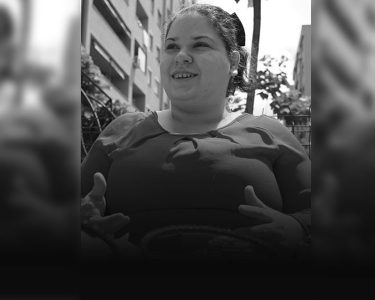
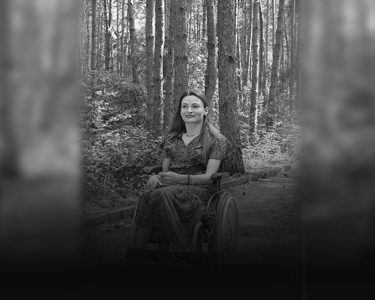
After twelve years of schooling, Ema Kabashi has almost given up on her dreams, unable to continue university. This is the story of the 19-year-old from Fushë Kosova, who has been diagnosed with a mild developmental delay. The skiing champion, though young, recalls her childhood years with much emotion.
She says that for a long time she suffered from depression due to the pressure and exclusion she experienced from her peers.
Ema Kabashi was born on January 4, 2006. Until the tenth grade, she attended “Mihail Grameno” school in Fushë Kosova, one year at the vocational school “Minatori,” and later at the Resource Center “Përparimi.”
“My peers bullied me a lot. They would say, ‘You can’t do anything, you only come to school for nothing. You don’t have a home or house.’ They told me, ‘Your face is full of acne.’ Even then I went to a psychologist and told her that I was being bullied badly, that they said, ‘Your face is ugly with acne.’ At that time, I told my parents to change my school as soon as possible because I had done well in elementary school, but in high school at the vocational school ‘Minatori,’ I felt very bad, I wanted to cry.”
Ema’s life changed somewhat after transferring to the Resource Center for Learning and Counseling “Përparimi,” a place where children with intellectual and multiple disabilities receive educational services. She says her opinions began to be heard, and her skills started to emerge.
Kimete Bekaj, a physical education teacher, noticed Ema’s skiing abilities. Her tireless work led to success.
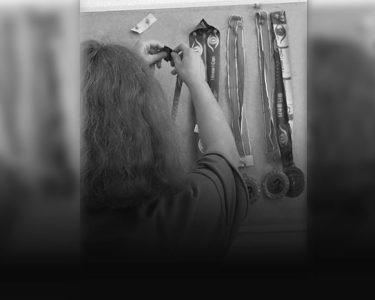
“Ema has been extraordinary. I noticed her potential in Brezovica in skiing, starting with the first elements, walking on the slopes and inclines. When she progressed to the next level, she became very successful. This year in Torino, she won a silver medal. Ema has decorated herself in skiing five times in national competitions.”
Previously, the girl from Fushë Kosova went through a difficult phase of depression.
“They made me feel very bad, so I went into depression. When depression hits me, my body shakes, and even if someone says something bad to me, I feel very bad. I am sensitive, meaning that for every bullying from someone, whether peers or strangers, I feel it. But my family supports and protects me every time.”
After finishing the twelfth grade, the 19-year-old is staying at home. Her biggest desire is to continue to university like her peers, but this seems impossible…
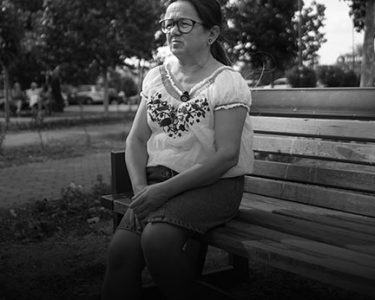
Her mother, Zejnija, also suffers greatly, worried about what will become of her daughter after she passes away.
“I asked Ema’s teachers and the principal, ‘Ema finished high school, what next for children who need support until they gain confidence and employment?’ As long as we are here, it’s fine, but what happens when a parent is missing, and there are no other ways for education or employment? For us, this is the main concern—where will they be employed, where will they find themselves in the future? It is very difficult.”
Zejnija, a woman over fifty, also speaks about the financial difficulties her family faces and the impossibility of getting timely treatment for Ema.
“As a mother, it was very difficult. I was unemployed, my husband unemployed, we had no income. She needed treatment, more opportunities to explore her case. It was impossible; we lived in a place, post-war, without income, without anything. With doctors and psychologists, we did what we could, but they didn’t have the resources to investigate further.”
For mother Zejnija, every day seeing her daughter almost isolated at home is painful and heavy.
“She was bullied a lot, unsupported. She wasn’t ready, didn’t have confidence to go out with friends, lonely, cried all the time. These difficulties continue without institutional support. My daughter often asks, ‘What should I do, where will I work?’ I don’t have the means to provide everything for her. Whenever she goes out looking, there’s no income to support her.”
The mother and daughter stay together all the time, as Zejnija fears that Ema might be exploited by her surroundings. She calls on the state to help her daughter gain employment skills.
Ema herself prays daily for the opportunity to continue in sports and to one day become a ski coach for children.
Ema and Zejnije Kabashi
Kimete Bekaj
September 2025