
She begins her mornings in the presence of her community, in a place where everyone speaks her language. Beyond those walls, every effort to communicate often remains futile, and discrimination makes it even harder.
For Drita, sign language is the bridge that connects her to the world; through it, she feels equal.
On her way to the Association of the Deaf in Prishtina, she sees hundreds of people, but everything is silent. The silence breaks only when she enters the spaces she has frequented since the 1970s.
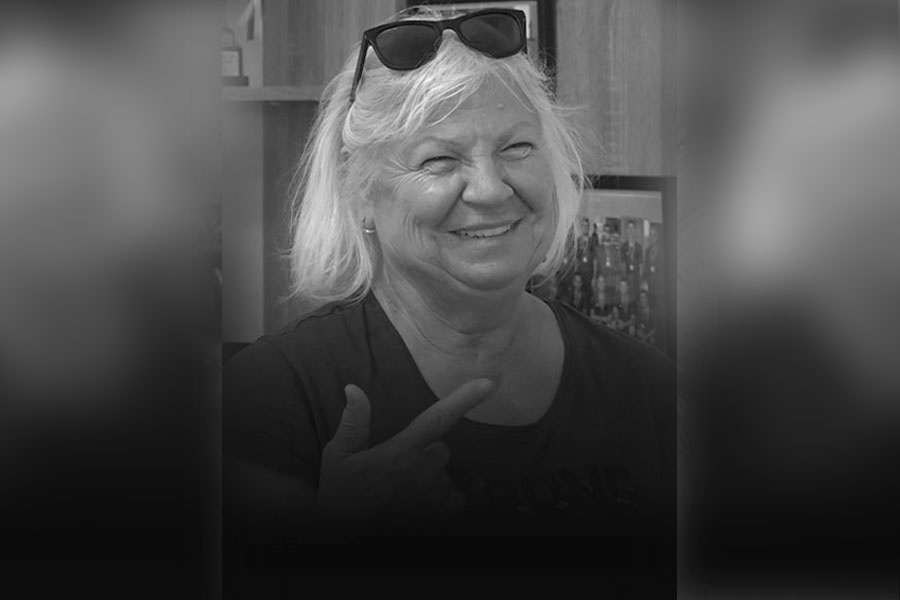
Mother of two children, Drita Bejtullahu Toprlak was born in 1950 in a village near Gjilan.
Her mother was deaf, while her father was a defectologist—a specialist who helps persons with disabilities learn and develop their abilities.
She took her first steps at “Elena Gjika” elementary school in Prishtina, then continued at the Resource Center “Nënë Tereza” in Prizren, and later completed higher education in Belgrade.
“I worked in a printing house for several years, and after the war I began teaching at ‘Elena Gjika’ school, as a teacher for deaf children. I also worked at the Association of the Deaf; I am a researcher of sign language. My husband was deaf, I have two children. One of them hears and is a sign language interpreter, and my daughter is deaf. In our family, we have bilingual communication—two languages.”
Drita, who has now been the head of the Association of the Deaf in Prishtina for two years, has spent her entire life advocating for the rights of people in this community.
In various institutions, she continues to face communication difficulties due to the lack of interpreters.
“I’ve had many problems, it’s been very difficult… In institutions I have problems when I am alone, without a sign language interpreter. The main priority of the community today is literacy—reading and writing. The school [the Resource Center ‘Nënë Tereza’ in Prizren] has existed for 75 years, but still… we wanted to integrate like others into universities, good jobs. Education is a big problem. I see people who hear and speak—they have good jobs, they have various university degrees. We receive completely different treatment; education is a big problem. From childhood, when a child receives education and learns to read and write, they can manage on their own. But our education system is very weak, and we always face barriers.”
Even after many years of schooling, she was unable to pursue her dreams.
“I loved finance very much, and many times I helped my colleagues because I loved mathematics. I loved it very much. But life… we will always remain underdeveloped compared to how we could be, and we will lose our dreams or a good job.”
She has never been able to receive the disability pension, despite having followed legal procedures for years. She has felt discriminated against and excluded whenever she met people outside her immediate family.
“In the family, when we were sitting with extended relatives, we never had access to information. We only received short pieces of information—‘Are you okay? How are you? Good.’ And nothing more; there was no bigger conversation in sign language. I felt excluded and discriminated against. Only in the association do I feel truly good with my community—nowhere else. I am very satisfied when I enter my community.”
The 75-year-old, who lives in Prishtina, feels proud of sign language—the strongest tool she has had throughout her life.
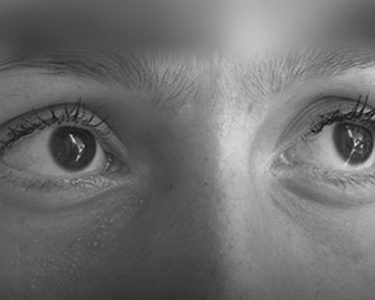
“I remember once I was with my husband, both of us deaf, and people were staring at us, surprised, wondering what kind of people we were who communicated through sign language. And they were shocked when they saw my husband driving—around the world, deaf people also drive. The most important thing is that the eyes are there to see, and we have our language. We receive information through our eyes. Our eyes speak.”
With hand movements and facial expressions, she “raises her voice” for bilingual education, saying:
“Let the youth not be lost the way we were. Bilingual education must be implemented, otherwise the deaf community will again end up without reading and writing skills.”
Drita Bejtullahu Toprlak
July 2025
The interview was conducted with the help of interpreter Rukije Gashi