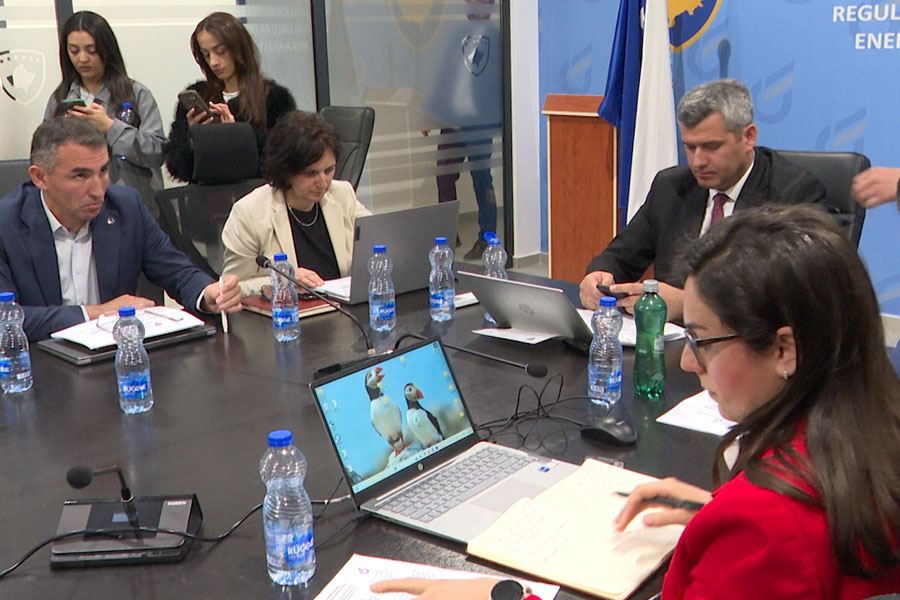
The Energy Regulatory Office in Kosovo (ERO) announced that the average increase in tariffs for all categories of consumers, based on the Maximum Allowed Revenues, is around 16%, KosovaPress reports. On Friday, ERO approved the requests of the three energy operators (KEDS, KESCO, and KOSTT) regarding their maximum allowed revenues. The ERO made the announcement about the price increase after the Board meeting, via a statement.
The energy regulator proposed last month an increase in electricity prices in the country by about 15 percent, arguing that the rise in tariffs this year is necessary due to the reduction in energy production, the increase in consumption, and the heavy reliance on high-priced imports, KosovaPress reports.
The maximum revenues for the Kosovo Electricity Supply Company [KESCO] are 435 million euros, even though their initial request was 447 million euros. Meanwhile, ERO decided that the maximum revenues for the Kosovo Electricity Distribution Company [KEDS] for the year 2025 will be 180 million euros, although their request was 220 million euros. On the other hand, the maximum revenues for the Transmission, System, and Market Operator [KOSTT] were set at 88 million euros, even though their request was 101 million euros.
In relation to this, the Chairman of the ERO Board, Ymer Fejzullahu, said that after evaluations from their staff and consultative reports, they managed to reduce the maximum allowed revenues for these operators.
However, he did not provide an exact percentage of the electricity price increase for the year 2025, despite heavy media insistence.
He was even harsh toward the media, asking them to leave the ERO board meeting.
“It is worth pointing out that the OSSH part, the KEDS part, was 214 million euros, but after evaluation by ERO, this request was reduced from 214 million euros to 180 million euros after the staff review in the consultative report and in response to comments as the final version… 26:35 The request (KESCO) was around 447 million euros, but after staff evaluation in this process, we reached the value of 435 million euros, after discussions we had with all stakeholders,” he said.
Meanwhile, ERO’s managing director, Petrit Pepaj, presented the reasons why, according to him, the cost of the electricity service is increasing.
“We have four causes that have influenced the increase in the service cost. These include changes in the cost of purchasing electricity from the universal service supplier. Changes in the cost of purchasing electricity from the distribution system operator. The forecast of electricity import prices for the year 2025 and the forecast for the cost of ancillary services for the transmission system operator. In the assessments for 2025, imports have also been predicted, taking into account that generation units are planned for maintenance,” he emphasized.
Despite journalists’ insistence regarding the percentage of the price increase, Pepaj refused to answer their questions.
“No questions. We will respond in writing,” he said.
At one point, ERO Board Chairman Ymer Fejzullahu even requested the media to leave the boardroom and refused to take any questions from journalists.
“I would kindly ask all media to understand us, as we are moving into a closed session and will continue with other agenda items…,” he said.
Later, ERO issued a statement after the Board meeting, saying: “The average tariff increase for all consumer categories based on Maximum Allowed Revenues is about 16%.”
The energy regulator proposed last month an increase in the price of electricity in the country by about 15 percent.
In response to the price hike, citizens also held a protest on Friday, opposing this decision by ERO.
The Chamber of Commerce and Industry has again called on ERO not to increase electricity prices. On the day the Energy Regulatory Office held its meeting to decide on this issue, the Director of the Chamber of Commerce and Industry, Kushtrim Ahmeti, said that increasing electricity prices at this time endangers jobs. Among other things, concerns were raised about the fast-paced liberalization of the energy market in Kosovo, for which it was requested that the parliament address the issue.
Businesses and citizens, it was said at a press conference, should not have to pay for institutional failures.