
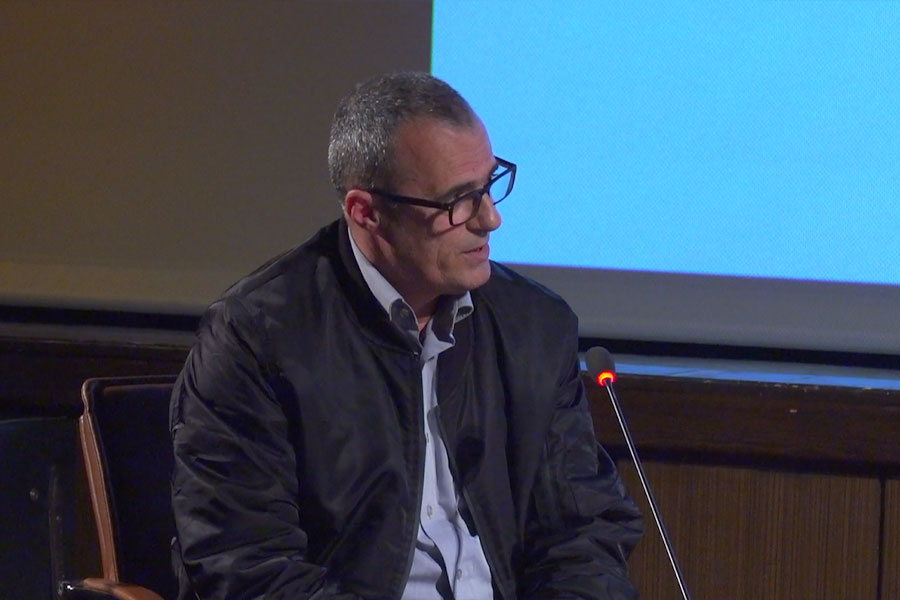
“Shame is not ours, it belongs to them,” is the call of Ramadan Nishori, the first male survivor who publicly speaks about the sexual violence that was endured during the war. For more than 26 years, he kept silent about the horrors he experienced. Today, on the Memorial Day for Sexual Violence Survivors, he shared the entire story that forever changed his life in front of the Kosovar society.
The man, around his fifties from Drenas, said that the reason he has courage to speak publicly is because he doesn’t want to remain a prisoner of the past.
“I am a man, a father, trying to build a normal life. I have a wife who has supported me at every step of life, and three children who are the light of my eyes and mean everything to me. I want people to see me as a person who has been through many things, someone who has suffered a lot but never broken. I do not want people to feel pity for the violence I endured. I want them to respect me as someone who fought hard to survive. As someone who fell many times but always got back up. I am here today not because I have forgotten what I went through, but I am here so that I do not remain a prisoner of the past,” he said.
The end of September 1998 is a time that Ramadan Nishori, then 22 years old, says he will never forget. While recounting his public testimony, he recalled the event that changed his life forever, remembering how he was taken to the police station in Drenas where he was sexually assaulted.
“After a while, they started the paraffin glove test, and around midnight, my turn came. I entered and did the test, and I had to wait in the corridor. There were rooms where they would interrogate us. There was also an Albanian who worked with them, everyone knew him. That day, he had the role of an interpreter. While waiting in the corridor, as the police were coming and going, two policemen in uniform opened the door, grabbed me by the arm, dragged me, and took me into a bathroom where the worst thing that could ever happen to a person occurred. I never imagined this would happen to me. One of them assaulted me, and as the second one prepared to do the same, the Albanian who was there knocked on the door, came in, and pulled me out of there,” he recalls.
He further recounts how civilian police officers had threatened him with the words, “What happened to you, you can never tell anyone.” Nishori says the inhuman maltreatment did not end there, as the next day he was taken to the Pristina prison and later to Lipjan prison.
The sexual violence survivor is also a witness to the massacre at the Dubrava prison, about which he said, “At that time, death was peace for me.”
The traumatic event haunted him even after the war, with Nishori saying that every night he was reminded of what he had gone through.
“Only I know, how hard it was. On March 16, 2001, I was released from prison with the help of the Red Cross. At that time, I was engaged, and two weeks later, I got married. At that time, I lived with my parents and brothers in the village, and after getting married, I told myself, ‘I will leave the past behind and start a new life, to build a family.’ But this was impossible. Every night, I was reminded of what had happened to me. I lived in fear that someone might find out what had happened. After a year, we decided to live in Fushë Kosovë, where I felt a little freer, but I was still locked inside,” he recounts.
What had happened to him remained a secret for many years, and he never found the courage to seek professional help.
“I would think, I am a man, and what happened to me, no one should know because I thought they would humiliate and bully me. I was very closed off. I wanted to cry, to scream loudly, I would leave the house at night, go out, cry, and let it all out. The shame was worse than the pain… It was 2005 when I first reached out to the QKRMT organization. I went there many times, but I couldn’t find the courage to go inside. I decided that it would be better to leave Kosovo altogether. I went to Montenegro, took my family, and moved there, but even there, the Montenegrin language bothered me. So, we returned to Kosovo. One night, I saw an interview with Vasfije Krasniqi, and to me, she is a living hero. I really envied her, thinking, ‘She is speaking up, she is letting it out.’ So, I wrote to her immediately,” he added.
The first man to publicly speak about being sexually assaulted by Serbian forces also shares the moment when he revealed his story to his wife.
“It was very hard, but one night, we went to bed as usual. I was having health problems, and my wife asked, ‘Dan, is there something troubling you?’ Without thinking much, I told her. I told her what happened when I was arrested at the police station in Drenas. She was silent. She started crying quietly, and that night we didn’t talk about anything. The next morning, she said, ‘Dan, there was war, and this could have happened to anyone.’ She said, ‘Until now, you had my support, and from now on, you will have it even more,'” he recalls.
It was not easy for him to share this horrific event with his children either.
“After telling my wife, it was a little easier, I didn’t have to leave the house at night, cry, and return. It was a little easier. One night, I told my wife, ‘What do you think about telling our daughter?’ She agreed, and I said, ‘Yes.’ Now I had a hard time figuring out how to tell her. The next day, we went out for coffee, as we often did. Flutura is the pillar of our house, she has kept the family together all these years. We went out for coffee, sat down, and without saying much, I presented the decision to her, which had been approved by the Government Commission that recognized my status as a victim of sexual violence. When she saw it, she said, ‘Dad, I’ve known about this for three to four years.’ She stood up, hugged me, and said, ‘I will always be by your side.’ At that moment, I cried with joy, I felt so free. I felt as though 500 kg had been lifted from me,” Nishori said.
Ramadan Nishori from Drenas said that after sharing his story with his family, for the first time, he felt like a true father.
“That’s when I felt like a real father for the first time. Because for my family, for my children, I could never be the father I should have been, always an angry person. A person who kept avoiding my children’s questions, always avoiding them,” he expressed.
“Shame is not ours, it belongs to them,” says Ramadan Nishori as he calls on all survivors.
“Today, somewhere, another survivor is watching us. I know what challenges he has faced, and I tell him there is hope, and never give up. And I tell them, shame is not ours, it belongs to them.” he declared.
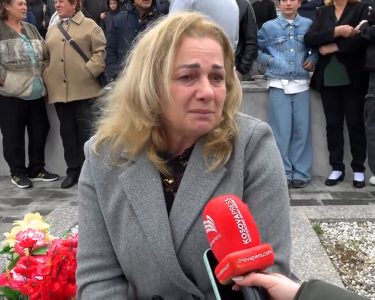
His daughter Flutura claims that family support has great value.
“Family support has great value. I want to tell others who have not spoken or haven’t had someone to talk to, that you are not alone. There is always someone who will stand by you, and maybe today, my father has given you a push to understand that these are not merely words, but the truth itself.” said Ramadan’s daughter.
Vasfije Krasniqi-Goodman, the first woman to publicly share her story of sexual assault, said that Ramadan Nishori’s story will now transform into courage for all victims.
“For the past six years, you have been a very good friend to me, we’ve shared stories together. But from today, you will be my brother. I bow to your courage; to live in a society like ours, you truly deserve the respect of all of us. From today, April 14th, it will no longer be remembered as a day of suffering for me, from today, it will transform into a day of courage for all victims,” said Krasniqi-Goodman.
The director of the Kosovo Rehabilitation Center for Torture Survivors (QKRMT), Feride Rushiti, also stated that Ramadan’s testimony is a rare act.
“This moment is not just a personal testimony; it is the breaking of a long silence. It is confronting the stigma that has weighed on this man for more than two decades, as well as many other men and women. When we say ‘My voice is my strength,’ we are recognizing and valuing the courage to speak. We are also giving a voice to all those who have not yet been able to speak. This is not just a step for one survivor, but a step forward for our entire society.” she declared.
The number of people raped during the recent war in Kosovo is unknown, but reports suggest around 20,000. Their stories remain untold because survivors still fear stigma and prejudice, and remain silent.