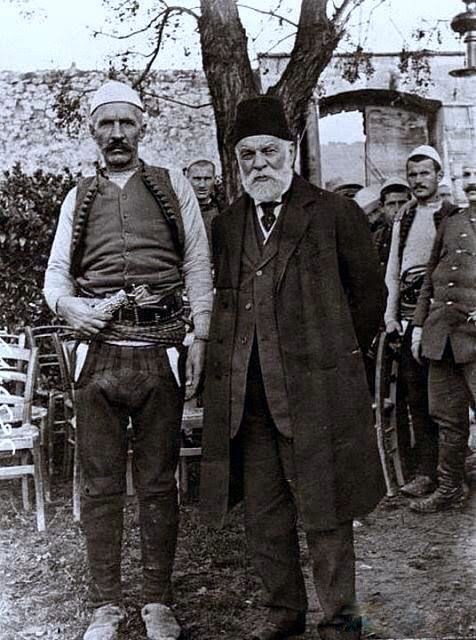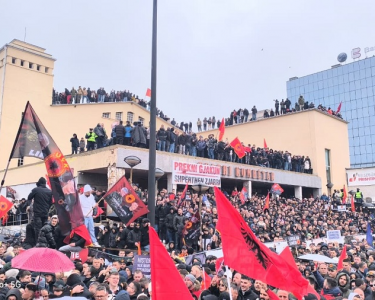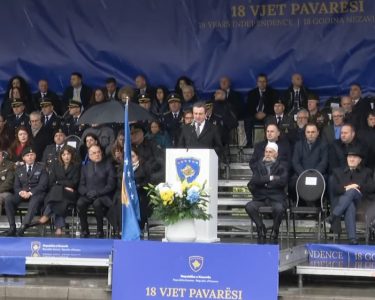

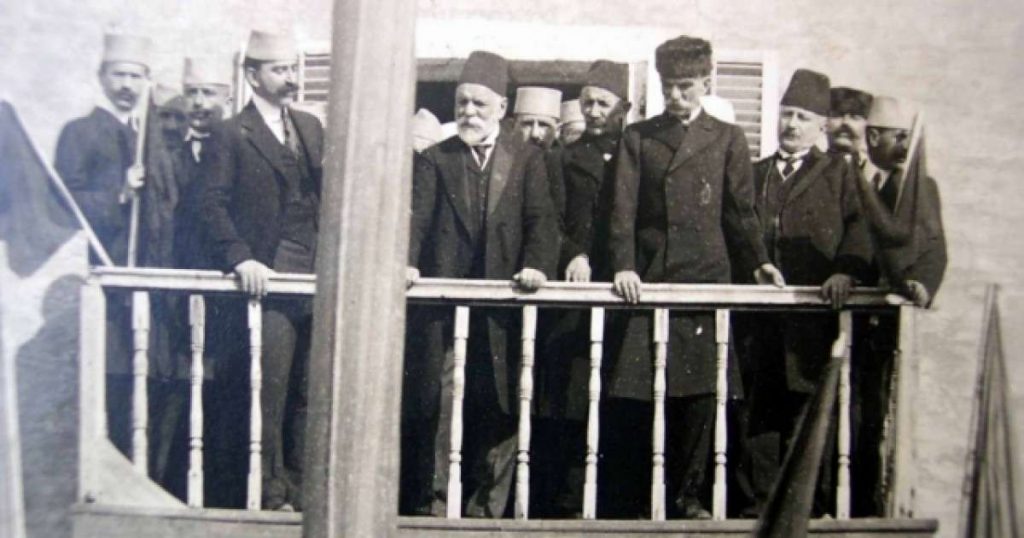
113 years ago in Vlora, representatives of the Albanian Vilayets declared the Independence of the Albanian State. The National Assembly of Vlora held its first meeting on November 28, 1912, with the act of declaring the Independence of the Albanian State from the Ottoman Empire.
The Declaration of Albania’s Independence was the culmination of centuries-long efforts and continuous struggles by Albanians for the liberation of their country. Unfortunately, the Government of Vlora had a short life; after a little more than a year, it was forced to withdraw and give way to a government led by a foreign Prince appointed by the Great Powers of the time.
Even worse, Albania was severely affected territorially: the armies of neighboring countries and the Balkan Wars partitioned half of Albania’s territories, which were annexed by neighboring states, while the London Conference of 1913 recognized the occupation of Albanian territories, drastically shrinking Albania’s borders. Half of the Albanian population remained under Serbian-Montenegrin and Greek rule.
After the Declaration of Independence on November 28, 1912, state institutions were formed, including the Council of Elders and the Government emerging from the Assembly of Vlora. Armed forces and law-and-order structures were established, and work began on consolidating education, healthcare, and administration.

The Government of Vlora laid the first foundations for creating a judicial system based on European models. The Albanian language was declared the official language, and the opening of Albanian schools starting from autumn 1914 was decided. The most important legal act issued by the Provisional Government of Vlora was the “Provisional Canon of the Civil Administration of Albania,” published in November 1913, reports KosovaPress.
The National Assembly of Vlora also elected the Council of Elders, which was to function as an advisory and supervisory body of the government, with Vehbi Agolli as its chair.
The Government of Vlora:
Ismail Qemali, head of the Government and Minister of Foreign Affairs
Dom Nikoll Kacërri, Deputy Prime Minister
Mufid Bey Libohova, Minister of Internal Affairs
Abdi Bey Toptani, Minister of Finance
Mehmet Pasha Deralla, Minister of War (Defense)
Petro Poga, Minister of Justice
Luigj Gurakuqi, Minister of Education
Mit’hat Bey Frashëri, Minister of Public Works
Pandeli Cale, Minister of Agriculture
Lef Nosi, Minister of Post-Telegraph