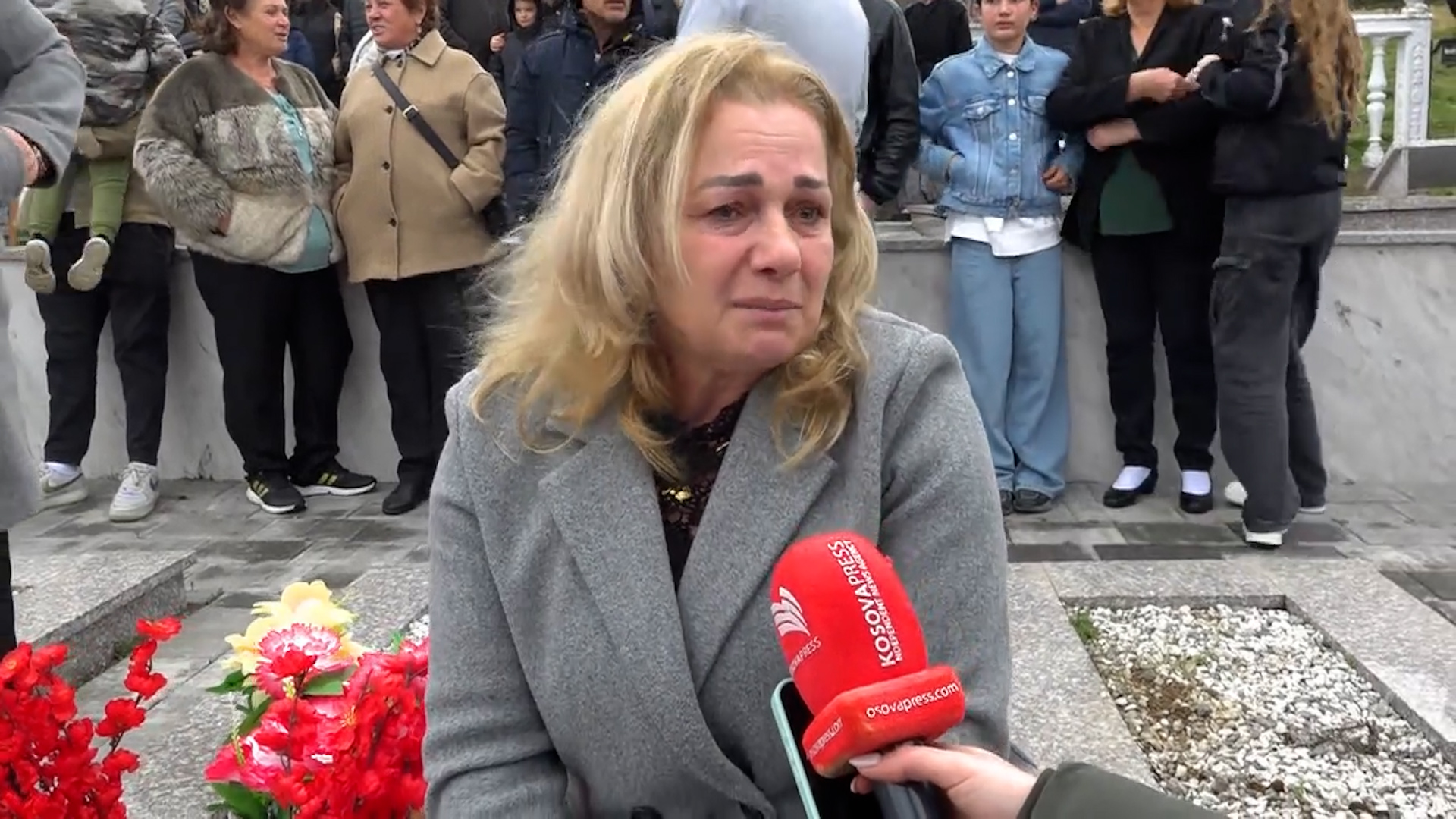
27 years since the massacre in Pastasellë, families of the victims speak out
“Son leave, I am going where they have gathered.”
These were the last words Njazi Krasniqi heard from his father before he was killed by Serbian armed forces 27 years ago in Pastasellë, Rahovec.
Although he is now 50 years old, he still remembers his final moment with his father, Selim, who was only 22 at the time.
Krasniqi also recounted to KosovaPress how, the following day, he saw the bodies of 106 people who had been killed, massacred, and some even burned.
At just 22 years old at the time, he was forced to bury the bodies one by one, among them also his own father.
Krasniqi was later arrested by Serbian forces and tortured after burying the victims.
“For the last time I saw my father near the school close to where the execution took place. He told me: ‘Son, leave, I am going where they are gathered.’ Five hours later, the execution happened. The next day I came to the place where 106 people had been executed; I saw them killed, massacred, and some bodies burned. The following day we began bringing them, placing five bodies at a time near the mosque. It took five days to bury them. On April 26, 1999, the Serbs came at night to the station and exhumed the bodies. On April 29, I was arrested by Serbian forces and held for 18 months. I was tortured; they asked me who killed them, where the bodies were taken. I said I did not know… The hardest part was that the bodies were taken because without DNA they could not identify them; they were exhumed and examined again. Most of them were buried two or three times—it was extremely difficult… I cannot forget until I die the moment my father told me to leave. The next day when I came, I saw him killed; he had a white plis, which we later found in his jacket pocket when we pulled him from the stream. He had been severely shot in the back… The hardest moment was when I met Ismet Gashi, who asked me about his son; I told him he was not dead. Four months later, when I visited him after prison, he told me I knew his son was dead and did not tell him. I told him I could not give him that news. Today I cannot meet that person because those memories come back,” Krasniqi said.
Nakije Hoti, whose father Fejzullah Krasniqi was killed, said that when she heard the gunshots, she already knew her father was among them.
“We were leaving the village and the Serbs from above did not allow us to move with tanks. Then they came and separated us—on one side the men, and the women. They executed the men. We went further down and heard gunshots, and after that I remember nothing… Yes, I was with my brother and my uncle’s son, but the heart knows. Later relatives came and told us that my father and uncles had been killed… It was very bad. I was young, my father was 57, in his best age. I will never forget this day for as long as I live. I wish these brothers and young people long life,” Hoti said.
Milazim Krasniqi, who was 12 years old at the time, also described how he experienced the massacre as a child.
“My father was killed. I was 12 years old. We gathered and came out. They came from above the village and started shelling. The Serbs separated us—men and women, and us children. They tortured us; they took women’s earrings and necklaces. They separated us children, and we heard gunshots as 106 people were executed. We found out three days later. It was a terrible event, the way I experienced it as a child,” he said.
On March 31, 1999, Serbian forces surrounded the village of Pastasellë in Rahovec, killing and massacring 106 people from the village and surrounding areas.
Only 13 people survived this massacre, and only one of them, Tahir Krasniqi, remains alive today.
Four people are still missing.