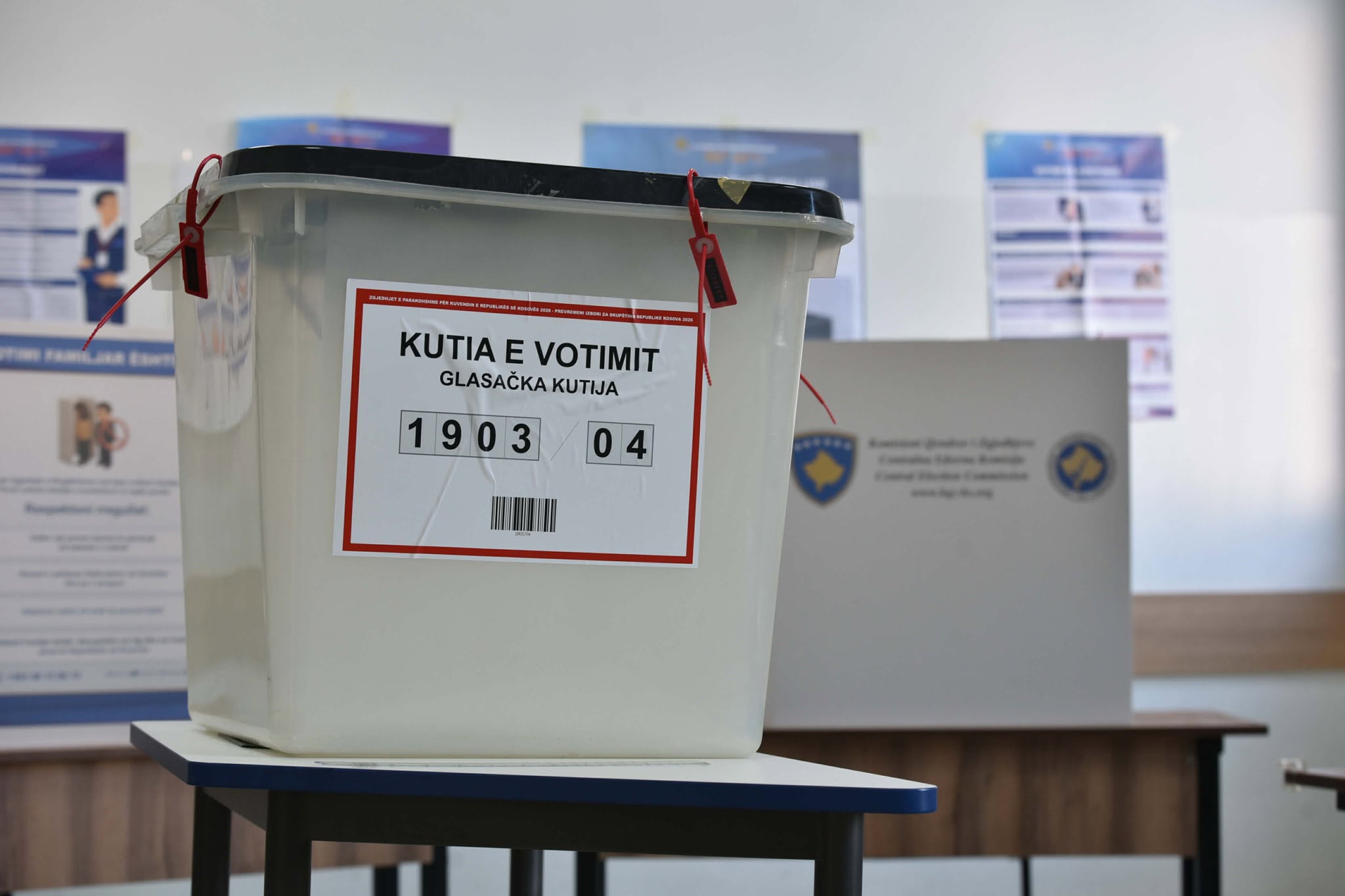
Why are Kosovars voting today?
Kosovars are voting today in their third parliamentary election within 18 months.
The reason for this vote, which began at 7:00 a.m. in most polling stations across Kosovo, is the prolonged political deadlock that has dominated the country's politics since February 2025.
The snap parliamentary elections were called after Kosovo’s main political parties failed to reach an agreement by April 28, the constitutional deadline, on who should succeed former President Vjosa Osmani, whose term expired at the beginning of that month.
As the country was left without a head of state, early elections became a constitutional obligation.
The ruling Vetëvendosje party of acting Prime Minister Albin Kurti has held a clear parliamentary majority since the snap elections held in December.
Kosovo’s president is elected by at least 80 votes in the 120-seat Assembly, a majority that neither Kurti nor the opposition was able to secure.
The inconclusive elections of February 2025 left the country without a fully functional government for much of the year, forcing a second election in December.
Those elections resulted in a 51.1 percent victory for Vetëvendosje, which formed a government without difficulty, unlike after the February vote. However, the Assembly subsequently failed to elect a president.
The election campaign for the June 7 vote lasted 10 days and featured intensive rallies by political parties. Their projects and promises were largely similar to those presented during the December 28, 2025 elections, due to the short period between the two electoral processes, which limited opportunities to introduce new and more innovative proposals.
Acting Prime Minister and Vetëvendosje leader Albin Kurti has urged voters to give him another mandate in Sunday's elections.
He repeatedly accused opposition parties of creating an “artificial crisis” and forcing repeated elections despite what he described as the “strong and clear will of the people.”
On the other hand, the two main opposition parties, the Democratic Party of Kosovo (PDK) and the Democratic League of Kosovo (LDK), have accused Kurti of seeking complete control over all political institutions in the country. They argue that Vetëvendosje is determined to secure the presidency for itself, despite the office having limited executive powers, though it retains important responsibilities in foreign policy and international representation.
One of the unique aspects of these elections is that former President Vjosa Osmani is now running on the LDK list against Kurti, her former ally, after he refused to support her bid for a second presidential term.
Fatmir Limaj, one of Kosovo’s longest-serving political figures, has chosen not to run with his own party and has instead aligned himself more closely with PDK during the campaign, although the party did not include him or other Nisma members on its electoral list.
The Alliance for the Future of Kosovo, which changed its name last month to simply “Alliance,” is contesting the elections under new leadership, both within the party and in the race for prime minister, having entrusted both roles to Ardian Gjini, the current mayor of Gjakova.
The smallest party in the race, PSD, has returned to electoral politics, opting to field only six candidates on its list — the minimum number required to form a parliamentary group if it surpasses the electoral threshold, which remains at 5 percent.