Which criteria did political parties use in selecting their parliamentary candidates?
For the first time, political parties have shown transparency regarding their campaign expenses and sources, thanks to the report “The Cost of Politics in Kosovo,” a collaboration between the non-governmental organization Democracy Plus (D+) and the Westminster Foundation for Democracy (WFD).
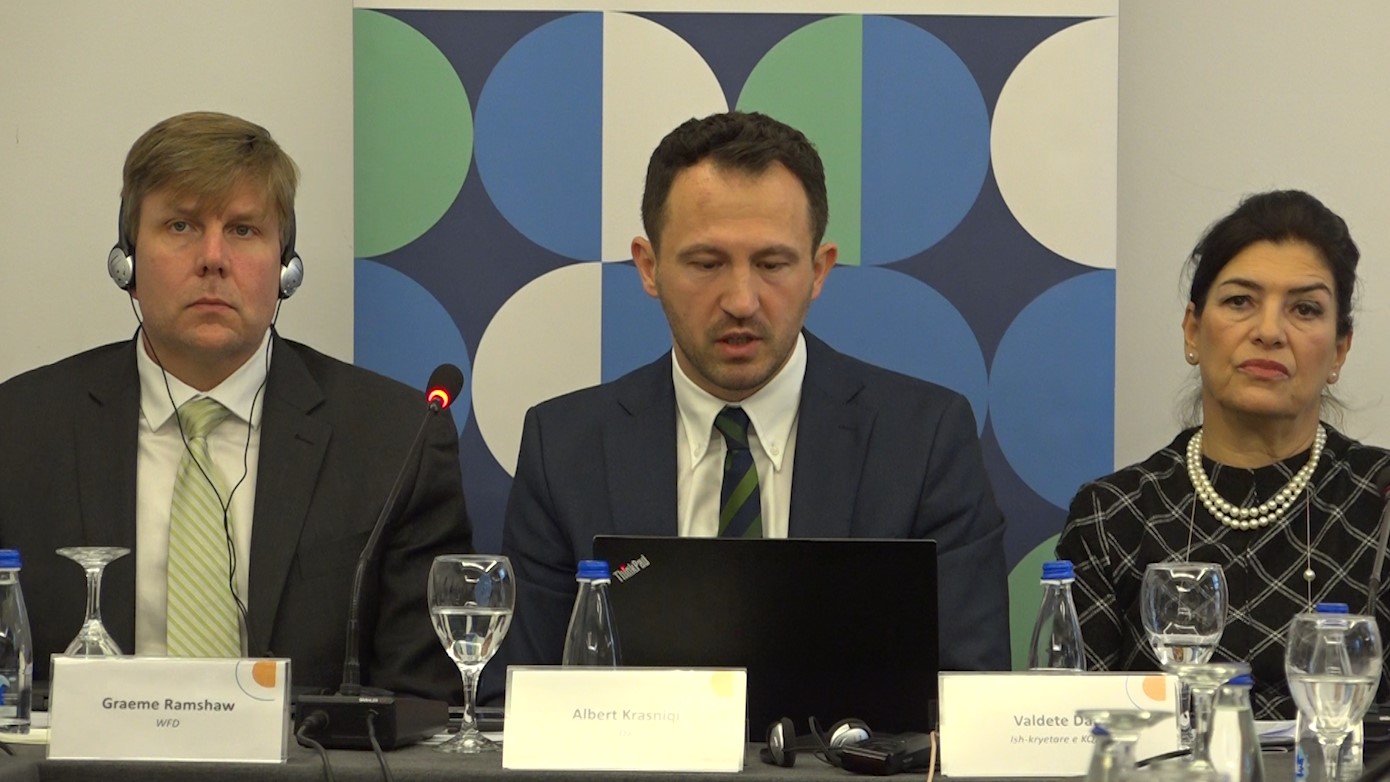
Albert Krasniqi from D+, which focuses on building a democratic society in Kosovo, explained that the report reveals the criteria used by political parties for selecting candidates representing their parties in the upcoming parliamentary elections, as well as the costs incurred during the campaign.
“The report aimed to examine the criteria parties used when compiling their election candidate lists. The second objective was to look at the costs candidates incurred during the election campaign, and the third was to identify the obligations they took on after receiving their mandates, including any additional costs afterward. We conducted semi-structured interviews with 15 parliamentary candidates, 10 of whom were successfully elected and five who were candidates. This is a very small sample and not representative, but the goal was to get information directly from the candidates. This is the first time they spoke publicly about campaign expenses and sources, providing a broader view of how campaigns are conducted. We also organized two focus groups, one with political party candidates and one with experts and journalists involved in election campaigns, to verify the findings from the study,” he said.
The report included representatives from Kosovo’s three main political parties. According to Krasniqi, the Vetëvendosje Movement used one of these criteria, the geographic aspect of representation.
“In Vetëvendosje, candidates told us that the geographic aspect of representation was considered, along with the influence these individuals have in their regions. Then, the polarizing ability of candidates in terms of representing central political issues and confronting political rivals was considered. Early activists and those with executive power had advantages on the lists. Proximity to the leader and party structures was another unwritten criterion, but candidates knew it influenced list placement. Figures from academia and showbiz who have supporters and can bring new votes to political parties were also considered,” he said.
Meanwhile, according to Krasniqi, the Democratic Party of Kosovo (PDK) applied the criterion that candidates should not have indictments.
“In the Democratic Party of Kosovo, the criteria included having no indictments, a clean and integrity-based list. Candidates should be politically active and have expertise in certain fields. Age and lack of prior political engagement were considered as an effort to introduce reforms within the party. Contributions to the country and ties to the Kosovo Liberation Army (KLA) were also taken into account, as well as geographic representation outside the Drenica region, since the party has a base there,” he said.
Finally, the study showed that the Democratic League of Kosovo (LDK) used criteria where proximity to the leader was considered an advantage for ranking on the LDK list.
“In the Democratic League of Kosovo, we were told that the goal was to protect LDK’s conservative vote. Early party activists, political figures, professional profiles, candidates with connections to the business community, or those demonstrating understanding of the economy and entrepreneurship, were included. The aim is for the party to appear strong economically. Proximity to the leader was also considered an advantage for ranking on the LDK list,” he said.
The publication also addressed the costs incurred during the campaign and touched on gender inequality issues in campaign spending.