Prejudice prevents the girls of the communities from pursuing professional programs
Read in: 4 min.
3 year ago
Link copied
Zana Xërxa, an English language teacher at the "Nexhmedin Nixha" technical high school, says that a small number of girls are attending this school. She shows that about five percent of the students belong to the communities and that the parents do not allow their daughters to enroll in these programs because of prejudices.
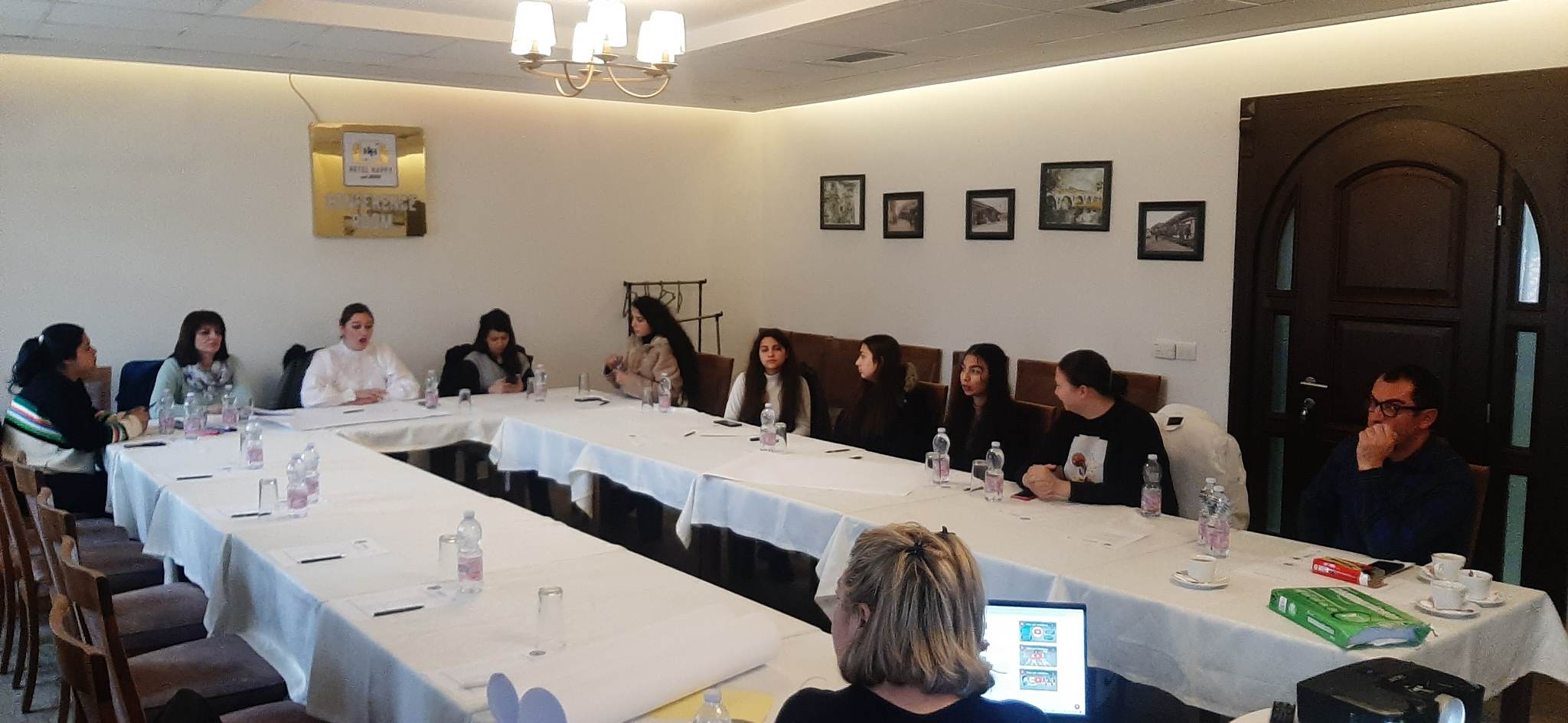
Students and teachers of schools in Gjakova, attended
today the lectures on media education. Today, the second phase with the topic
"Misinformation, disinformation and malicious information" has been
completed, within the project "Media education for teachers of students
from the Roma, Ashkali and Egyptian communities".
"Social conditions are generally one of
the factors that possibly negatively affect students, in particular those from
non-majority communities. While, as far as information, the media issues, we
have some technical programs where there are mainly male students. Therefore,
due to disinformation, the parents were misinformed that there are no girls in
those programs and they
are reluctant to enroll them to certain programs in our school.
This has made many girls drop out of school after enrollement", she states
for KosovaPress.
Ernesa Bajrami, who is in the first year of
the high school of medicine "Hysni Zajmi", says that her peers are
facing bullying, prejudice and exclusion.
"Very often, there are fake news, even
though they are not that kind of news at all, everyone believes that news. Many
students of the communities have dropped out of school halfway...Mostly the
students of the communities, even if it is not about you personally, you take
it as if it is about you," she says.
The project manager, Fadil Miftari, says that
the workshop sessions started in September and more than 160 students and
teachers participated in them.
"More than 160 participants in total, attended
the workshop during these eight lectures on the topic. An extremely large
number, about 70 percent of the participants were female educators/teachers,
female students and as you saw even today here in Gjakova, a 100 percent of the
attendees were women and girls", he says.
Furthermore, it emphasizes that due to
disinformation, many children of the communities are dropping out of school.
"One of the findings was that the members of these communities did not respond positively to the vaccination against Covid-19, entirely due to disinformation. Then there were other findings, that a large number of girls drop out of school due to incorrect information or prejudices in relation to them. These were some elements where we wanted to intervene and give them information on how to protect themselve", continues Miftari.
The lecturer, Linda Baleta says that the
purpose of these sessions with students and teachers was to inform them on how
to identify news with manipulative content.
"The goal of the workshop "Media
education for students, teachers and civil society activists from the Roma,
Ashkali and Egyptian communities", was to enable all participants to
identify, and not accept media content that is manipulative, and instead choose
information that is reliable, objective and verified," she says.
With financial support from the American
Embassy in Pristina, the "KosovaPress" News Agency, together with the
non-governmental organization "Young Community Leaders Center/YCLC",
have organized these lectures within the seven-month project, where the aim was
to raise the awareness of communities against disinformation, as well as
strengthening the role of civil society activists from the Roma, Ashkali and
Egyptian communities.
The project included two phases, where in the
first phase the teachers of primary schools from the sixth to the ninth grade
were involved.
Meanwhile, in the second phase, professors and
secondary school students from grades 10 to 12 were involved. Meanwhile,
another workshop will be held in March that will include civil society
activists from these three communities.
The Anti-Disinformation Media Education Project for Teachers, Students, and Civil Society Activists from the Roma, Ashkali, and Egyptian Communities, is supported by the United States Embassy in Pristina.