Kurti: We do not accept rewriting history; the KLA war was purely liberating
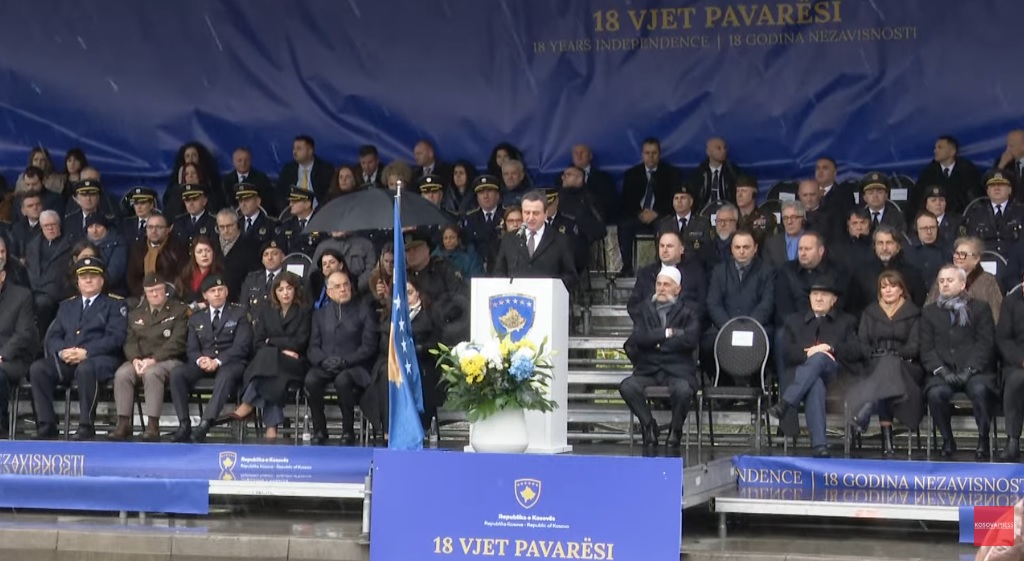
At the official parade ceremony of the Kosovo Security Force (KSF) and the Police, Prime Minister Albin Kurti said that on this day of celebration they do not close their eyes to the injustices being faced by the KLA leaders in The Hague. The head of the executive said they believe in justice, but do not accept rewriting the country’s history.
On the 18th anniversary of Kosovo’s declaration of independence, Prime Minister Albin Kurti stated that Kosovo was born as a state from peaceful resistance, the liberation war, and international intervention.
Honoring all those who fell for freedom, Kurti described the trial process in The Hague, where former KLA leaders are being tried, as non-transparent and unprecedented in international justice practices.
“Kosovo’s freedom did not begin on that day 18 years ago; Kosovo’s freedom was conceived much earlier through tireless efforts across generations, through resistance and the just war of the KLA, which together with NATO’s bombing of Milosevic’s Yugoslavia, put an end to an oppressive regime and paved the way for our statehood. Today, we bow before the martyrs of the nation and those who fell for our freedom. They are not only part of history; they are the foundations of the Republic. We honor the war invalids and KLA veterans, and we thank our international allies who stood on the side of freedom, on the right side of history. On this day of celebration, we do not close our eyes to injustices; some of the leaders of our liberation war continue to be held in prolonged pre-trial detention in The Hague, in non-transparent judicial processes and practices unprecedented in international justice. We believe in justice, but we do not accept revising and rewriting history. The KLA war was a purely liberating and anti-colonial war, a just war of an occupied and oppressed people under apartheid, and this is a truth that cannot be changed,” he said.
During his speech at the parade of the KSF and Kosovo Police forces, the Kosovar prime minister highlighted the investments made in the army. He said the Kosovo Security Force is an army ready to defend sovereignty and territorial integrity.
“Kosovo in 2026 is a stronger and safer state than ever before during these 18 years of independence. This is thanks to the commitment of every institutional official and patriotic citizen, with the right decisions and concrete investments. In recent years, spending on the army has multiplied; the number of KSF members has doubled with the recruitment of new generations of cadets and soldiers, including an increasing number of women members, which is now a declared state priority for the KSF. Investment in procurement and equipment exceeds 450 million euros—direct investments in modern weaponry, military vehicles, sufficient ammunition, and communication systems... Today, the KSF is developing as a professional force interoperable with our allies, ready to defend our state sovereignty, our territorial integrity, and the lives of Kosovo’s citizens,” he said.
Prime Minister Albin Kurti stated that today’s parade is not a demonstration of force toward anyone, but evidence of the state’s modernization and maturity.

