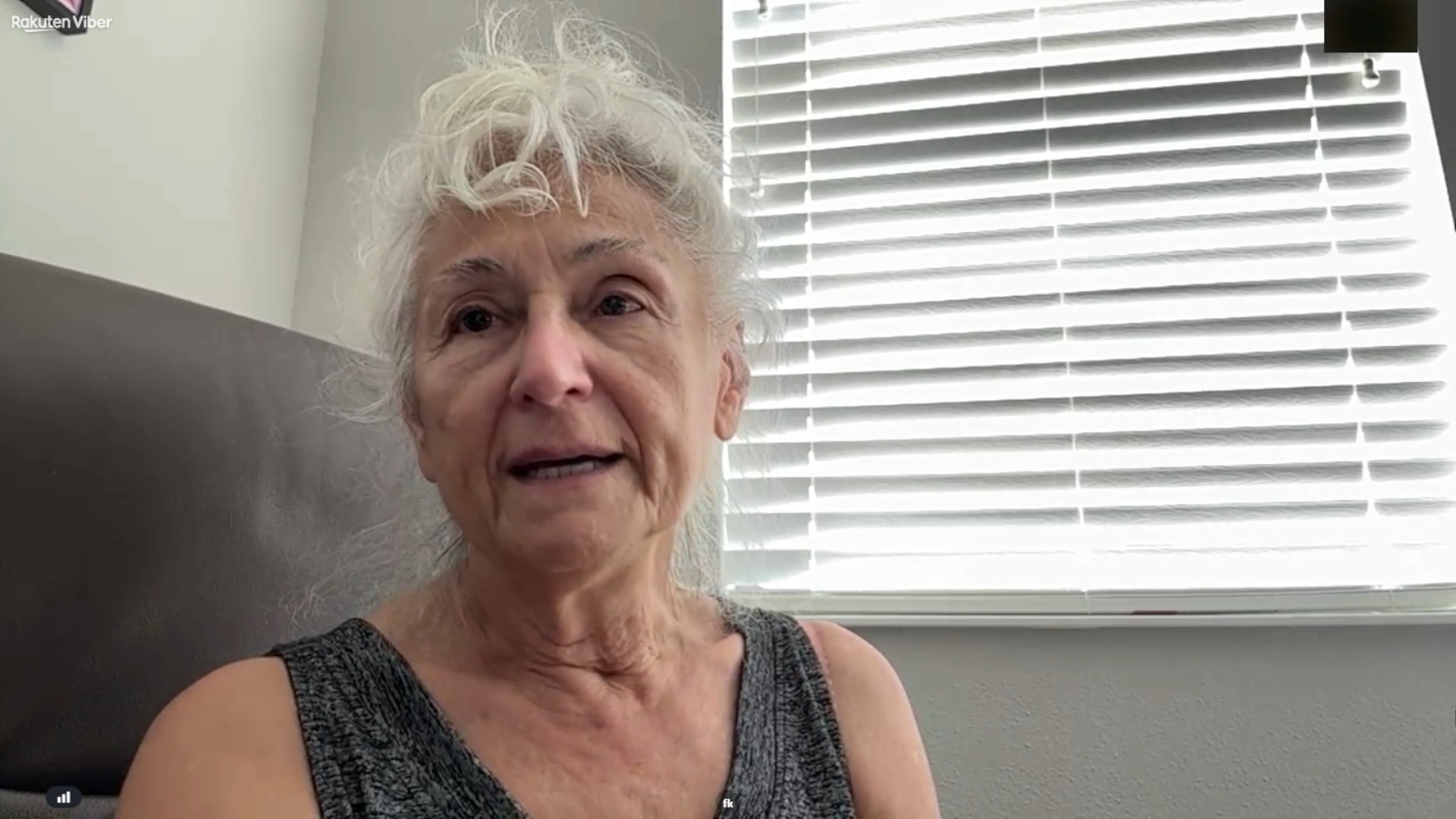
Faruza Kallaba: I volunteered to save my father’s people
“I felt that we were finally helping Albanians for all the suffering they had gone through”…
This is how Faruza Kallaba recalls the emotions she felt while aboard a military aircraft during the mission to liberate Kosovo.
The daughter of an Albanian from Rogana in Kamenica decided to give up retirement in 1999 when the possibility of intervention in her father’s homeland was mentioned.
In an exclusive interview from Florida for KosovaPress, on the evening of Tuesday, March 24—at the same time when 27 years ago the planes dropped the first bombs—the Albanian-American pilot recounts the 78 days of NATO strikes against Serbian targets.
Well, when we knew when the unit knew we were going, I didn't wait for them to put me on the orders. I went straight to my commander and I said, make sure my name is on that list.
So that's how, that's how I did that with that list. It's it was amazing too, that when we got word, I was just so surprised and I thought, no, this is my chance and I want to go. I want to make sure that I didn't get missed".
Even now, at the age of 70, Faruza still vividly remembers that decision and action.
"As you know, I was preparing to retire at the end of that year. So each year I think of my father, his homeland, his his legacy and what, what, what me serving Kosovo meant to him. So it means a lot to me when I think of him, the connection. So that's how I feel about that. I think of it every year," she says.
During the operation, Kallaba was engaged in aerial refueling for combat aircraft, but she was fully aware of the importance of the intervention.
"Well, when we're in the air, because it's so it's such an intense job that we pretty much just have to concentrate on just the job. So I don't have time for emotions, but once we get on the ground is when it all hits me when I realized what we were there for. And then, and you go through so many, so many emotions. I feel, I remember feeling finally, we're helping the Albanians for all the suffering that they've gone through. So it's when we're on the ground, when we feel it. Now, our mission is we did pre-strike and post-strike in-flight refueling, meaning that bombers and the fighting fighters that actually did the striking, they came to us for their fuel before and after. So while I was in the air, I wasn't in the theater of the, of the war, but I was able to see the surrounding area somewhat. So that's how that war worked, worked for us. And the number of days, the, out of the about two weeks that we were there, I flew maybe eight times because there are other in-flight refuelers and other aircraft we would, we would cycle through", Kallaba told KosovaPress.
She grew up listening to her father talk about Kosovo’s history, which made her contribution to the country of her roots even more special.
"That was very, very special because as we were growing up here in the US, because I never lived in, in Kosovo, I would listen to my father. He was telling us the history. And when we were younger, it was a little confusing because we didn't understand it very well. But, but then as, as time went by, we all learned and we understood the pain that the country has gone through," Kallaba said.
Faruza Kallaba concluded her career with the historic mission of Kosovo’s liberation from Serbia. Today, she says she would never have wanted to miss being part of that operation.
"I often think of how I could have missed that opportunity being that was the year that I retired and I would have been, the war, a war is always sad anyway, but I would have felt that I would have not felt as good knowing that I was part of it. So, so that's how I always feel about that. It was so close, so close. So it was meant to be for me to be there... Life isn't, isn't perfect, but I feel it's better there. I chose to believe that our input made better for family and friends that live there," she said.
She adds that she would also feel proud if she had the opportunity to contribute today to Ukraine, her mother’s homeland, Hanifa Senkjevic.
"Her country has been in constant turmoil as, as Kosovo has. So in reality, our whole family has been in constant war, just like your country there. So, so yes, it's, it's awful. It's an awful feeling there too... Well, at my age, I couldn't even choose to do any of that anymore, but, but I certainly would have been proud to have been a part of that," she claimed.
The last time she visited Kosovo was in 2004, but she says she will soon return to a country that amazed her with its rapid post-war development.
"The advancement [in Kosovo] is unbelievable. I'm so proud of everybody there and we're spoiled here because you all speak English and your language and many other languages and we're, we're spoiled that way...The last time I was there between the first time I was there and the last time I was there, it's like a whole different world. I can't believe the structures that are being built and the intelligence of people. It's just so hard to believe the change, but it's wonderful to see," the Albanian-American pilot emphasized.
With her extensive experience, she is also ready to help the Kosovo Security Force (KSF), but is waiting to be contacted by local institutions.
"I wish I could [help, but I don't have any contact. I never really had other than when I was there visiting and I had the opportunity to meet some commanders and some army, but no, no connection. So unfortunately I can't help in any way at this point... I don't have any contacts, just with some family members here and there, but no other institutions," she says.
Twenty-seven years after the bombing campaign that lasted 78 days, the pilot—born in Syria—has only a message of love for the people of Kosovo.
“From the bottom of my heart, I love the people as my father did. That is the best message I can give them,” she concludes.