Corruption in Kosovo: A widespread challenge undermining human rights and public trust
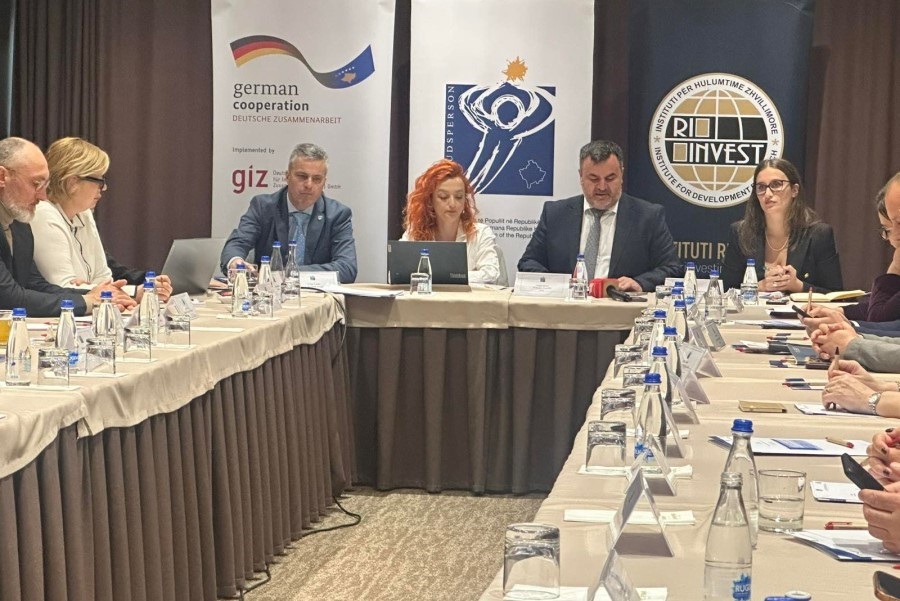
Corruption in Kosovo remains a widespread phenomenon that directly undermines the exercise of fundamental rights in the country. This is the main conclusion of the report presented today at a roundtable organized by the Ombudsperson under the theme “The Impact of Corruption on Human Rights.”
The Ombudsperson, Naim Qelaj, emphasized that corruption remains a deep societal problem that directly affects citizens’ lives and the functioning of the rule of law.
“When we first began addressing this issue, it was not difficult for us to identify it as a societal problem. Corruption and its impact on our lives have always been observed primarily from the perspective of citizens’ perceptions, but also based on numerous assessments conducted by civil society organizations. However, it was challenging to determine which methodology we would use to investigate or evaluate this phenomenon. Naturally, we chose surveys and interviews as two of the most reliable methods to gather authentic opinions and perceptions from citizens. The results of the surveys and interviews, the entirety of the research conducted, confirmed what we expected. In some situations there were minor differences, which helped us understand how important it is to have such evaluations before drawing conclusions,” he said.
He praised institutional cooperation and the need for open discussions to improve the findings. According to him, corruption fundamentally affects human rights and citizens’ dignity.
“What is important is that the cooperation with institutions, up to the point of producing results from this survey, has been excellent. I want to express special thanks to all the institutions that cooperated and provided sufficient materials to enable us to reach this assessment. I believe that corruption touches not only human rights but also the rule of law, equality before the law, and every aspect of our daily lives, which we translate into human rights, reaching the dignity that serves as an umbrella or the most substantive part of why these rights exist, as described in international acts,” said Qelaj.
Meanwhile, Fjolla Koshi, advisor on the rule of law, democracy, and governance at GIZ, stressed that the rule of law is the foundation for all development and that corruption undermines citizens’ trust.
“The project has several areas, five in total, with the most important including access to justice and everything under this area’s umbrella, such as human rights and the rule of law. At GIZ, we place great importance on this area as it is the foundation for any other initiative. Without the rule of law and human rights, nothing else can function. In short, the idea is that the impact of corruption is not only an institutional issue but also a direct influence on human rights, access to justice, citizen services, and citizens’ trust in Kosovo when such challenges exist,” said Koshi.
Today’s roundtable was organized by the Ombudsperson in cooperation with GIZ and the Riinvest Institute.

