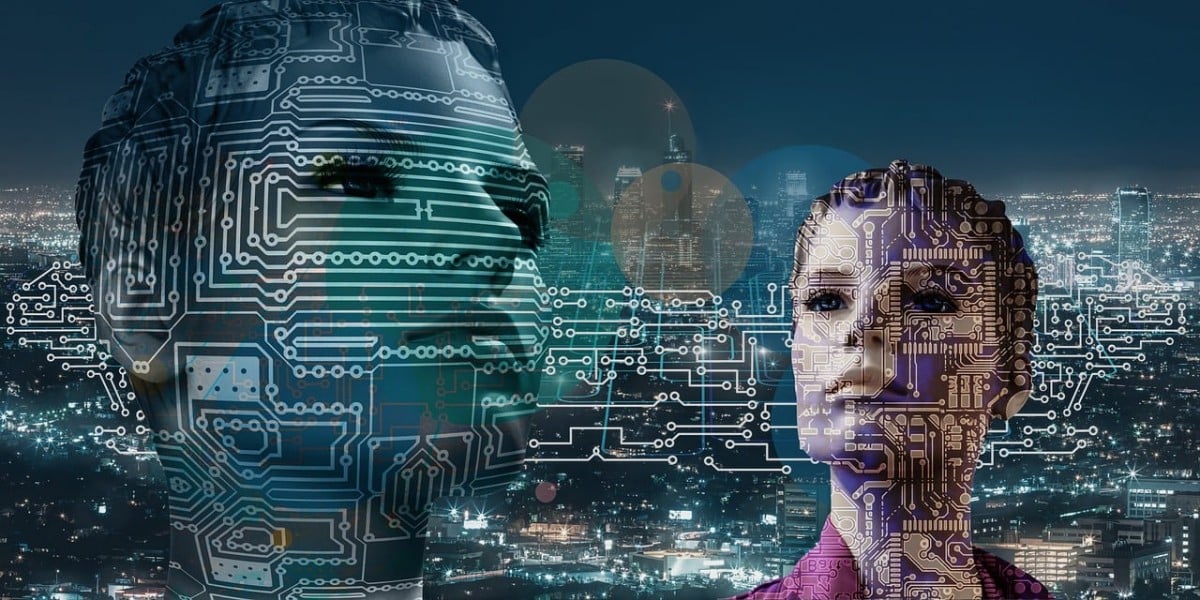
Artificial intelligence, help and threat in the digital age
Artificial intelligence brings benefits to people’s daily lives, influencing almost every aspect of it – from research and education to access to real-time information. However, it is also accompanied by risks, especially in terms of the spread of fake news and propaganda.
This phenomenon is particularly sensitive due to ongoing attempts of hybrid warfare, which, according to experts, are also observed from Serbia.
Cybersecurity expert Halil Berisha told KosovaPress that one potential risk is the so-called Deep Fake deception, where the visual data of various individuals is taken and manipulated visually and audibly to create a second persona with an almost identical appearance.
“Artificial intelligence creates a very big opportunity, which is being used for spreading fake news. One of the most dangerous ones, still under development, is the so-called Deep Fake. The visual data of a person is taken, the artificial intelligence is trained and it is able, from the information it possesses, such as the visual information and audio information of that person, to create a second persona of that person, which appears almost one hundred percent identical,” Berisha said.
Berisha pointed out that another method being used for creating fake news is the ability of artificial intelligence to communicate in different languages and accents, which is being exploited in hybrid warfare by states, including attempts from Serbia.
“Another method being used for creating fake news through artificial intelligence is its ability to generate in different languages, and not only in different languages but also in different accents. This is now widely used in hybrid warfare by states. We are also witnesses of many attempts from Serbia to use artificial intelligence to spread disinformation and increase its propaganda, which is a very important part of hybrid warfare against Kosovo,” he said.
However, according to Berisha, artificial intelligence is not only a source of risk, but it can also serve as a tool for combating disinformation, mentioning the use of Grok on the X platform, which enables fact-checking of news.
“But besides this, what artificial intelligence gives us – this possibility or risk of fake news – it also gives the other side, meaning an extraordinary opportunity to fight fake news. For example, on the X platform (Twitter), there is the use of Grok, which allows you to verify each piece of content in real time and to verify comments on what people are saying. In cases when bots try to push forward the Serbian narrative, this can be fought very easily,” Berisha said.
Berisha considers it important for citizens to be able to detect fake news, advising them to follow news only from well-known media outlets and not to be influenced by the shares and views such news might have, as this does not necessarily mean it is true. /A. Shala/