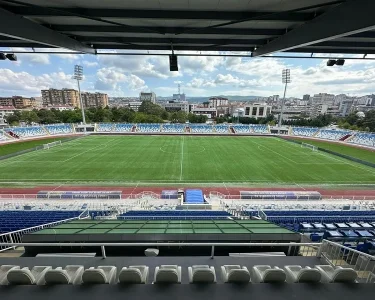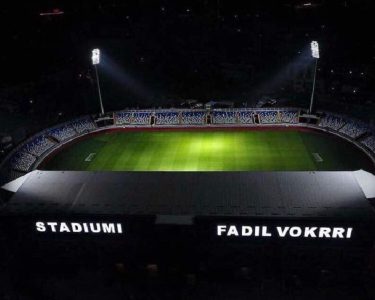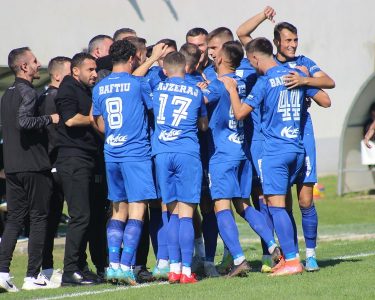

Kosovo’s national football team begins its qualifying campaign in September with two very difficult matches. The “Dardanians” will play their first two matches in Group B of the 2026 FIFA World Cup qualifiers against Switzerland away and then Sweden at the “Fadil Vokrri” Stadium in Prishtina.
Football analysts and experts believe that the level and quality of Kosovo’s team has improved and there is optimism, but it must also be borne in mind that the group rivals (Switzerland, Sweden, and Slovenia) are extremely difficult to beat.
Coach and analyst Bylbyl Sokoli told KosovaPress that Kosovo must aim for a positive result in the first match against Switzerland, so that motivation for the home game against Sweden in Prishtina will be at the highest level.
“Kosovo has always played well against Switzerland, especially when away, which is why I am optimistic that Kosovo will perform successfully against them. It is very important that in this match, the team shows self-confidence, which can then carry over into the matches in Prishtina. I am very optimistic that Kosovo will play well against Switzerland because, as always, in Switzerland, Kosovo feels at home and has delivered quality performances. For this reason, I strongly believe Kosovo will come out with a favorable result, and from this game much will depend on the optimism and self-confidence for the following match against Sweden in Prishtina,” Sokoli said.
Sports commentator Arbër Loxha has called for realism in facing the group’s rivals, emphasizing that Kosovo is still in a development process.
“Considering the competition in this group, which is one of the toughest Kosovo could have been drawn into; we must keep our expectations realistic. We are in a stage of development, but not yet at the level to defeat Switzerland or Sweden in the opening matches. However, football is an interesting sport — sometimes even when you’re not the best in the world, you can still win. The main reason we should focus on growth is to test the new players who have been recruited, those who are starting to get minutes, and see where they can play and what they can improve. That way, in the coming years, we can see them performing at a higher level,” Loxha said.
Meanwhile, Kushtrim Krasniqi from the Kosovo Olympic Committee emphasized that expectations should be viewed with a longer-term perspective, giving greater importance to preparations for the future.
“I see this more from a long-term perspective, with greater hopes for Euro 2028, because it is indeed extremely difficult to achieve success in these qualifiers. Naturally, we will not give up, because with all these new arrivals, our hopes have increased, and we will aim to take points from every match — why not even victories? We have nothing to lose, so every draw or win will be valued by us. I hope Kosovo even finishes first in the group, but we must return to reality and see where Switzerland stands. Switzerland is in decline, which is good news, but on the other hand Sweden is on the rise,” Krasniqi said.
Kosovo first plays away against Switzerland on September 5 in Basel, and then at “Fadil Vokrri” Stadium against Sweden. The Dardanians aim to give their maximum in these two matches to start this qualifying cycle in the best possible way.