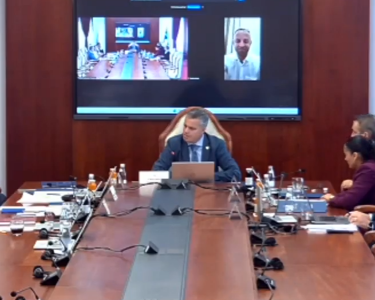

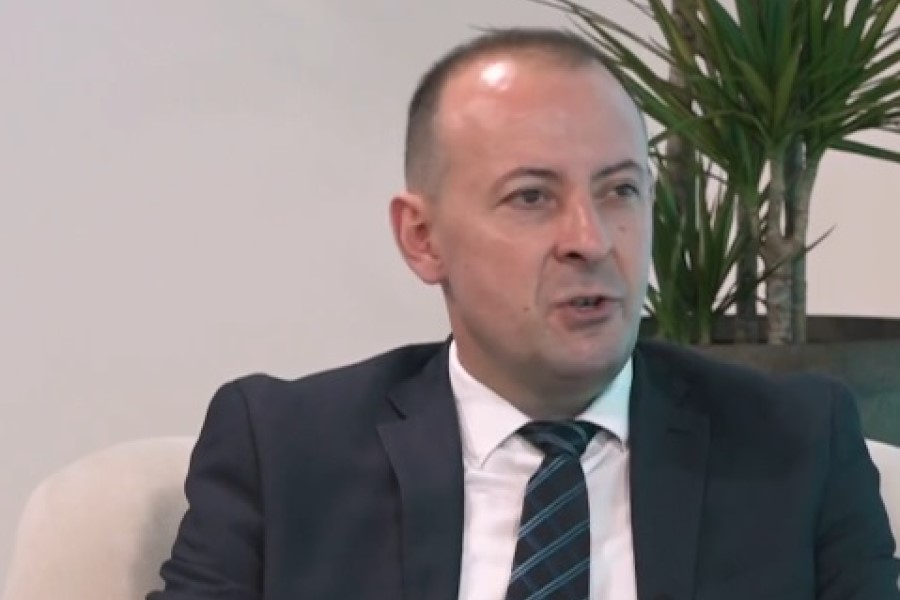
The Director of the Kosovo Agency for the Prevention of Corruption (APK), Yll Buleshkaj, has stated that public procurement and recruitment continue to be among the sectors most vulnerable to corruption in Kosovo, due to the involvement of a large part of the state budget and the decision-making of public officials, which, according to him, can often favor certain operators.
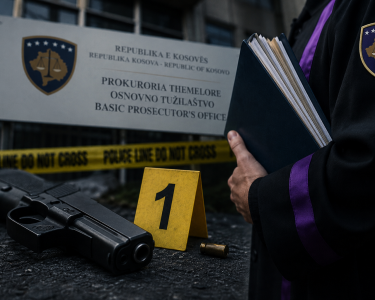
As a guest on an economics-focused program, Buleshkaj noted that last year alone the agency referred over 150 cases to the prosecution, mostly related to asset declarations, conflicts of interest, and financial benefits of public officials. He emphasized that in cases where personal or family benefits are confirmed, the APK is legally obliged to file a criminal complaint.
“The Agency for the Prevention of Corruption, as the main institution for combating corruption, in addition to other activities related to asset declarations, conflict of interest, whistleblowing, and anti-corruption assessments, encounters many anomalies connected to public tender procedures. In this regard, the agency seeks to contribute to making these procedures fairer and ensuring citizens receive better services, because ultimately public procurement involves goods and services purchased on behalf of citizens, serving the public. As a sector, public procurement is still considered one of the two most high-risk sectors, along with recruitment, because these sectors not only manage a large portion of Kosovo’s budget, but the decision-making by involved officials can be problematic and favor certain businesses over others that may offer better proposals. This is not the only area we examine in tenders. If we notice other technical shortcomings, we inform the relevant institutions,” Buleshkaj stated.
He explained that there have been cases where criminal complaints were filed for significant amounts of money.
“In every case where we confirm potential financial benefits for the official involved or their relatives, we are legally obliged to submit a criminal complaint to the local prosecution. Last year, we had such cases—at least two, if I am not mistaken, were referred to the prosecution. One is under review; I don’t have many details on the other. These involve significant sums; at least one exceeds 1 million euros. There are also cases where complaints do not fall directly under our mandate, alleging collusion among operators, which are then matters for the prosecution. There are cases involving officials, and when we can document them, we take action,” Buleshkaj emphasized.
Regarding claims that the current tender system discourages investment, Buleshkaj acknowledged complaints from foreign companies but stressed that procurement procedures are not a decisive obstacle for foreign investors.
“There have been foreign companies that submitted complaints to the agency, including claims that other institutions are not performing their duties, despite notifications. Although the agency has a significant name, we are not the prosecution; we do not have the authority to investigate criminal acts. We have the competence to investigate administrative violations, and if we see potential criminal offenses, we forward them to the prosecution. Any complaint regarding a prosecutor who has not done their job is beyond our mandate. Kosovo is actually the first country in the region to implement an electronic procurement system, making us a leader. Almost all other regional countries now have similar systems. Over the last three to four years, the law has been under review to improve procedures, increase transparency, and adapt them. I believe there is room for improvement, but the situation is not so bad that procurement procedures alone would prevent a foreign investor from coming to Kosovo,” he said.
Buleshkaj emphasized that perceived corruption negatively impacts economic development, even when it is being combated.
“We have a major problem in that even when corruption is being fought, we fail to explain to citizens the extent of the efforts. As long as citizens believe corruption exists, it is as if it does exist, even if it does not. It is very important for institutions like ours, the Anti-Corruption Council, the National Audit Office, the Ombudsperson, and others to have communication offices, to educate citizens about what constitutes a violation, how to report it, and what realistic expectations are. Since last year, we have been educating young people to identify violations and where to report them. We are trying to create frameworks for citizens to report issues, so we can identify and correct shortcomings. While we cannot provide exact responses on economic development, I believe corruption, if at high levels, negatively affects economic growth,” Buleshkaj noted.
He also stated that the agency is in the final phase of verifying asset declarations, involving around 2,000 officials, including their family members.
“We are in the final stage of asset verification. About 2,000 individuals have been reviewed, including their family members. For statistical purposes, we multiply the numbers by three, which means roughly 6,000 officials have been involved in the verification process in one way or another. We are now in the final phase. If I am not mistaken, around 150 are under review to determine whether they need to be sent to the prosecution or other institutions. There are different levels of discrepancies, and although as director I am not focused on individual names, there are ministers, deputies, and heads of institutions still communicating with the agency to clarify certain inconsistencies in their asset declarations,” Buleshkaj said.
When asked whether the agency has received a report on the assets of President Vjosa Osmani for investigation, Buleshkaj gave a non-committal response.
“The agency has previously stated that in the cases we handle, we do not have the legal right to comment on whether we are conducting verification or not. We have issued a public statement saying we neither confirm nor deny such a case. We do our work. Once the process is completed, we can inform the public about specific individuals who have been subject to verification. Unfortunately, we cannot publicly disclose the names of those referred to the prosecution, as this could harm ongoing investigations. For those whose verification is completed and no discrepancies were found, we can inform the public. At the moment, I do not have the legal right to comment further, as the staff is still in the process of investigation, and as director, I cannot interfere in these aspects,” Buleshkaj said.
He also spoke about cases submitted by the agency to the prosecution related to mismanagement or abuse of positions in public enterprises.“The agency’s main tool is whistleblowing, which falls under our mandate. We have referred several cases to the prosecution. Most of our criminal complaints concern asset declarations, conflicts of interest, or decisions made in conflicts of interest by public officials. Last year alone, we referred over 150 cases to the prosecution. The downside is that the vast majority were dismissed by the prosecution, especially those related to asset declarations. Some cases are still under review, particularly regarding benefits in conflicts of interest or reports alleging public funds were mismanaged or misallocated,” Buleshkaj said.