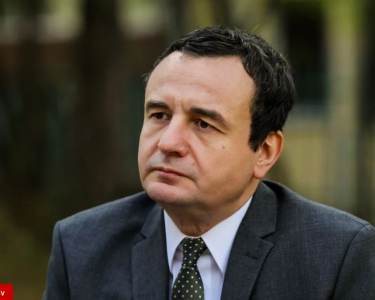

The security situation in Kosovo is better compared to previous years, while the risk posed by espionage activities is declining, thanks to increased inter-institutional coordination, says Acting Prime Minister Albin Kurti.
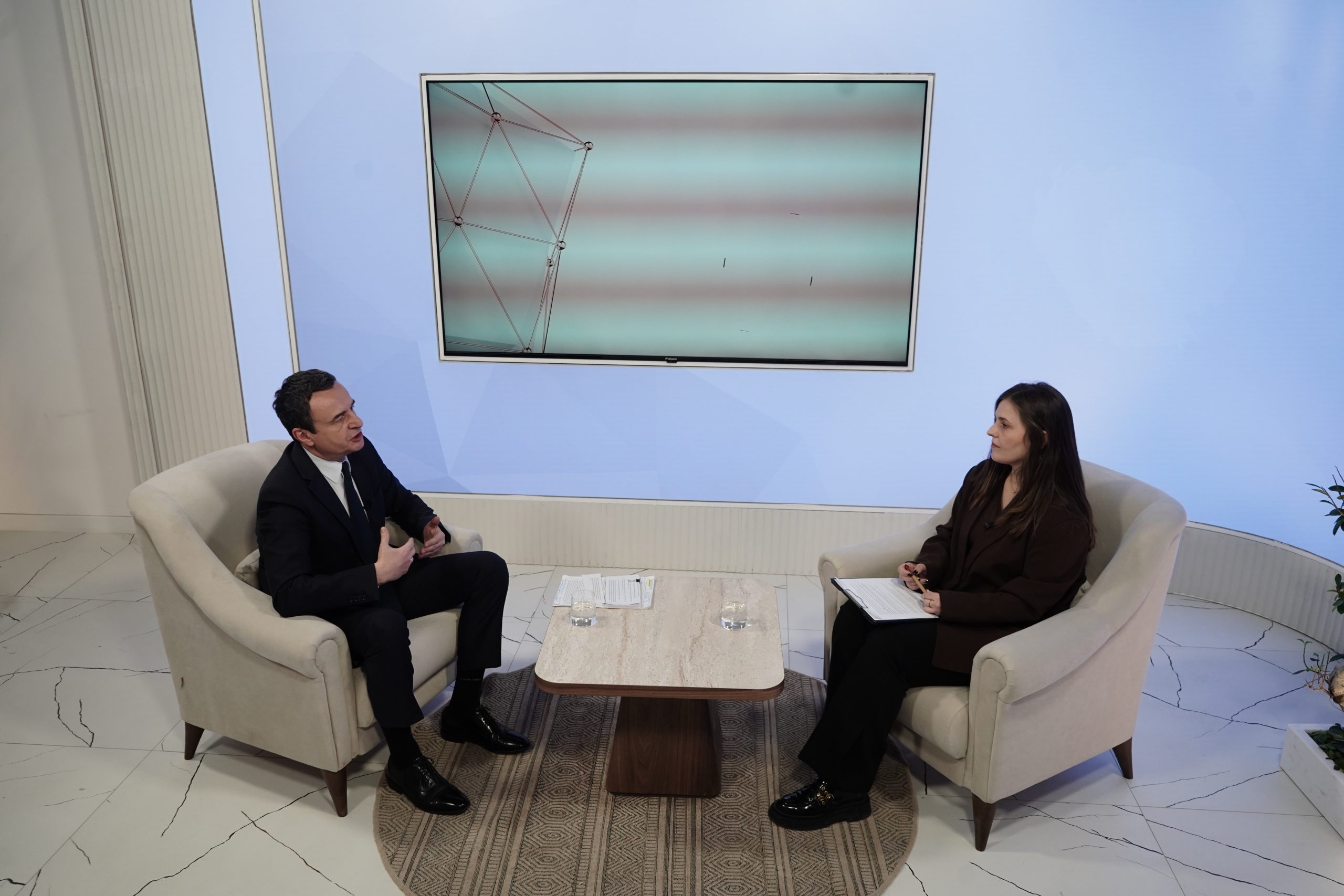
In an exclusive interview — his first since the December 28 elections — Kurti says that during 2024 and 2025 there was close cooperation between security, intelligence, and justice institutions, which resulted in arrests and criminal prosecutions in cases suspected of espionage.
During 2025, as a result of the engagement of the Kosovo Police, the Kosovo Intelligence Agency, and other security institutions, several suspected espionage cases were uncovered, involving arrests, detention measures, and indictments filed by the Special Prosecution of the Republic of Kosovo.
KosovaPress previously reported on these cases, noting that in the past year alone the following individuals were arrested: Fatmir Sheholli, who was arrested on October 9, 2025, in Prishtina on suspicion of committing the criminal offense of espionage; Bojan Jevtiq — a lieutenant in the Kosovo Police who served as operations chief in the border police at the “Dheu i Bardhë” crossing point; Hysri Selimi, who was arrested on May 6, 2025, on suspicion of committing the criminal offense of espionage in cooperation with Serbia’s Intelligence and Security Agency (BIA); and Jelena Gjukanovic, an official of the OSCE Mission in Kosovo — who was arrested on February 28, 2025, on suspicion of espionage and was initially detained for 48 hours by the Special Prosecution following several months of investigations.
In the interview for KosovaPress, Acting Prime Minister Albin Kurti says that inter-institutional cooperation, crowned with concrete results, has directly contributed to preventing attempts at sabotage, disinformation, and destabilization of the country, as well as to protecting Kosovo’s sovereignty and territorial integrity. He emphasizes that Kosovo has faced not only direct threats but also a hybrid war, which he described as concrete and organized, mentioning Serbia and its allies — including the Russian Federation — as sources of these destabilizing efforts.
“It is very positive that during 2024 and 2025 there was inter-institutional coordination among security, intelligence, and justice bodies in pursuing such cases involving espionage, which is strongly reflected in sabotage and disinformation, in attempts to destabilize the country, our political system, and to undermine sovereignty and territorial integrity. As a government, we have always supported this undertaking, which is new in our country and which greatly reassures us regarding state security. At the same time, however, we regret that this did not happen in the past. Serbia and its allies — first and foremost the Russian Federation with its despotic president Putin — have not conducted only warfare through kinetic attacks, terrorist acts, and state aggression, mobilizing their gendarmerie, police, military, and especially their secret service, the BIA, but have simultaneously waged a hybrid war, which is not abstract but very concrete,” Kurti says.
He says that thanks to increased inter-institutional coordination, the risk of espionage activities is declining.
Video “I believe that the risk is lower than it was previously and continues to decline. We did not know how exposed we truly were, but now all those arrested for espionage are either in detention or have already been convicted. And you know that in Kosovo we also have EULEX, which monitors judicial processes. Kosovo is the most democratic country in Southeast Europe that has not yet been integrated into the European Union — in what is otherwise called the Western Balkans — and fair, correct, and just judicial processes are taking place here. Therefore, citizens have no reason to worry, but of course state institutions have many reasons to remain vigilant, because Serbia’s hybrid war is strongly expressed through destabilizing, disinformation, and sabotage efforts by various actors who are not connected only to official Belgrade but also to the Kremlin, which is using Serbia as a tool to destabilize and undermine peace and security in the Balkan Peninsula,” he says.